Begleiten Sie uns auf eine literarische Weltreise!
Buch zum Bücherregal hinzufügen
Grey
Einen neuen Kommentar schreiben Default profile 50px
Grey
Jetzt das ganze Buch im Abo oder die ersten Seiten gratis lesen!
All characters reduced
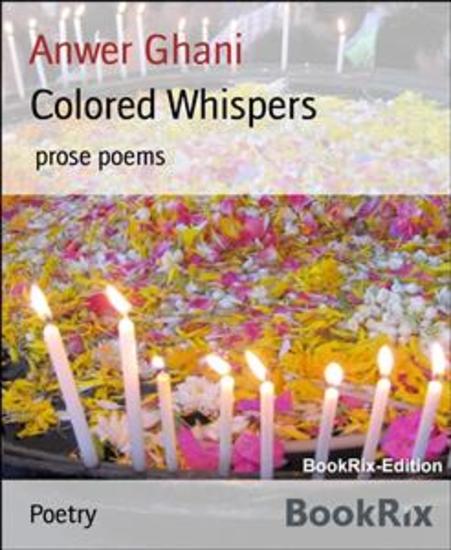
Colored Whispers - prose poems - cover

Colored Whispers - prose poems

Anwer Ghani

Verlag: BookRix

  • 0
  • 0
  • 0

Beschreibung

Colored whispers by more than sixty prose poems written by Anwer Ghani in the first half of 2019, we find the same message that Anwer repeats in his speeches and writings that it is the call for a life of peace for the war-ravaged Iraqi people.
Verfügbar seit: 19.12.2023.
Drucklänge: 60 Seiten.

Weitere Bücher, die Sie mögen werden

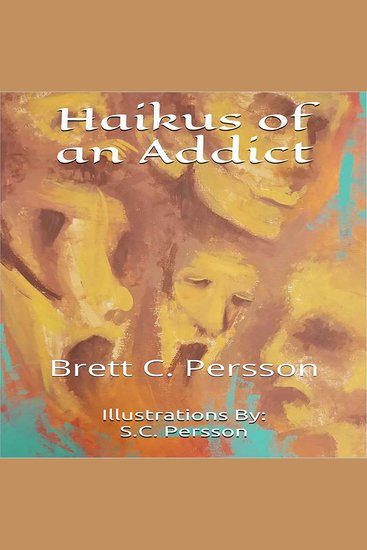
  • Haikus of an Addict - cover

    Haikus of an Addict

    Brett C. Persson

    • 0
    • 0
    • 0
    Witness haikus drawn from the mind of a recovering addict. 
    Gritty, authentic, and deeply personal, this complete collection of Poetry of an Addict compiles over 125 haikus that explore the darkness of addiction and offering a mixture of musings, reflections, and thoughts captured from moments of author Brett C. Persson's life. Ranging from vivid wordplay written while sober to fragments and flashes of thought that were snatched from the depths of drug and alcohol use, these poems illuminate the mind of a man who struggled for decades with pain, grief, and substance abuse. 
    Balancing the sorrows of addiction with a redeeming message of hope and growth, readers will be taken on a journey that will offer them a window into the mind of an addict, revealing the inner conflicts, struggles, and suffering that grips the throes of addiction. This collection provides a new perspective to any poetry fan who wants to deepen their understanding of addiction, find a new source of human resilience, and see how one man managed to rise above his addiction to reclaim his life. 
    Perfect for kindred souls who have struggled with addiction, Haikus of an Addict shines as a guiding light that will help you reflect on your own demons – or build the courage to confront them.
    Zum Buch
  • The Importance of Being Earnest - cover

    The Importance of Being Earnest

    Oscar Wilde

    • 0
    • 0
    • 0
    The Importance of Being Earnest by Oscar Wilde is a sparkling masterpiece of wit, satire, and social comedy that remains one of the most beloved plays in the English language. First performed in 1895, this brilliant farce skewers Victorian conventions with elegance and irreverence, offering audiences a delightful exploration of identity, courtship, and the absurdities of polite society.
    
    At the center of the play are two young gentlemen, Jack Worthing and Algernon Moncrieff, who each maintain carefully constructed double lives. In order to escape social obligations and pursue romance, both men adopt the name "Ernest," creating a web of misunderstandings that grows increasingly tangled. When love enters the picture—particularly in the form of the charming Gwendolen Fairfax and the spirited Cecily Cardew—the deception spirals into a series of comedic revelations.
    
    Wilde's dialogue sparkles with clever epigrams and playful paradoxes, turning even the simplest exchanges into showcases of linguistic brilliance. Every line brims with irony, exposing the trivial concerns and rigid expectations of upper-class society. Through exaggerated manners and exaggerated seriousness, Wilde highlights the superficiality that often lies beneath respectable appearances.
    
    One of the play's most memorable figures is Lady Bracknell, whose formidable presence and unwavering devotion to social propriety make her both intimidating and hilariously absurd. Her pronouncements on marriage, class, and lineage underscore Wilde's satirical critique of a world obsessed with status and convention.
    
    Beneath its lighthearted tone, the play cleverly examines themes of identity and authenticity. The characters' insistence on the name "Ernest" reflects society's fixation on appearances and moral labels. Wilde invites audiences to question whether sincerity is truly valued—or whether it is merely another performance in a carefully staged social drama.
    
    Set between fashionable London drawing rooms and the tranquility of a country estate, the play moves with precision and energy, building toward a resolution that is as improbable as it is satisfying. Wilde's masterful control of structure ensures that every twist serves both humor and commentary.
    
    Celebrated for its timeless charm and razor-sharp humor, The Importance of Being Earnest continues to enchant readers and theatergoers alike. Its playful wit, unforgettable characters, and enduring relevance make it a cornerstone of comedic theatre. In this dazzling work, Oscar Wilde proves that laughter can be both entertaining and incisive—revealing truths about society through the lightest of touches.
    Zum Buch
  • Soup of Alphabets Volume 003 - cover

    Soup of Alphabets Volume 003

    Various Various

    • 0
    • 0
    • 0
    This third "stove-top" full of Alphabet Soups --again-- runs the fullest gamut! It ranges from country scenes (Alphabets of Fruits, Birds, Animals and "Country Scenes"), to just plain silliness (Absurd ABCs and Lear's Nonsense Alphabet #5), and finally, topical subjects (the Anti-Slavery Alphabet, the Alphabet of Celebrities --a list quite different when compared to our current crew-- and an Alphabet of Old Testament History). Have fun, and be sure to tune in for the fourth volume, which promises to break new ground in Alphabet Books! (Summary by Denny Sayers)
    Zum Buch
  • The Prophet - cover

    The Prophet

    Kahlil Gibran

    • 0
    • 0
    • 0
    "You talk when you cease to be at peace with your thoughts."
    
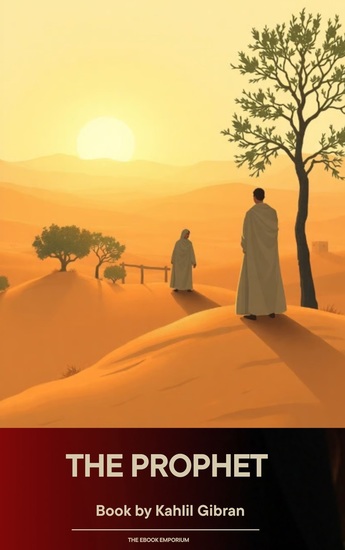
    In the city of Orphalese, the people gather to say farewell to Al-Mustafa, the "Chosen and the Beloved." Before he departs, they ask him to speak his truth on the fundamental experiences of human life. Through a series of lyrical and profound dialogues, Al-Mustafa provides timeless insights into love, pain, work, friendship, and death. Gibran's work transcends religion and culture, offering a blueprint for a life lived with meaning, compassion, and spiritual freedom.
    
    The Art of Living: Gibran does not offer rigid rules but rather a philosophy of balance. He teaches that joy and sorrow are inseparable, that work is "love made visible," and that true friendship is a field "which you sow with love and reap with thanksgiving." His words act as a mirror, reflecting the reader's own inner wisdom.
    
    A Global Phenomenon: Since its publication, The Prophet has never been out of print. Its popularity lies in its simplicity and its ability to speak directly to the human heart. It has served as a guide for millions during life's most significant transitions—from weddings and births to the finality of death.
    
    A Synthesis of East and West: As a Lebanese-American artist, Gibran blended the mysticism of the East with the Romanticism of the West. This unique perspective allowed him to create a work that feels both ancient and modern, providing a sanctuary of peace in an increasingly chaotic world.
    
    Seek the truth within. Purchase "The Prophet" today and discover the wisdom that has inspired generations.
    Zum Buch
  • Never Craven Was the Raven - cover

    Never Craven Was the Raven

    Michael Anthony White

    • 0
    • 0
    • 0
    Amidst an otherwise routine blink, you have just caught glimpse of a curious and unfamiliar binding - one that promises only to lead you gradually off the wayside. Its destination: past the charming whims of poetic joviality into the snarky silhouette of an umbral fowl.
    Zum Buch
  • Inferno - cover

    Inferno

    Alighieri Dante

    • 0
    • 0
    • 0
    Inferno, the first part of Dante Alighieri's monumental epic poem The Divine Comedy, is one of the most powerful and enduring works in world literature. Written in the early fourteenth century, this visionary masterpiece takes readers on a harrowing journey through the depths of Hell—an imaginative and moral landscape that has shaped Western thought, art, and spirituality for centuries.
    
    The poem begins with Dante, lost in a dark forest, symbolizing spiritual confusion and moral crisis. Guided by the Roman poet Virgil, he descends through the nine circles of Hell, each reserved for different sins and their corresponding punishments. As Dante travels deeper into the abyss, he encounters a vast array of souls—historical figures, mythological characters, and contemporaries from his own Florence—each suffering a fate that reflects the nature of their earthly transgressions.
    
    Through vivid imagery and unforgettable scenes, Inferno explores themes of justice, free will, responsibility, and divine order. The punishments of the damned are not arbitrary; they are symbolic reflections of the sins committed in life, embodying the principle of moral consequence. From the restless spirits of the lustful swept by eternal winds to the frozen depths where traitors are imprisoned in ice, Dante crafts a universe governed by a precise and awe-inspiring moral logic.
    
    Beyond its theological framework, Inferno is also a deeply personal and political work. Dante weaves into his narrative commentary on the corruption, factionalism, and moral decay of his time. His encounters with former allies and enemies reveal his passionate engagement with the political struggles of medieval Italy, transforming the poem into both a spiritual vision and a sharp critique of earthly injustice.
    
    The poem's language is rich, dramatic, and intensely visual. Dante's use of terza rima—a distinctive interlocking rhyme scheme—creates a rhythmic flow that propels the narrative forward. His imagery is at once terrifying and poetic, blending classical mythology with Christian doctrine to create a layered and imaginative cosmos.
    
    Yet Inferno is more than a descent into darkness. It is the beginning of a redemptive journey—a confrontation with sin that ultimately prepares the soul for purification and enlightenment. The poem invites readers to reflect on their own moral choices and the consequences that follow, offering timeless insights into human nature and the pursuit of truth.
    
    A cornerstone of medieval literature and a foundational text of the Western canon, Inferno continues to captivate readers with its dramatic intensity, philosophical depth, and poetic brilliance. Dante's vision of Hell remains one of the most vivid and influential representations of the afterlife ever conceived—a journey both terrifying and profoundly illuminating.
    Zum Buch