Begleiten Sie uns auf eine literarische Weltreise!
Buch zum Bücherregal hinzufügen
Grey
Einen neuen Kommentar schreiben Default profile 50px
Grey
Jetzt das ganze Buch im Abo oder die ersten Seiten gratis lesen!
All characters reduced
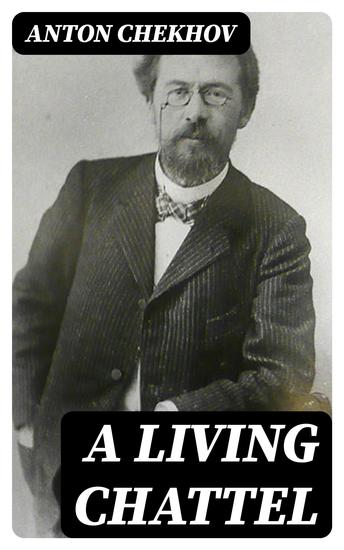
A Living Chattel - cover

A Living Chattel

Anton Chekhov

Übersetzer Constance Garnett

Verlag: DigiCat

  • 0
  • 0
  • 0

Beschreibung

In "A Living Chattel," Anton Chekhov delves into the intricate dynamics of love, desire, and the socio-economic conditions of his time, enveloping the reader in a narrative rich with psychological nuance and evocative imagery. Through the lens of a complex relationship between the protagonists, Chekhov explores themes of societal obligation and emotional entrapment, capturing the essence of human frailty against the backdrop of late 19th-century Russia. The story is marked by Chekhov's signature minimalist style, characterized by subtle dialogue and profound emotional undercurrents that invite readers to reflect deeply on the nature of their own relationships and societal roles. Anton Chekhov, a prolific playwright and short story writer, was not only a master of the literary form but also a keen observer of human behavior and social injustices. Born into a modest family, he experienced firsthand the struggles of the lower classes and the complexities of interpersonal relationships, factors that ignited his passion for storytelling. His medical background further informed his subtle understanding of human psychology, which is vividly illustrated in this work as he navigates the moral dilemmas faced by his characters. Readers seeking a profound exploration of emotional entanglements and societal expectations will find "A Living Chattel" an illuminating experience. Chekhov's deft narrative style and keen psychological insights ensure that this work remains relevant, resonating with contemporary audiences as it unravels the delicate threads of human connection. This is not merely a story of love; it is a reflective probe into the lived experiences of individuals bound by circumstance.
Verfügbar seit: 10.08.2022.
Drucklänge: 33 Seiten.
Weitere Bücher, die Sie mögen werden

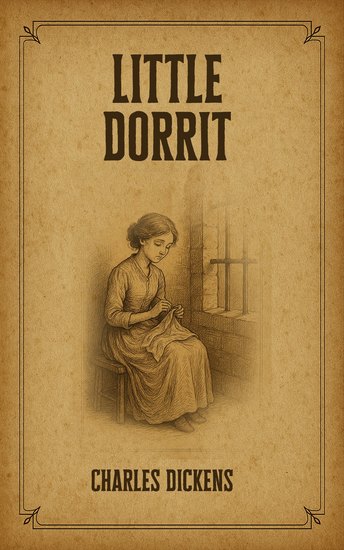
  • Little Dorrit - cover

    Little Dorrit

    Charles Dickens

    • 0
    • 0
    • 0
    Little Dorrit is a deeply moving and socially incisive novel by Charles Dickens that explores poverty, pride, bureaucracy, and the enduring power of compassion. Set against the backdrop of Victorian England, the story offers a sweeping portrait of society—from the grim confines of a debtors' prison to the glittering yet hollow world of wealth and status.
    
    At the heart of the novel is Amy Dorrit, known as "Little Dorrit," a gentle and selfless young woman born and raised within the walls of the Marshalsea Prison, where her father has been imprisoned for debt. Despite her harsh circumstances, Amy embodies kindness, humility, and quiet strength. Her life becomes intertwined with that of Arthur Clennam, a thoughtful and morally conflicted man seeking to uncover secrets from his family's past.
    
    As the narrative unfolds, Dickens exposes the cruelty and inefficiency of rigid social institutions, particularly through his biting satire of government bureaucracy and financial systems. Characters rise and fall in fortune, revealing how wealth can corrupt, isolate, and ultimately imprison the soul just as surely as physical walls can imprison the body.
    
    Little Dorrit is a powerful meditation on freedom—both external and internal. Through its richly drawn characters and intricate plot, the novel examines how love, loyalty, and moral integrity can endure even in the most oppressive conditions. Blending social criticism with deep emotional insight, the novel stands as one of Dickens's most profound and compassionate works, offering a timeless reflection on human dignity and resilience.
    Zum Buch
  • Once He Made a Beginning - A Pride and Prejudice Variation - cover

    Once He Made a Beginning - A...

    P. O. Dixon

    • 0
    • 0
    • 0
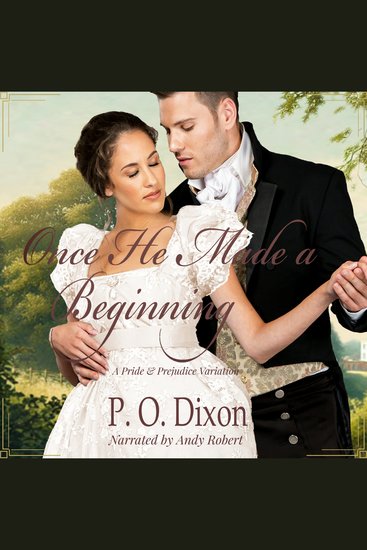
    "Every Ending, a Promising Prelude to a Beautiful New Beginning." 
    After his failed proposal at Hunsford, Fitzwilliam Darcy suffers a devastating accident that alters the course of his future. Overwhelmed with concern, unresolved feelings, and self-blame, Elizabeth Bennet finds herself compelled to stay by his side throughout his recovery. Is this fate’s way of giving them a second chance, or are some wounds too deep to heal?
    Zum Buch
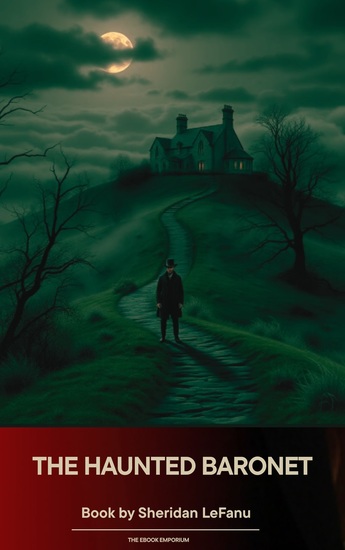
  • The Haunted Baronet - cover

    The Haunted Baronet

    Joseph Sheridan Le Fanu

    • 0
    • 0
    • 0
    "The lake does not give up its dead easily, and the House of Mardykes has a long memory."
    
    Sir Bale Mardykes is a man of iron will and a cold heart, living in the ancestral home of Mardykes Hall near the secluded village of Golden Friars. He believes he is the master of his own fate, but he is haunted by a centuries-old prophecy of doom. When he cruelly causes the death of his secretary and distant relative, Philip Feltram, Sir Bale believes he has cleared a nuisance from his path. But when Feltram returns—changed, silent, and carrying the chill of the lake—Sir Bale realizes that the dead have a way of reclaiming what is theirs. It is a slow-burn masterpiece of Gothic tension, where the environment itself seems to conspire against the living.
    
    The Environment as Antagonist: Le Fanu utilizes the "Atmospheric Gothic" to its fullest potential here. The swirling mists of the Lake District, the echoes in the mountain passes, and the bottomless depths of the lake serve as metaphors for Sir Bale's mounting paranoia. The house and the land are not just settings; they are active participants in the baronet's downfall.
    
    A Study in Psychological Ruin: Unlike many contemporary ghost stories, the horror in The Haunted Baronet is deeply internal. We watch Sir Bale's skepticism slowly erode as the supernatural elements become undeniable. The figure of the "Returned" Feltram is one of Le Fanu's most effective creations—a ghost that doesn't just haunt, but inhabits the social space of the living.
    
    The Weight of Ancestry: Le Fanu explores the idea that we are never truly free from the actions of our forefathers. Sir Bale is a victim of his own bloodline as much as his own choices. The novella builds to a tragic and inevitable climax that proves that some debts can only be paid in lifeblood.
    
    Beware the calm waters of Golden Friars. Purchase "The Haunted Baronet" today.
    Zum Buch
  • Cohen of Trinity - From their pens to your ears genius in every story - cover

    Cohen of Trinity - From their...

    Amy Levy

    • 0
    • 0
    • 0
    Amy Levy was born in London, England in 1861, the second of seven in a fairly wealthy Anglo-Jewish family. The children read and participated in secular literary activities and became firmly integrated into Victorian life. 
    Her education was at Brighton High School, Brighton, before studies at Newnham College, Cambridge; she was the first Jewish student when she arrived in 1879, but left after four terms. 
    Amy’s writing career began early; her poem ‘Ida Grey’ appeared when she was only fourteen. Her acclaimed short stories ‘Cohen of Trinity’ and ‘Wise in Their Generation,’ were published by Oscar Wilde in his magazine ‘Women's World’. 
    Her poetic writings reveal feminist concerns; ‘Xantippe and Other Verses’, from 1881 includes a poem in the voice of Socrates's wife. ‘A Minor Poet and Other Verse’ from 1884 comprises of dramatic monologues and lyric poems. 
    In 1886, Amy began a series of essays on Jewish culture and literature for the Jewish Chronicle, including ‘The Ghetto at Florence’, ‘The Jew in Fiction’, ‘Jewish Humour’ and ‘Jewish Children’. 
    That same year while travelling in Florence she met the writer Vernon Lee. It is generally assumed they fell in love and this inspired the poem ‘To Vernon Lee’. 
    Her first novel ‘Romance of a Shop’, written in 1888 is based on four sisters who experience the pleasures and hardships of running a London business during the 1880s. This was followed by Reuben Sachs (also 1888) and concerned with Jewish identity and mores in the England of her time and was somewhat controversial. 
    Her final book of poems, ‘A London Plane-Tree’ from 1889, shows the beginnings of the influence of French symbolism. 
    Despite many friendships and an active life, Amy suffered for many years with serious depressions and this, together with her growing deafness, led her to commit suicide by inhaling carbon monoxide on September 10th, 1889. She was 27.
    Zum Buch
  • Araby - From their pens to your ears genius in every story - cover

    Araby - From their pens to your...

    James Joyce

    • 0
    • 0
    • 0
    James Augustine Aloysius Joyce was born on the 2nd February 1882 in Dublin into a middle-class family, and the eldest of ten surviving siblings 
    Admired as a brilliant student he briefly attended the Christian Brothers-run O'Connell School before excelling at the Jesuit schools of Clongowes and Belvedere.  From there he went on to attend University College Dublin from 1898, studying English, French and Italian 
    In 1902, Joyce was now in his early twenties, and went to Paris to study Medicine but soon abandoned his teachings.  Back in Dublin to attend to his dying Mother he met Nora Barnacle. They bonded immediately into a life-long match. Together they decided to emigrate to Europe.  The couple lived in Trieste, Rome, Paris, and finally Zürich where Joyce pursued a variety of jobs and ventures to supplement his literary pursuits but none of these paid off.  
    After publishing a poetry volume, ‘Chamber Music’, in 1907, his short story collection ‘The Dubliners’, in 1914, helped establish his talent in the rapidly changing world.  
    Although far from home Joyce’s literary heart and works were set in his recollections of Dublin.  Characters are close resemblances of family and friends and indeed enemies.  His landmark work ‘Ulysses’, published in 1922, is set in the streets and alleyways of the city as it parallels Homer’s Odyssey in a variety of styles including its famed stream of consciousness. 
    His pen continued to produce classics of the order of ‘A Portrait of the Artist as A Young Man’ and ‘Finnegan’s Wake’ together with several volumes of poetry and a play ‘The Exiles, in 1918.   
    On the 11th January 1941, Joyce underwent surgery in Zürich for a perforated duodenal ulcer. The next day he fell into a coma. On the 13th after a brief period of lucidity in which he called for his wife and son he passed.  He was 58.
    Zum Buch
  • The Two Gentlemen of Verona - cover

    The Two Gentlemen of Verona

    William Shakespeare

    • 0
    • 0
    • 0
    He after honor hunts, I after love. He leaves his friends to dignify them more, I leave myself, my friends and all, for love. Proteus - Act I, Scene I 
    A Shakespeare Society Production. 
    The complete play in four acts.
    Zum Buch