Rejoignez-nous pour un voyage dans le monde des livres!
Ajouter ce livre à l'électronique
Grey
Ecrivez un nouveau commentaire Default profile 50px
Grey
Abonnez-vous pour lire le livre complet ou lisez les premières pages gratuitement!
All characters reduced
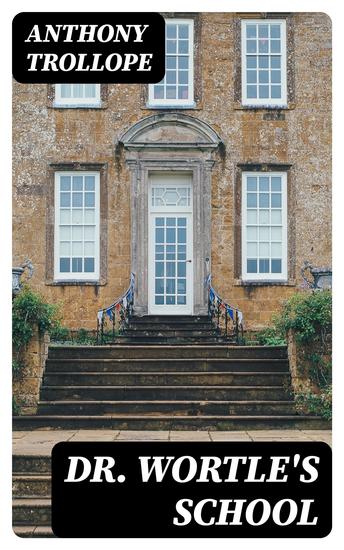
Dr Wortle's School - cover

Dr Wortle's School

Anthony Trollope

Maison d'édition: DigiCat

  • 0
  • 0
  • 0

Synopsis

In "Dr. Wortle's School," Anthony Trollope presents a vivid exploration of the English educational system and the societal changes of his time. Set in a fictional preparatory school, the novel intricately weaves themes of morality, ambition, and human fallibility, showcasing Trollope's characteristic sharp wit and keen social observation. The narrative is marked by Trollope's distinctive descriptive style, revealing the complexities of character interactions against the backdrop of a rapidly modernizing society, which echoes the evolving educational philosophies of Victorian England. Anthony Trollope, a prominent Victorian novelist, drew upon his own experiences as a postmaster and his keen awareness of social structure to craft compelling narratives. His deep engagement with the societal issues of his time, particularly concerning education and class, informed the rich tapestry of characters in "Dr. Wortle's School." Trollope's prolific writing career reflects a fascination with the moral dilemmas faced by individuals within institutional frameworks, offering an astute critique of the era. This novel is highly recommended for readers interested in the interplay of education and societal norms, as well as those who appreciate nuanced character development and historical context. Trollope's insights into the human condition resonate through his narrative, providing a thought-provoking exploration that remains relevant today.
Disponible depuis: 16/09/2022.
Longueur d'impression: 180 pages.
D'autres livres qui pourraient vous intéresser

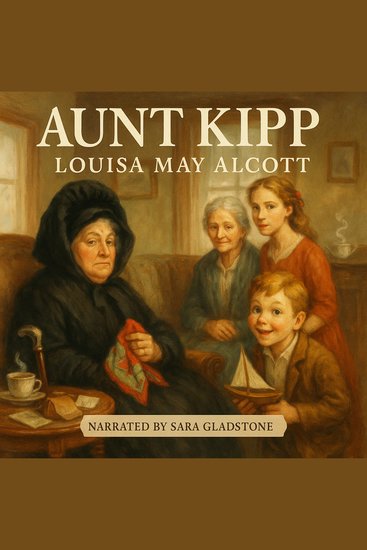
  • Aunt Kipp - cover

    Aunt Kipp

    Louisa May Alcott

    • 0
    • 0
    • 0
    Louisa May Alcott’s Aunt Kipp is a warm and witty tale of family trials, truth-telling children, and the reform of a difficult relative. 
    Polly Snow, her frail mother, and her mischievous younger brother “Toady” struggle to make ends meet while depending on the uncertain goodwill of their wealthy but domineering Aunt Kipp. With her towering black bonnet, sharp tongue, and constant reminders of her fragile health, Aunt Kipp seems to hold her fortune—and their future—over them like a storm cloud. But through humor, honesty, and unexpected affection, this domestic comedy reveals the power of kindness and change of heart. 
    Filled with Alcott’s trademark blend of sentiment, humor, and social observation, Aunt Kipp is both a sharp portrait of Victorian family life and a heartwarming reminder that it’s never too late to love and be loved.
    Voir livre
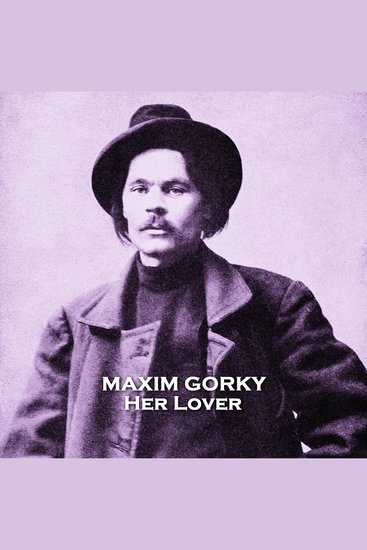
  • Her Lover - From their pens to your ears genius in every story - cover

    Her Lover - From their pens to...

    Maxim Gorky

    • 0
    • 0
    • 0
    Alexei Maximovich Peshkov was born on 28th March 1868, in Nizhny Novgorod, Russia. 
    Better known as Maxim Gorky he was orphaned at 11 and ran away from home at 12.  At 19 he had already attempted suicide and thereafter travelled, by foot, across the Russian Empire for 5 years. 
    His first book ‘Essays & Stories’ in 1898 was a sensation and so began a long career as an author of short stories, novels and plays.  Gorky saw writing as a moral and political act that would help to change the unjust world around him.  He was an ardent early advocate of the emerging Marxist movement and publicly opposed the Tsarist regime leading several times to his arrest.  
    In 1904 he began his own theatre but the censor banned every play and Gorky was forced to abandon the project. 
    But Gorky was a financially successful author, editor, and playwright and gave monies to political parties as well as for civil rights and social reform.  The brutal shooting of workers, which set in motion the Revolution of 1905, pushed Gorky more decisively toward radical solutions.  
    In 1906 he went to the United States to raise funds for the Bolsheviks. Those experiences including a scandal over travelling with his lover and not his wife deepened his contempt for the ‘bourgeois soul.’ 
    Gorky now moved to Capri in Italy, both for health reasons and to escape the increasingly repressive times in Russia.  
    An amnesty for the 300th anniversary of the Romanov dynasty saw him return to Russia in 1914. His politics remained close to the Bolshevik cause.  But soon, after the 1918 revolution, his essays referred to Lenin as a tyrant for his senseless arrests and repression.  He was soon appealing to the outside world for food aid after the catastrophic crop failure. 
    In October 1921 Gorky returned to Italy, now in Fascist hands, and settled in Sorrento until 1932.  His health worsened with the onset of tuberculosis. 
    He wrote several successful books there but now decided to find an understanding with the communist regime. Stalin invited him home and his return was hailed as a major propaganda victory.  He was decorated with the Order of Lenin, and a province, a park, and various streets re-named in his honour. 
    But he had his faults too.  In 1933, Gorky co-edited a book on the White Sea-Baltic Canal and denied even a single prisoner died during its construction, but thousands had. As well, knowing that some Nazis were homosexual, a phrase was attributed to him that said ‘exterminate all homosexuals and fascism will vanish’.  Although he was himself was quoting another he was decidedly homophobic. 
    With the increase of Stalinist repression in 1935 Gorky was placed under unannounced house arrest. 
    Maxim Gorky died on the 18th June 1936 from pneumonia.  He was 68. 
    Stalin and Molotov were among those who carried Gorky's urn of ashes at his funeral.
    Voir livre
  • Anthem - cover

    Anthem

    Ayn Rand

    • 0
    • 0
    • 0
    Though written in the 1930s, Anthem addresses controversial subjects in society that are still relevant today: equality, environment, sexism, mental health, the role of government. In revisiting this book and its many subjects, one keeps catching glimpses of understandings, and connections with our society today. The use of “we”—could it have a connection to the way we now declare our pronouns? The light he creates—could it have a connection to how man exploits the planet and is paying the price for it now? The Mating Hall—could it have a connection to the Me Too movement? The assumption that all must be happy, for there is no reason not to be—could it have a connection to our dawning understanding of mental health? Then, as you hear the struggles of the main character to grasp something just beyond his fingertips, you too may struggle to find your own understanding of what all this means in today’s world. Listen. And see what questions it brings to mind for you.
    Voir livre
  • How Old Tomofei Died Singing - From their pens to your ears genius in every story - cover

    How Old Tomofei Died Singing -...

    Rainer Maria Rilke

    • 0
    • 0
    • 0
    René Karl Wilhelm Johann Josef Maria Rilke was born into a troubled marriage on the 4th December 1875 in Prague, then part of the Austro-Hungarian Empire.  His mother, having previously lost a baby girl, would dress the young boy up in girl’s clothing.   
    Later his father dispatched him to a military academy at age 10 but after a miserable 5 years the young Rilke left due to illness and instead entered first Prague and then Munich and finally Berlin university to study art history, philosophy and literature. 
    His initial forays into literature was in poetry.  His intense, mystical and lyrical style was much admired and over time inspired many in succeeding generations.    
    His short prose collection ‘Stories of God’, written in an impassioned burst over several nights was published in 1900 and offers a beguiling view of much of Rilke’s influences and outlook.  
    The following year he married the pioneering sculptor and artist Clara Westhoff.  The union produced one child, a daughter Ruth.   
    He lived in Paris for most of the Century’s first decade where he mixed with many great minds of the time.  Although he continued to write he also worked as a secretary to the sculptor, Rodin.   
    It was only after they settled in Switzerland in 1919 that his writing output was in full flow.  Here he wrote profusely in both German and French, which included much on his previous travels, his left-wing sympathies, his religious and existential thoughts, all part of a unique and consummate style. 
    From 1923 on, Rilke increasingly struggled with his health which was now in constant decline and often spent time rehabilitating at a sanatorium.   
    Rainer Maria Rilke died of leukaemia on the 29th December 1926 in Montreux, Switzerland.  He was 51.
    Voir livre
  • The Secret Garden | Audiobook for Sleep - A soothing reading for sleep and relaxation - cover

    The Secret Garden | Audiobook...

    Frances Hodgson Burnett

    • 0
    • 0
    • 0
    Step into the enchanting world of "The Secret Garden," the timeless classic by Frances Hodgson Burnett, narrated by the soothing voice of Elizabeth Grace and produced by Slumber Studios. 
    This audiobook is designed ease restless nights and to gently lull you into a peaceful, restorative sleep. 
    Close your eyes, relax, and let Elizabeth Grace’s calming narration transport you to the Yorkshire moors, where young Mary Lennox discovers a hidden garden that transforms her life and the lives of those around her. Experience the magic, wonder, and healing power of this heartwarming tale while easing into a state of deep relaxation. 
    At Slumber Studios, we create soothing content designed to help you unwind and drift off effortlessly. This audiobook features slow, gentle narration paired with soft background music, offering the perfect escape into dreamland. 
    If you’re looking for a relaxing way to end your day, this is the perfect choice. Simply press play, get comfortable, and let Elizabeth’s serene voice guide you through the magical world of "The Secret Garden."  Wake up feeling refreshed, with a renewed sense of peace and wonder for the day ahead.
    Voir livre
  • The Hunchback of Notre Dame - cover

    The Hunchback of Notre Dame

    Victor Hugo

    • 0
    • 0
    • 0
    When Quasimodo appears before the masses as the "Pope of Fools," the crowd beholds an enormous cyclops-like creature— the hunchback's whole body seems a twisted grimace. Yet, with all his deformity, there is a certain grace and agility in him, and he possesses an endearing passion. When Esmerelda, the beautiful Romani woman, stands between his two executioners, Quasimodo makes the ultimate sacrifice.
    Voir livre