Rejoignez-nous pour un voyage dans le monde des livres!
Ajouter ce livre à l'électronique
Grey
Ecrivez un nouveau commentaire Default profile 50px
Grey
Abonnez-vous pour lire le livre complet ou lisez les premières pages gratuitement!
All characters reduced
The Age Of Robots: Navigating The Future - cover

The Age Of Robots: Navigating The Future

Anthony Lewis

Maison d'édition: Lewis Dabam

  • 0
  • 0
  • 0

Synopsis

"The Age of Robots: Navigating the Future" is an enlightening and thought-provoking exploration of the rapidly evolving landscape of robotics and artificial intelligence (AI) and their profound impact on society, the economy, and our daily lives. This book delves into the latest advancements in robotics, from autonomous vehicles and surgical robots to intelligent assistants and beyond, offering readers a glimpse into a future where robots are an integral part of everyday life.
Through expert analysis and engaging narratives, "The Age of Robots" examines the ethical, social, and economic challenges and opportunities presented by increased automation and AI. It discusses the potential for robots to transform industries, enhance productivity, and address global challenges, while also considering the implications for employment, privacy, and ethics. The book encourages readers to consider how humanity can navigate these changes responsibly, ensuring that technology serves to enhance human well-being and equity.
Featuring interviews with leading scientists, innovators, and thinkers in the field of robotics, the book provides diverse perspectives on how to harness the potential of AI and robots for good. It also offers insights into the development of smart policies and practices that can guide the responsible integration of robots into various sectors, including healthcare, manufacturing, transportation, and home life.
"The Age of Robots: Navigating the Future" is an essential read for anyone interested in understanding the current state of robotic technology and AI, its future directions, and the strategies needed to optimize its benefits for society. This book is a call to action for policymakers, business leaders, technologists, and citizens to work together in shaping a future where technology enhances human capabilities and ensures a prosperous, equitable, and sustainable world for generations to come.
Disponible depuis: 09/02/2024.

D'autres livres qui pourraient vous intéresser

  • Fluid Dynamics - Principles and Applications of Fluid Flow - cover

    Fluid Dynamics - Principles and...

    Mark Hedges

    • 0
    • 0
    • 0
    Fluid dynamics is a branch of physics that deals with the behavior of fluids (liquids and gases) in motion. It is a fundamental subject in engineering, physics, and applied sciences, playing a crucial role in various industries, including aerospace, automotive, energy, and environmental studies. Understanding how fluids move and interact with their surroundings helps engineers and scientists design efficient systems, predict natural phenomena, and develop innovative technologies. 
    At its core, fluid dynamics is governed by a set of fundamental principles derived from classical mechanics and thermodynamics. These include the conservation of mass, momentum, and energy. The governing equations, such as the Navier-Stokes equations, describe the motion of fluids by relating forces, pressure, velocity, and viscosity. The study of fluid dynamics is essential for solving real-world problems, from designing aircraft wings and optimizing fuel injection systems to predicting weather patterns and ocean currents. 
    Fluids can exhibit different types of motion depending on external forces, constraints, and their physical properties. A key distinction in fluid dynamics is between laminar flow and turbulent flow. Laminar flow is characterized by smooth, orderly fluid layers, whereas turbulent flow is chaotic and involves complex mixing and vortices. The Reynolds number, a dimensionless quantity, helps determine whether a flow will be laminar or turbulent based on factors like velocity, viscosity, and characteristic length.
    Voir livre
  • Night Night Sweet Child - Safe Blastoff to Anesthesia Dreamland - cover

    Night Night Sweet Child - Safe...

    CAA Kate Novinc

    • 0
    • 0
    • 0
    The book provides a comforting yet accurate overview of the anesthetic process for surgery, aimed at children who are injured and frightened about what to expect. It explains the journey from preoperative holding to the operating room and then to the post-anesthesia care unit. The narrative highlights the steps involved in anesthesia in a medically accurate yet fun and playful way, making the child feel as if they are embarking on a rocket ship ride under anesthesia. This process is portrayed as safe and guided by the anesthetist, who is depicted as a knowledgeable and compassionate guide. 
    The child is introduced to the medical equipment they will encounter, such as the face mask, reservoir bag, and vital sign monitors, making them appear approachable and less intimidating. Additionally, the anesthetist is portrayed as an "anesthesia angel" and a real-life superhero, alongside various other healthcare providers who are dedicated to helping and caring for the child. All medical personnel are in scrubs. Ultimately, the child undergoes an inhalational general anesthetic and emerges as their own "astronaut of anesthesia" superhero filled with pride and a beaming smile.
    Voir livre
  • Accidental Kindness - A Doctor's Notes on Empathy - cover

    Accidental Kindness - A Doctor's...

    Michael Stein

    • 0
    • 0
    • 0
    We will all be patients sooner or later. And when we go to the doctor, when we're hurting, we tend to think in terms of cause and condemnation. We often look for relief not only from physical symptoms but also from our self-blame. We want from our doctors kindness under any of its many names: empathy, caring, compassion, humanity. We look for safety and forgiveness. But we forget that doctors, too, are often in need of forgiveness—from their patients and from themselves. No doctor enters the medical profession expecting to be unkind or to make mistakes, but because of the complexity of our current medical system and because doctors are human, they often find themselves acting much less kindly than they would like to. Drawing on his work as a primary care physician and a behavioral scientist, Michael Stein artfully examines the often conflicting goals of patients and their doctors. In those differences, Stein recognizes that kindness should not be a patient’s forbidden or unrealistic expectation. This book leaves us with new knowledge of and insights into what we might hope for, and what might go wrong, or right, in the most intimate clinical moments.
    Voir livre
  • Rocket Science Made Simple - A Beginner's Guide to the Wonders of Space Exploration - cover

    Rocket Science Made Simple - A...

    Virversity Online Courses

    • 0
    • 0
    • 0
    Embark on a cosmic journey with our comprehensive online course in rocket science and space exploration. Designed for all, from beginners to enthusiasts, it offers insights into the principles and technologies that power rockets. Gain a foundational understanding of rocket concepts, explore rocketry's history, learn the physics of propulsion, and uncover design and material aspects of various rockets. Understand complex launch processes, satellite deployment, tackle challenges, and explore future innovations.
     
    Start with an introduction to rocket science, followed by the history of rocketry to learn about key milestones. Dive into the basic physics of rocketry, covering the forces and motions governing rockets. Learn about rocket propulsion and explore different rocket designs and uses. Discover the significance of materials in rocket construction, and explore key components in Rocket Anatomy.
     
    The course delves into orbital mechanics, explaining how orbits work, and the rocket launch process, providing a detailed guide. Learn about the strategic importance of satellite deployment and examine common challenges in the industry. Finally, explore the future innovations and technologies set to redefine rocket science.
     
    By the end, you'll have a robust understanding of rocket science and an enriched perspective on its role in advancing human exploration and technology, transforming your view on human interaction with the cosmos.
    Voir livre
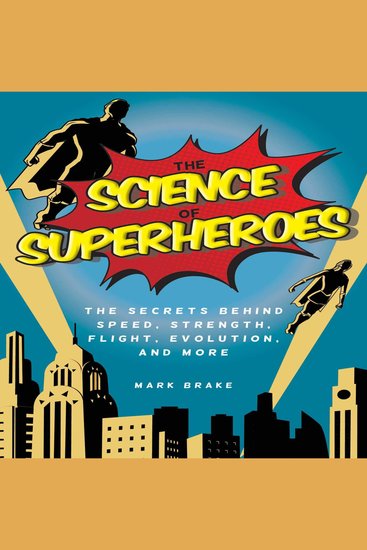
  • The Science of Superheroes - The Secrets Behind Speed Strength Flight Evolution and More - cover

    The Science of Superheroes - The...

    Mark Brake

    • 0
    • 0
    • 0
    Discover the science behind the abilities of your favorite superheroes—the physics, chemistry, and biology of Superman, Iron Man, Captain Americam, Aquaman, Spiderman, Cyborg, and more! 
     
    The concept of the superhero has permeated our culture. They fascinate their fans with their incredible superhuman abilities and impressive technology. But do you ever wonder if any of it is plausible or rooted in fact? 
     
    Enter The Science of Superheroes, which address more than fifty topics that span the worlds of your favorite superheroes and villains. Explore and examine their amazing abilities and fantastic gadgets with a detailed scientific lens. 
     
    The scientific questions examined within this book include: 
     
     
    Can an Iron Man suit be made?How does Thor's hammer work?Could any known forms of radiation cause superpowers?How many calories does Superman need each day?Could you cross a Lamborghini and a hummer to make the Batmobile Tumbler?And many more! 
     
    Whether you're a movie or comic buff, this book is certain to entertain and open your eyes to the truth behind these amazing characters.
    Voir livre
  • Neuropsychology - cover

    Neuropsychology

    Miguel Vaquero

    • 0
    • 0
    • 0
    This book contains two topics, which are the following:1 - Memory Improvement: The ability for the brain to encode, store, and recall information is known as memory. Experience serves as a roadmap for future action.Memory includes both consciously recalled facts and experienced details as well as deeply embedded knowledge that pops up without thought or even awareness. It serves as both a temporary information storage space and a more lasting record of what has been learned.2 - The study of the anatomy and operation of the nervous system and the brain is known as neuroscience. To map the brain mechanistically, neuroscientists draw on cellular and molecular biology, anatomy and physiology, human behavior and cognition, and other fields.Each neuron, or brain cell, in an adult human has an estimated 100 billion connections to other neurons. The mapping of all the cell-to-cell communication networks—the brain circuits that process all ideas, feelings, and behaviors—remains one of the major difficulties of contemporary neuroscience. The resulting image that gradually forms is referred described as "the connectome." All learning is based on the brain's capacity to build new neural circuits and connections, or neuroplasticity.
    Voir livre