Begleiten Sie uns auf eine literarische Weltreise!
Buch zum Bücherregal hinzufügen
Grey
Einen neuen Kommentar schreiben Default profile 50px
Grey
Jetzt das ganze Buch im Abo oder die ersten Seiten gratis lesen!
All characters reduced
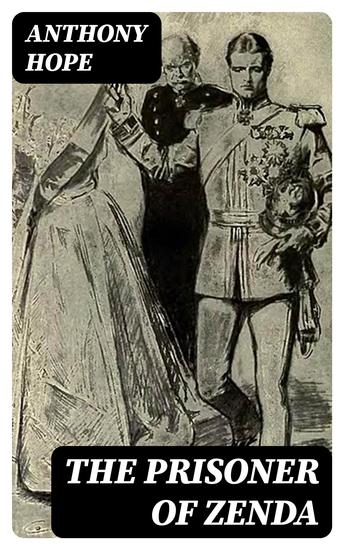
The Prisoner of Zenda - cover

The Prisoner of Zenda

Anthony Hope

Verlag: DigiCat

  • 0
  • 0
  • 0

Beschreibung

In *The Prisoner of Zenda,* Anthony Hope weaves a compelling tale of adventure, romance, and political intrigue set in the fictional European kingdom of Ruritania. The narrative unfolds with an ingenious twist, as the protagonist, Rudolf Rassendyll, becomes embroiled in a royal conspiracy that sees him impersonating the kidnapped king. Hope's vivid prose and suspenseful pacing reflect the Victorian era's fascination with chivalry and honor, inviting readers into a world where the themes of duty and identity are intricately explored. This novel is not just an adventure; it stands as a critique of romantic realism, capturing the zeitgeist of its time while influencing the genre of political thrillers and romantic adventures that would follow. Anthony Hope, an English novelist and playwright, was inspired by his experiences traveling in Europe, as well as by the socio-political landscapes of his time. Born in 1863, Hope's background in law and his literary ambitions fueled his storytelling prowess. He crafted *The Prisoner of Zenda* during a period of personal and political intrigue, which greatly informed his narrative techniques and thematic explorations of power and identity. Readers seeking a riveting and imaginative escape into a world of royal intrigue will find *The Prisoner of Zenda* an enthralling read. Hope's masterful blend of suspense, romance, and existential inquiry ensures that this timeless classic continues to resonate today. Dive into this landmark of adventure literature, where the lines between duty and desire blur, captivating enthusiasts of all ages.
Verfügbar seit: 11.10.2022.
Drucklänge: 151 Seiten.
Weitere Bücher, die Sie mögen werden

  • Delilah and Mr Bircumshaw - cover

    Delilah and Mr Bircumshaw

    D H Lawrence

    • 0
    • 0
    • 0
    'Delilah and Mr Bircumshaw was written by D H Lawrence in 1912. Lawrence is beginning to move away from his working class roots in this story, and exploring the relationship of a middle-class couple who have a slight argument, egged on by the wife's friend. Bircumshaw loses his dignity and self-respect for the comforts of married life. For all his insights into women, the misogynist in Lawrence can be detected.
    Zum Buch
  • Lady Chatterley's Lover - cover

    Lady Chatterley's Lover

    D. H. Lawrence

    • 0
    • 0
    • 0
    This audiobook is based on literature that was written in a past cultural or historical context, and includes language and depictions of people or cultures that are considered offensive to listeners. Please keep this in mind when deciding if, how and when you’ll listen. 
    Banned in the 1920s, and not released widely until the 1960s, Lady Chatterley’s Lover was considered one of the most scandalous books of all time. Lady Constance Chatterley is stuck in a loveless marriage until she crosses paths with Oliver Mellors, the estate’s gamekeeper. Embarking on a passionate affair with Mellors awakens desires in Lady Chatterley that she had never been able to explore within the confines of straight-laced society. As her journey of sexual self-discovery deepens, Lady Chatterley must navigate the clash of mind and body, industrialization and nature, and firmly established class distinctions. 
    This final novel by D. H. Lawrence has endured in significance even as societal morals have evolved and changed.
    Zum Buch
  • A Little Joke - From their pens to your ears genius in every story - cover

    A Little Joke - From their pens...

    Anthony Hope

    • 0
    • 0
    • 0
    Sir Anthony Hope Hawkins was born on 9th February 1863 in Clapton, London.  
    He was educated at St John's School, Leatherhead, Marlborough College and Balliol College, Oxford.  Hope trained as a lawyer and barrister and was called to the Bar by the Middle Temple in 1887. Despite what was thought to be a promising legal career he had literary ambitions and wrote in his spare time. 
    His early works appeared in various periodicals of the day but for his first book ‘A Man of Mark’ (1890), with no publisher interested, he published with his own resources.  
    More novels and short stories followed, including the mildly successful ‘Mr Witt's Widow’ in 1892. Hope even found time to run as the Liberal candidate for Wycombe in the election that same year but was unsuccessful. 
    His first major literary success came with ‘The Dolly Dialogues’, a collection of previously published magazine pieces followed very quickly by his instant classic, ‘The Prisoner of Zenda’. He now gave up the vestiges of his legal career to pursue writing full-time. 
    Despite never again reaching the same pinnacle of success he was popular and wrote prolifically across novels, plays and of course, short stories though his writing output rapidly diminished after the war. 
    In 1918 he was knighted for his contribution to propaganda efforts during World War I.  
    His short stories are delicate, mannered and often surprising with their wit, humour and interplay of characters who say one thing and usually mean another.  He was very definitely a writer of escapist rather than serious fare but they are no less enjoyable for that. 
    Anthony Hope died of throat cancer on 8th July 1933 at his country home, Heath Farm at Walton-on-the-Hill in Surrey. He was 70.
    Zum Buch
  • God the Invisible King (Unabridged) - cover

    God the Invisible King (Unabridged)

    H. G. Wells

    • 0
    • 0
    • 0
    This book sets out as forcibly and exactly as possible the religious belief of the writer. That belief is not orthodox Christianity; it is not, indeed, Christianity at all; its core nevertheless is a profound belief in a personal and intimate God. There is nothing in its statements that need shock or offend anyone who is prepared for the expression of a faith different from and perhaps in several particulars opposed to his own.
    Zum Buch
  • High Wages - cover

    High Wages

    Dorothy Whipple

    • 0
    • 0
    • 0
    In Dorothy Whipple's High Wages, a determined young woman makes her way in the world against the looming backdrop of World War I. High Wages is more than a tale of savvy entrepreneurship: Jane’s thoughts, feelings, adventures and disappointments in love and friendship are all laid bare. Jane Carter sees an advertisement for a live-in shop assistant and jumps at the chance to leave her old life behind. After Chadwick the draper takes her on, Jane learns all there is to know about fabrics and dressmaking. She proves a talented saleswoman and befriends Maggie and Lily, the other employees.The girls struggle under exploitative conditions: meagre pay; tiny portions of food; the boss cheating them out of commissions. When the young man Maggie is seeing falls in love with Jane, a bitter falling-out results in Maggie threatening to leave Chadwick’s. Armed with initiative and ideas, Jane decides to set up her very own clothing shop, but it’s not all plain sailing – far from it.High Wages is part of the Persephone Audiobook Collection, a series of forgotten classics including neglected fiction and non-fiction by women writers. First published in 1930, this edition includes a new preface by author Jane Brocket.
    Zum Buch
  • Moon-Bog The (Unabridged) - cover

    Moon-Bog The (Unabridged)

    H. P. Lovecraft

    • 0
    • 0
    • 0
    In the story, the unnamed narrator describes the final fate of his good friend, Denys Barry, an Irish-American who reclaims an ancestral estate in Kilderry, a fictional village in Ireland. Barry ignores pleas from the superstitious local peasantry not to drain the nearby bog, with unfortunate supernatural consequences.
    Zum Buch