Begleiten Sie uns auf eine literarische Weltreise!
Buch zum Bücherregal hinzufügen
Grey
Einen neuen Kommentar schreiben Default profile 50px
Grey
Jetzt das ganze Buch im Abo oder die ersten Seiten gratis lesen!
All characters reduced
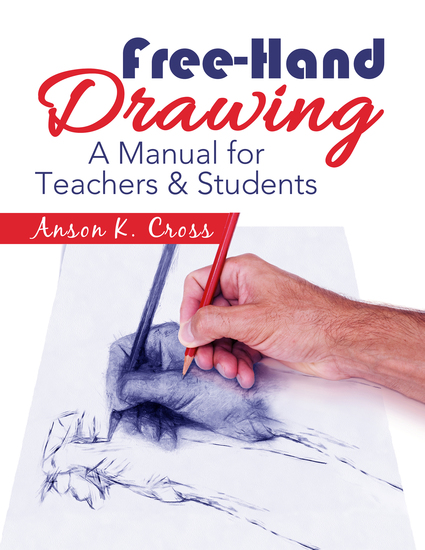
Free-Hand Drawing - "A Manual for Teachers & Students" - cover

Free-Hand Drawing - "A Manual for Teachers & Students"

Anson K. Cross

Verlag: E-Kitap Projesi & Cheapest Books

  • 0
  • 0
  • 0

Beschreibung

DRAWING is the expression of an idea: Art must come from within, and not from without. This fact has led some to assert that the study of nature is not essential to the student, and that careful training in the study of the representation of the actual appearance is mechanical and harmful. Such persons forget that all art ideas and sentiments must be based upon natural objects, and that a person who cannot represent truly what he sees will be entirely unable to express the simplest ideal conceptions so that others may appreciate them. Study of nature is, then, of the first and greatest importance to the art student.A drawing may be made in outline, in light and shade, or in color. The value of the drawing artistically does not depend upon the medium used, but upon the individuality of the draughtsman making it. The simplest pencil sketch may have much more merit than an elaborate colored drawing made by one who is unable to represent truly the facts of nature, or who sees, instead of the beauty and poetry, the ugliness and the imperfections of the subject.OBJECTS FOR STUDY:We hear a great deal now about the cultivation of the sense of beauty by the choice of drawing models. Many go so far as to say that nothing but the most beautiful forms should be given from the start, and, asserting that the cube, cylinder,and other type forms are not beautiful, they say that they should not be used, but that beautiful variations of these type forms should be provided. More definite information than this is rarely given. We are not told what natural objects are beautiful, and cheap enough to be provided, or how these objects of beauty are to be obtained, if they are not provided by the city. Such advice as to the use of beautiful models must be very pleasant and valuable to the drawing teacher, who so often fails to secure the money necessary to provide the cheap wooden models costing a few cents each ; and we do not wonder that special and regular teachers often regard this subject as one having no standards and no authorities.Much of all this commotion about beautiful objects of study is raised by those who, suffering from criticism, have in the desire to escape it plunged headlong from one set of mechanical rules for a series of lessons for the public schools, to another set less arbitrary in certain directions, but still mechanical, and if possible, more harmful than before, because attempting more.The average teacher can readily learn to discover at a glance whether or not the drawing of a cube represents the object as it might appear. She can do this even without seeing the model from the pupil's position; and the student can compare his drawing with the object and discover its errors more easily than he can in the drawing of a cast, a leaf, a figure,or any other object of beauty, in which the beauty depends upon lines which are subtile and which require a trained eye to see at all truly.
Verfügbar seit: 10.01.2024.
Drucklänge: 200 Seiten.

Weitere Bücher, die Sie mögen werden

  • The Alchemist - cover

    The Alchemist

    Ben Jonson

    • 0
    • 0
    • 0
    An outbreak of plague in London forces a gentleman, Lovewit, to flee temporarily to the country, leaving his house under the sole charge of his butler, Jeremy. Jeremy uses the opportunity given to him to use the house as the headquarters for fraudulent acts. He transforms himself into 'Captain Face', and enlists the aid of Subtle, a fellow conman and Dol Common, a prostitute.    In The Alchemist, Jonson unashamedly satirizes the follies, vanities and vices of mankind, most notably greed-induced credulity. People of all social classes are subject to Jonson's ruthless, satirical wit. He mocks human weakness and gullibility to advertising and to "miracle cures" with the character of Sir Epicure Mammon, who dreams of drinking the elixir of youth and enjoying fantastic sexual conquests. The Alchemist focuses on what happens when one human being seeks advantage over another. In a big city like London, this process of advantage-seeking is rife. The trio of con-artists - Subtle, Face and Dol - are self-deluding small-timers, ultimately undone by the same human weaknesses they exploit in their victims.
    Zum Buch
  • Showa Era - Empire War and the Post-War Transformation of Japan - cover

    Showa Era - Empire War and the...

    Rolf Hedger

    • 0
    • 0
    • 0
    The Showa Era began on December 25, 1926, with the ascension of Emperor Hirohito following the death of his father, Emperor Taisho. This period marked a critical turning point in Japan’s history, as the nation transitioned from the political turbulence of the Taisho democracy to a time of increasing militarism and nationalist sentiment. Although the early years of the Showa Era were characterized by economic struggles and political instability, they also set the stage for Japan’s dramatic expansion and eventual involvement in global conflict. 
    Emperor Hirohito’s rise to the throne was met with both hope and uncertainty. Many saw him as a symbol of continuity and strength, while others were concerned about the growing influence of the military in governmental affairs. Unlike his father, whose reign was defined by a parliamentary democracy, Hirohito’s early years as emperor witnessed the gradual erosion of democratic institutions. The shift toward a more authoritarian government was driven by widespread dissatisfaction with the parliamentary system and the belief that Japan needed strong leadership to navigate domestic and international challenges. 
    One of the most pressing issues Japan faced at the beginning of the Showa Era was economic instability. The global economy had already begun to weaken, and in 1929, the Wall Street Crash sent shockwaves through Japan’s financial system. The economic downturn led to mass unemployment, factory closures, and widespread poverty, exacerbating social tensions. Farmers, who made up a significant portion of Japan’s population, suffered greatly as the price of rice plummeted, leading to rural hardships that fueled growing resentment toward the government. In response, nationalist and ultraconservative factions gained popularity, advocating for territorial expansion as a means to secure resources and economic stability.
    Zum Buch
  • A Rare Recording of Television Icon Elizabeth Montgomery - cover

    A Rare Recording of Television...

    Elizabeth Montgomery

    • 0
    • 0
    • 0
    Elizabeth Victoria Montgomery (April 15, 1933 - May 18, 1995) was an American actress, from Los Angeles, whose career spanned five decades in film, stage and television. She portrayed the good witch Samantha Stephens on the popular television show Bewitched, which earned her five Emmy nominations and four Golden Globe nominations. After Bewitched, Montgomery continued her career with roles in many television films, including A Case of Rape (1974) and The Legend of Lizzie Borden (1975); both performances earned her Emmy nominations. The following audio include two television interviews from the 1960s.
    Zum Buch
  • The Healing Power of Story - How Reading and Storytelling Boost Mental and Emotional Well-Being - cover

    The Healing Power of Story - How...

    Davis Truman

    • 0
    • 0
    • 0
    In an age of noise, anxiety, and endless distractions, The Healing Power of Story offers a refreshing, science-backed path to inner peace and emotional strength through the timeless act of storytelling. 
    Whether it's reading a novel, sharing personal memories, or listening to others' lived experiences, stories shape who we are. But they also heal. 
    In this powerful and inspiring book, Davis Truman explores how storytelling taps into our deepest emotions, rewires our brains, and fosters resilience, empathy, and a sense of meaning. Drawing on the latest psychological research, compelling case studies, and practical exercises, Truman reveals how both reading and telling stories can: 
    ·        Reduce stress, anxiety, and depression 
    ·        Strengthen memory and emotional regulation 
    ·        Build deeper connections and empathy 
    ·        Help process grief, trauma, and life transitions 
    ·        Reignite creativity and purpose 
    Whether you're a book lover, therapist, teacher, parent, or someone longing for hope and connection, The Healing Power of Story is your guide to transforming how you think, feel, and relate to the world. 
    Open a book. Share your story. Heal your life.
    Zum Buch
  • 100 Things to Hate Before You Die - cover

    100 Things to Hate Before You Die

    Claudia Stavola

    • 0
    • 0
    • 0
    Comedian Claudia Stavola understands we’re living in sensitive times and the word hate is controversial, so she doesn’t use it loosely. She only uses it for serious infractions like gender reveal parties, guys who wear shorts when it’s forty below, and Gwyneth Paltrow’s vagina candle.  
    You’ll be thoroughly entertained and in awe of how Stavola’s raucous sarcasm mirrors your inner most thoughts in this hilarious collection of easy-to-read essays. With her witty and insightful observations, she’s like a modern-day George Carlin, except hairier. (Hey, she’s Italian. She was born with a mustache). 
    100 Things to Hate Before You Die is astute, honest, and laugh-out-loud funny. Claudia shares her aggravation over a range of topics from mundane things like Fakebook, crappy gift-givers, and ukuleles on talent show auditions, to more thought-provoking topics such as people with no shame, the need for a license to parent, and the death of Eddie Van Halen.  
    Delivered with razor-sharp force, Stavola’s hysterical and unique takes on everyday a**holes makes this not only a great read for comedy lovers, but a must-read.
    Zum Buch
  • 27 Thoughts on Steampunk - cover

    27 Thoughts on Steampunk

    Travis I. Sivart

    • 0
    • 0
    • 0
    Travis I. Sivart draws on his passion of steampunk as an aesthetic and a hobby to offer his personal insights for helping others to begin to delving into this fascinating culture and genre. Each thought is a single page, keeping the ideas simple and to the point. This book offers twenty-seven thoughts on the basic questions and concepts that often crop up when someone is beginning to explore this incredible movement. 
    Travis I. Sivart is a published steampunk author, as well as having hosted a weekly radio show on the subject, and is often a guest at conventions to speak on the topic of steampunk. He does not claim to be the ultimate or complete authority in this beloved genre, and wrote this book hoping to help new folks find their way into the hobby. 
    Book 1 in the "27 Thoughts on Social DIY" series.
    Zum Buch