Begleiten Sie uns auf eine literarische Weltreise!
Buch zum Bücherregal hinzufügen
Grey
Einen neuen Kommentar schreiben Default profile 50px
Grey
Jetzt das ganze Buch im Abo oder die ersten Seiten gratis lesen!
All characters reduced
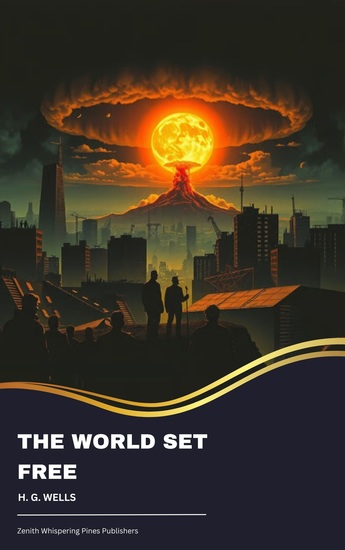
The World Set Free - cover

The World Set Free

Anonym

Verlag: Zenith Whispering Pines Publishers

  • 0
  • 0
  • 0

Beschreibung

In 1914, H. G. Wells wrote about a world consumed by atomic fire. It wasn't fiction—it was prophecy.

The World Set Free is a startlingly relevant novel that documents a future global conflict ignited by the invention of ceaseless, chain-reacting atomic bombs (coined "atom bombs" by Wells himself). H. G. Wells, the greatest futurist of his time, forces you to confront the terrifying destructive power of science unleashed. But the novel is not just a tale of war. After the devastation, humanity rises from the ashes, establishing a new, enlightened World Government and achieving a true utopian society.

This novel is a powerful blend of military science fiction, philosophical debate, and hopeful social engineering. It is one of the most historically significant pieces of speculative fiction ever written, influencing scientists like Leo Szilard in the development of real atomic weaponry.

Discover the novel that predicted the future of warfare and imagined the ultimate price of peace. Click "Buy Now" to instantly download this prophetic classic and explore Wells's vision for a world set free.
Verfügbar seit: 09.12.2025.
Drucklänge: 170 Seiten.

Weitere Bücher, die Sie mögen werden

  • Vision of Purgatory The - The Divine Comedy 2 (Unabridged) - cover

    Vision of Purgatory The - The...

    Dante Alighieri

    • 0
    • 0
    • 0
    Purgatory is the second part of Dante's Divine Comedy, following the Inferno, and preceding the Paradiso. The poem was written in the early 14th century. It is an allegory telling of the climb of Dante up the Mount of Purgatory, guided by the Roman poet Virgil, except for the last four cantos at which point Beatrice takes over as Dante's guide.
    Zum Buch
  • Blue & Green - From their pens to your ears genius in every story - cover

    Blue & Green - From their pens...

    Virginia Woolf

    • 0
    • 0
    • 0
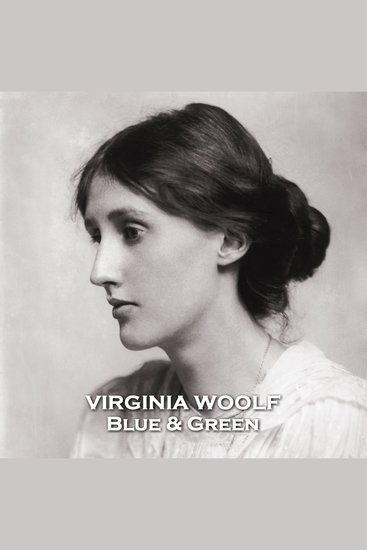
    Adeline Virginia Woolf was born on the 25th January 1882 in South Kensington in London. 
    Although lauded as a founder of modernist writing with such classics as ‘Orlando’, ‘Mrs Dalloway’ and ‘To the Lighthouse’ and, of course, many classic short stories, her background is filled with elements of tragedy that she somehow overcame to become such a revered writer.   Her mother died when she was 13, her half-sister Stella two years later and with it her first of several nervous breakdowns.  Appallingly it was later found that three of her half-brothers had sexually abused her so darkness must have seemed ever present.   
    She began writing professionally at age 20 but her father’s death two years later brought a complete mental collapse and she was briefly institutionalised.  Somehow she found within herself a literary career and with it great innovations in writing; she was a pioneer of “stream of consciousness”.    
    Her tight circle of friends were the founders of the Bloomsbury Group, a movement whose legacy still influences across the arts and society in many way to this day.   
    Whilst the dark periods continued to interrupt her emotional state her rate of work never ceased.  Until, on 28th March 1941, Woolf put on her overcoat, filled up its pockets with stones, and walked into the River Ouse, in Lewes, East Sussex and drowned herself.  Her body was not recovered until the 18th April.  She was 59. 
    She left behind a note which read in part “Dearest, I feel certain that I am going mad again.  I feel we can't go through another of those terrible times.  And I shan't recover this time.  I begin to hear voices, and I can't concentrate.  So I am doing what seems the best thing to do”.
    Zum Buch
  • Grisha - cover

    Grisha

    Anton Pavlovich Chekhov

    • 0
    • 0
    • 0
    Short story about a little boy who learns how to perceive the world.
    Zum Buch
  • Effi Briest in simple language - based on plain language - cover

    Effi Briest in simple language -...

    Theodor Fontane

    • 0
    • 0
    • 0
    Theodor Fontane's best-known novel is published in simple language for the first time.Theodor Fontane's best-known novel is published in simple language for the first time. It largely complies with the ISO 24495-1:2023 plain language standard. We have also largely adapted it for plain language.The content is also typographically designed to be particularlyreader-friendly. The book is suitable for readers with limited readingability, English as a second language or with cognitive impairments.This means that as many people as possible can enjoy readingand understanding one of Germany's most famous novels.aibo publishing produces the World Literature series in simple and plain language. The first publications generated a media response across Europe, including in the FAZ and The Times London, and, according to the NZZ, triggered a "culture war"."Effi Briest" is about love and freedom. A young woman is married at an early age. She is torn between her feelings and the strict rules of society. Her curiosity and zest for life are her destiny. She is caught between two men. They fight a duel. This is no longer in keeping with the times. But they don't know better.The novel is set in 19th century Germany. It can be compared to the Russian novel "Anna Karenina" or the French "Madame Bovary". "Effi Briest" became world-famous and was often made into a film. Theodor Fontane is considered a representative of poetic realism.
    Zum Buch
  • A Broken Trust - From their pens to your ears genius in every story - cover

    A Broken Trust - From their pens...

    Elizabeth Corbett

    • 0
    • 0
    • 0
    Elizabeth Burgoyne Corbett was born on the 16th August 1846 at Standishgate, near Wigan. 
    After a good education she worked as a journalist for the Newcastle Daily Chronicle and went on to become a widespread and popular writer of adventure and society novels. 
    As a feminist writer it is a little bizarre that she published as Mrs George Corbett.  Her most ardent feminist work was ‘New Amazonia: A Foretaste of the Future,’ though other of her works were also similarly themed and dealt with one of the great issues of the day in Victorian society. 
    She married George Corbett in Sheffield in 1868.  They went on to have 4 children, of which only 3 survived. 
    As a writer she was not overly prolific but was perhaps most admired for her female detectives.  During her literary career Detective books were all the rage and authors of both sexes attempted to bring new and unusual angles of characters and narratives before the voracious public.   
    Corbett’s first was in a collection of short stories ‘Adventures of a Lady Detective featuring Dora Bell'.  A later novel introduced a further detective in the guise of Annie Cory. 
    Elizabeth Corbett died on in 1930.
    Zum Buch
  • A Christmas Tree - cover

    A Christmas Tree

    Charles Dickens

    • 0
    • 0
    • 0
    Charles John Huffam Dickens (7 February 1812 – 9 June 1870) was an English writer and social critic. He created some of the world's best-known fictional characters and is regarded as the greatest novelist of the Victorian era. His works enjoyed unprecedented popularity during his lifetime, and by the twentieth century critics and scholars had recognised him as a literary genius. His novels and short stories enjoy lasting popularity.
    I have been looking on, this evening, at a merry company of children assembled round that pretty German toy, a Christmas Tree. The tree was planted in the middle of a great round table, and towered high above their heads. It was brilliantly lighted by a multitude of little tapers; and everywhere sparkled and glittered with bright objects. There were rosy–cheeked dolls, hiding behind the green leaves; and there were real watches (with movable hands, at least, and an endless capacity of being wound up) dangling from innumerable twigs; there were French–polished tables, chairs, bedsteads, wardrobes, eight–day clocks, and various other articles of domestic furniture (wonderfully made, in tin, at Wolverhampton), perched among the boughs, as if in preparation for some fairy housekeeping; there were jolly, broad–faced little men, much more agreeable in appearance than many real men—and no wonder, for their heads took off, and showed them to be full of sugar–plums; there were fiddles and drums; there were tambourines, books, work–boxes, paint–boxes, sweetmeat–boxes, peep–show boxes, and all kinds of boxes; there were trinkets for the elder girls, far brighter than any grown–up gold and jewels; there were baskets and pincushions in all devices; there were guns, swords, and banners; there were witches standing in enchanted rings of pasteboard, to tell fortunes; there were teetotums, humming–tops, needle–cases, pen–wipers, smelling–bottles, conversation–cards, bouquet–holders; real fruit, made artificially dazzling with gold leaf; imitation apples, pears, and walnuts, crammed with surprises; in short, as a pretty child, before me, delightedly whispered to another pretty child, her bosom friend, “There was everything, and more.”
    Zum Buch