The Novel That Changed the World.
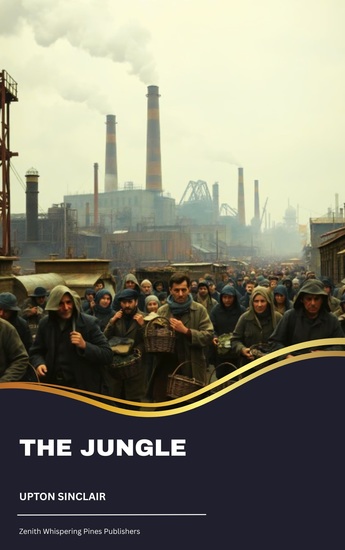
Experience the raw, unflinching power of Upton Sinclair's masterpiece, The Jungle. Originally intended to expose the brutal conditions faced by immigrants in Chicago's Stockyards, this "muckraking" classic instead ignited a national firestorm over food safety, directly leading to the passage of the Pure Food and Drug Act.
Follow the heartbreaking journey of Jurgis Rudkus, a Lithuanian immigrant who arrives in America full of hope, only to be crushed by the industrial machine of the meatpacking district. Sinclair paints a vivid, terrifying portrait of systemic corruption, poverty, and the hazardous realities of early 20th-century labor.
More than just a historical document, The Jungle remains a gripping and essential work of social justice literature. It is a profound exploration of the American Dream turned nightmare and a testament to the power of a single book to transform a society.
Bear witness to the story that demanded justice. Buy "The Jungle" today and own a piece of literary and social history.
Hello Kids and Parents. This is a box set of the 3-letter words book and 4-letter words book. Here is your chance to have a set of two! Get both of these great books together at once! In the lessons attached, we have over 720 3 and 4-letter words and sentences that will help sharpen your child’s thinking skills and help you and your child have some fun together. There are many different chapters on several subjects including Words to do with Animals and Words that start with T. As you work thru this audiobook, you will be asked to spell the word, then given the word used in a sentence. The word will then be repeated, followed by a pause where you have time to work out the spelling on your own before you are given the correct spelling of theword. Then it’s on to the next!Sharpen your skills and have fun figuring out how many more 3 and 4 letter words you can find than I did! Enjoy, and Let’s get started!!
Enduring Hope: Ethnographic Insights into Long-Term Racial Justice Advocacy
Many White Christians feel convicted when they hear of racial injustice but aren't sure what they can do. They often become overwhelmed by deep divisions, conflicting priorities, and historical burdens. They need a clearer vision for engagement with racial justice and reconciliation that goes beyond easy answers or simplistic optimism. Isn't there anyone who has found a way forward?
Anthropologist Christine Jeske has studied precisely this question. Her one-of-a-kind research started by asking people of color about their work and experience with White advocates of racial justice. She then studied the postures, ideas, and actions of those they recommended as positive examples.
In Racial Justice for the Long Haul, Jeske presents her findings on what makes for an effective, enduring approach, revealing shared threads in the lives of White Christians who have faithfully embraced the call to advocate for justice. By abandoning simplistic answers and confronting the depths of suffering and injustice, they discover a bold way of hope that perseveres. This book
- features a unique methodology of interviews with Christian leaders of color and White advocates
- makes qualitative ethnographic research accessible, and
- provides concrete examples of how White Christians can grow—and persist—in working for racial justice.
This book invites readers to engage deeply, reflect thoughtfully, and grow authentically as allies in the work of racial justice. White Christians must learn the nature of true hope as they encounter the depths of injustice and of lament—and of grace. Racial Justice for the Long Haul offers the clarity, inspiration, and tools needed to persevere in the pursuit of a more just world.
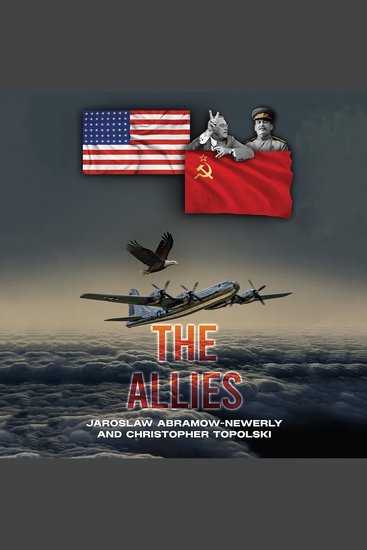
This book lay almost half a century at the bottom of an old computer before it was published. At the time, it was considered politically ‘inappropriate’ because it was too ‘anti-Russian.’ It was written in America by two political émigrés, refugees from the communist part of the world, who knew Russia as it really is and always has been, even during World War II, when it pretended to be a faithful ally of the United States.
American pilots, crew members of a B 29 bomber, are hit by anti-aircraft fire during a reconnaissance flight over Japan. They make an emergency landing in USSR territory. It would seem that they are safe on the lands of an ally, but the reality turned out to be frighteningly different.
Although this book is historical fiction and its characters are invented, they are woven into real historical events related to the Manhattan Project infiltrated from within by Soviet spies. During Gorbachev’s ‘thaw,’ Stalin was forgotten, and Russia was to be ‘an example and model of
democracy’ from then on. Even then, this book was supposed to be a warning; now it is allmost a wake-up call. Today’s Russia, waging a criminal, aggressive war against Ukraine, Russia of Vladimir Putin, with its troll farms, armed green men, murdering disobedient citizens in labor camps, poses an even greater threat to the entire free world.
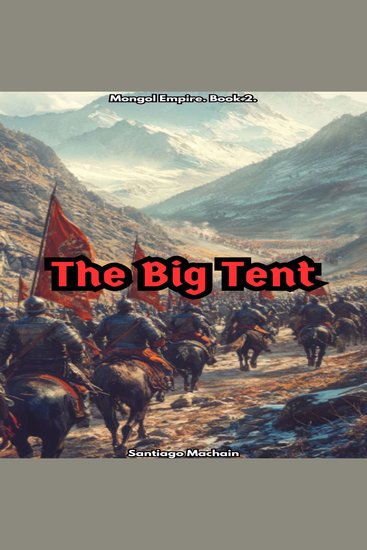
This book reveals how a nomadic empire engineered the most ambitious peace of the medieval world—and what it cost to keep it. From the relay-station highways of the yam to the cosmopolitan capitals of Dadu, Tabriz, and Sarai, this volume shows how the Mongols turned conquest into governance, revived the Silk Roads, and moved people, ideas, and technologies at unprecedented speed. Readers meet rulers like Ögedei and Khubilai, merchants underwriting caravans with paper money, monks and qadis negotiating pluralism, and engineers dredging canals to feed cities. Across chapters on law, daily life, diplomacy, and long-distance trade, the book reconstructs a functioning imperial system—bold, pragmatic, and often surprisingly humane—before charting the stresses that strained it by the late 13th century: fiscal overreach, environmental shocks, regional rivalries, and administrative fatigue. Grounded in vivid scenes and careful analysis, this is a sweeping, accessible history of how the Mongol order worked on the ground—and why it began to creak even as it transformed Eurasia.
What does it mean to belong?
Across oceans and centuries, this sweeping narrative shuttles between the corridors of the Colonial Office in London, the contested streets of Durban, and the changing power dynamics within the British Raj.
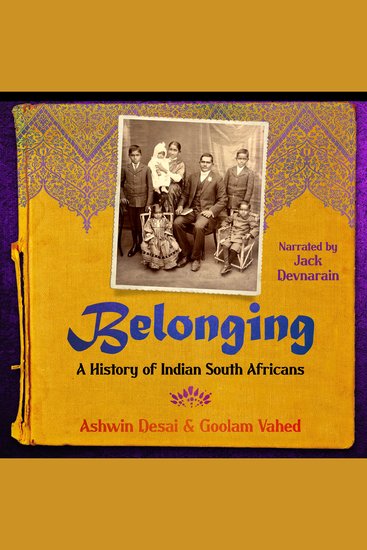
The first boatload of indentured Indians arrived in Natal in 1860. Thousands were to follow. In haunting detail, the book captures the plight of these labourers as well as the vicious onslaught faced by the merchant class for daring to outpace their colonial rivals. At its core are the untold struggles of Indian South Africans as they confront the ever-present threat of repatriation.
Sensitive to shifting political terrains, the book weaves together seismic events – the independence of India, the coming of apartheid and the threat once more of mass expulsions – with the texture of everyday life. The granting of citizenship in 1961 is accompanied by mass relocations as the Group Areas Act rips communities from their roots. Yet, out of this despair, barren townships on the edges of cities are turned into places of hope.
In the final chapters, the fall of apartheid offers a moment of transcendence. Yet it also asks: what does it mean, at last, to belong? It is a fascinating story of the global and the local, of resistance and collaboration, and undefeated optimism. This is a book for anyone who has ever sought a place to call home.
Over the course of its history, England has engaged in an uncountable number of battles, but a select few have been celebrated like the Battle of Trafalgar, one of the most important naval battles in history. Before the battle, Napoleon still harbored dreams of sailing an invasion force across the English Channel and subduing England, but that would be dashed on October 21, 1805 by a British fleet that was outnumbered and outgunned.
Napoleon's Russian adventure gutted his veteran army, depriving him of the majority of his finest and most loyal soldiers. Those who remained formed the hard core of his new armies, but the Russian fiasco damaged their health and embittered their previously unquestioning loyalty. Napoleon raised vast new armies, but circumstances compelled him to fill the ranks with raw recruits, whose fighting skills did not equal their undoubted bravery and whose dedication to the Napoleonic cause was shaky, and in many cases due solely to coercion. The tough, experienced, faithful veteran found himself outnumbered by unwilling, sketchily trained amateurs.
These factors set the stage for the second setback, which essentially sealed the fate of Napoleon's empire. The four-day Battle of Leipzig in October 1813, romantically but accurately dubbed the "Battle of the Nations," proved the decisive encounter of the War of the Sixth Coalition and essentially determined the course the Napoleonic Wars took from that moment forward.
Waterloo is the most famous battle in modern history if not all of history, and appropriately so. Gathering an army of 100,000 men, Napoleon marched into what is now Belgium, intent on driving his force between the advancing British army under the Duke of Wellington and the Prussian forces under Marshal Blucher. It was the kind of daring strategy that only Napoleon could pull off, as he had at places like Jena and Austerlitz.
Ihr Account wird momentan auf einem anderen Gerät benutzt.
Es ist bereits eine Sitzung auf einem anderen Gerät geöffnet.
Abmelden
Erneut verbinden
Ihr Account wird momentan auf einem anderen Gerät benutzt.
Um darauf zugreifen zu können, müssen die Berechtigungen und obligatorischen Richtlinien (markiert mit *) überprüft und akzeptiert werden.
Wenn Sie Hilfe oder weitere Informationen benötigen, schreiben Sie an support@24symbols.com
Akzeptieren
Ihr Account wird momentan auf einem anderen Gerät benutzt.
OK
Bestätigungs-E-Mail noch einmal schicken
Ihr Account wird momentan auf einem anderen Gerät benutzt.
Wir haben versucht, Ihr Abo abzubuchen, aber es ist uns nicht gelungen. Das teilt uns Ihre Bank/Karte mit:
Wenn Sie weiterlesen möchten, müssen Sie sich möglicherweise an Ihre Bank wenden oder Ihre Zahlungsinformationen hier ändern:
Ich möchte meine Karte aktualisieren!
Haben Sie Fragen? Schreiben Sie uns an support@24symbols.com und wir werden Ihnen weiterhelfen.
Cookies helfen uns bei der Bereitstellung unserer Dienste. Durch die Nutzung unserer Dienste erklären Sie sich damit einverstanden, dass wir Cookies setzen.Mehr erfahren