Begleiten Sie uns auf eine literarische Weltreise!
Buch zum Bücherregal hinzufügen
Grey
Einen neuen Kommentar schreiben Default profile 50px
Grey
Jetzt das ganze Buch im Abo oder die ersten Seiten gratis lesen!
All characters reduced
The Brothers Karamazov - cover

The Brothers Karamazov

Anonym

Verlag: Seven Books

  • 0
  • 0
  • 0

Beschreibung

The Brothers Karamazov, also translated as The Karamazov Brothers, is the last novel by Russian author Fyodor Dostoevsky. Dostoevsky spent nearly two years writing The Brothers Karamazov, which was published as a serial in The Russian Messenger from January 1879 to November 1880. Dostoevsky died less than four months after its publication. It has been acclaimed as one of the supreme achievements in world literature.

Set in 19th-century Russia, The Brothers Karamazov is a passionate philosophical novel that discusses questions of God, free will, and morality. It has also been described as a theological drama dealing with problems of faith, doubt, and reason in the context of a modernizing Russia, with a plot that revolves around the subject of patricide. Dostoevsky composed much of the novel in Staraya Russa, which inspired the main setting.
Verfügbar seit: 12.12.2024.
Drucklänge: 750 Seiten.

Weitere Bücher, die Sie mögen werden

  • In a German Pension - 13 Stories - cover

    In a German Pension - 13 Stories

    Katherine Mansfield

    • 0
    • 0
    • 0
    'One cannot go about in a German pension without coming to the conclusion that life is very full of mysterious things.'
    
    First published in 1911, In a German Pension is the first collection of short stories from one of the modernist masters of the form, Katherine Mansfield.
    
    Written during Mansfield's stay in Bad Wörishofen after her unfortunate marriage and subsequent miscarriage, the stories in this emotionally acute collection offer sharp, satirical observations of German society, noting everything from proper etiquette to gender role expectations and the repression of women. Taking place within a boarding house, each story centres around a semi-autobiographical female figure. Mansfield expertly explores themes such as cultural misunderstandings and the absurdity of societal conventions, all told through what would become her trademark dry humour and nuanced critique. This audiobook edition is brilliantly brought to life by Eve Karpf.
    Katherine Mansfield (1888 – 1923) was a New Zealand writer and critic. She was an important figurehead of the modernist movement, befriending the likes of Virginia Woolf and D. H. Lawrence amongst others. Her works regularly explored themes such as sexuality, religion and existentialism, and have been translated into twenty-five different languages across the world.
    Zum Buch
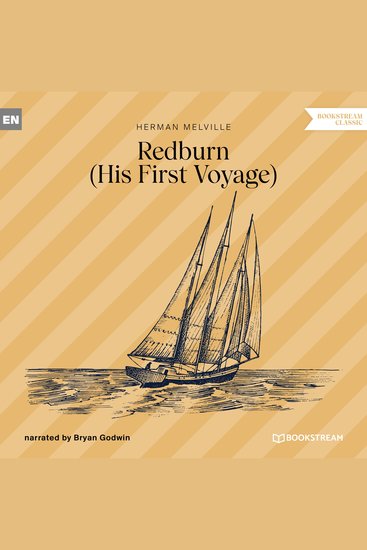
  • Redburn - His First Voyage (Unabridged) - cover

    Redburn - His First Voyage...

    Herman Melville

    • 0
    • 0
    • 0
    Wellingborough Redburn is a fifteen-year-old from the state of New York, with only one dream to run away to sea. However, when he does fulfil this long-held fantasy, he quickly finds that reality as a cabin boy is far harsher than he ever imagined. Mocked by the crew on board the Highlander for his weakness and bullied by the vicious and merciless sailor Jackson, Wellingborough must struggle to endure the long journey from New York to Liverpool.
    Zum Buch
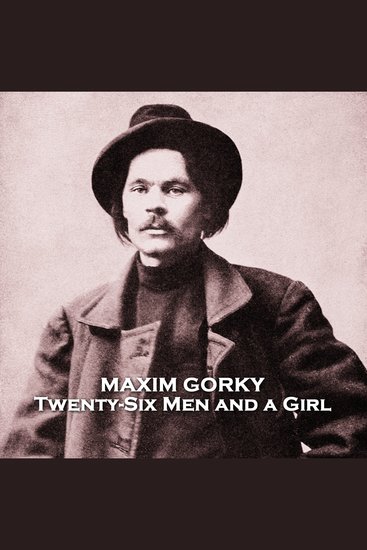
  • Twenty-Six Men and a Girl - From their pens to your ears genius in every story - cover

    Twenty-Six Men and a Girl - From...

    Maxim Gorky

    • 0
    • 0
    • 0
    Alexei Maximovich Peshkov was born on 28th March 1868, in Nizhny Novgorod, Russia. 
    Better known as Maxim Gorky he was orphaned at 11 and ran away from home at 12.  At 19 he had already attempted suicide and thereafter travelled, by foot, across the Russian Empire for 5 years. 
    His first book ‘Essays & Stories’ in 1898 was a sensation and so began a long career as an author of short stories, novels and plays.  Gorky saw writing as a moral and political act that would help to change the unjust world around him.  He was an ardent early advocate of the emerging Marxist movement and publicly opposed the Tsarist regime leading several times to his arrest.  
    In 1904 he began his own theatre but the censor banned every play and Gorky was forced to abandon the project. 
    But Gorky was a financially successful author, editor, and playwright and gave monies to political parties as well as for civil rights and social reform.  The brutal shooting of workers, which set in motion the Revolution of 1905, pushed Gorky more decisively toward radical solutions.  
    In 1906 he went to the United States to raise funds for the Bolsheviks. Those experiences including a scandal over travelling with his lover and not his wife deepened his contempt for the ‘bourgeois soul.’ 
    Gorky now moved to Capri in Italy, both for health reasons and to escape the increasingly repressive times in Russia.  
    An amnesty for the 300th anniversary of the Romanov dynasty saw him return to Russia in 1914. His politics remained close to the Bolshevik cause.  But soon, after the 1918 revolution, his essays referred to Lenin as a tyrant for his senseless arrests and repression.  He was soon appealing to the outside world for food aid after the catastrophic crop failure. 
    In October 1921 Gorky returned to Italy, now in Fascist hands, and settled in Sorrento until 1932.  His health worsened with the onset of tuberculosis. 
    He wrote several successful books there but now decided to find an understanding with the communist regime. Stalin invited him home and his return was hailed as a major propaganda victory.  He was decorated with the Order of Lenin, and a province, a park, and various streets re-named in his honour. 
    But he had his faults too.  In 1933, Gorky co-edited a book on the White Sea-Baltic Canal and denied even a single prisoner died during its construction, but thousands had. As well, knowing that some Nazis were homosexual, a phrase was attributed to him that said ‘exterminate all homosexuals and fascism will vanish’.  Although he was himself was quoting another he was decidedly homophobic. 
    With the increase of Stalinist repression in 1935 Gorky was placed under unannounced house arrest. 
    Maxim Gorky died on the 18th June 1936 from pneumonia.  He was 68. 
    Stalin and Molotov were among those who carried Gorky's urn of ashes at his funeral.
    Zum Buch
  • The Mantle - cover

    The Mantle

    Nikolai Gogol

    • 0
    • 0
    • 0
    With his sense of humor and ability to observe, Nikolai Gogol presents the world with stories of little people: the weak and fragile people who try to hold on to life in the gloomy cities of Russia. "The Mantle", which is listed among his masterpieces, describes how Russian bureaucracy turns everyone into a ghost of each other. It tells the tragicomic story of a poor low-ranking official named Akakiy Akakiyevich Bashmachkin, a faint character living on the margins of society who spends all his time diligently copying documents. Drawn into bureaucratic mechanisms of modern life, humiliated, and despised, hе finds solace in his fondest dream: a mantle that will protect him from the cold in the winter. This humble dream, however, will cost him way too much and will turn his life upside down...Adapted into a variety of stage and film interpretations, the story is a major milestone in Russian literature, as expressed by in a quote often attributed to Fyodor Dostoyevsky: "We have all come out from under Gogol's Mantle".
    Zum Buch
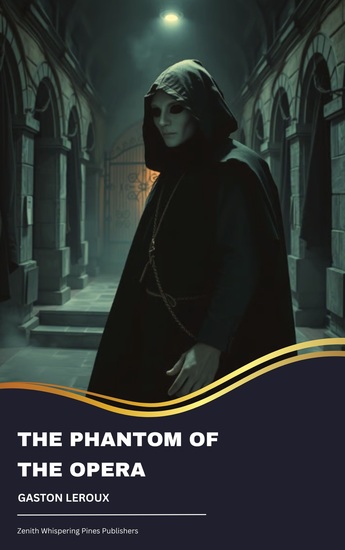
  • The Phantom of the Opera - cover

    The Phantom of the Opera

    Gaston Leroux

    • 1
    • 0
    • 0
    A voice in the darkness. A masked genius in the shadows. A love twisted into obsession.
    Deep beneath the Paris Opera House, a brilliant but tormented figure watches from the catacombs—teaching, manipulating, and haunting the young soprano Christine Daaé. As his passion grows and his jealousy turns dangerous, the opera becomes a stage for secrets, deception, and a terrifying ultimatum that threatens everyone above.
    
    Praised as "one of the most captivating gothic mysteries ever written," Gaston Leroux's classic blends romance, suspense, and haunting atmosphere into a story that has enthralled readers for over a century. Its unforgettable characters and emotional tension continue to inspire countless adaptations.
    
    If you crave dark romance, dramatic twists, and a mystery wrapped in music and shadow, this timeless novel will hold you spellbound.
    
    Open the book—and descend into the labyrinth where beauty meets terror.
    Zum Buch
  • 20000 Leagues Under the Sea - cover

    20000 Leagues Under the Sea

    Jules Verne

    • 0
    • 0
    • 0
    tbc
    Zum Buch