Begleiten Sie uns auf eine literarische Weltreise!
Buch zum Bücherregal hinzufügen
Grey
Einen neuen Kommentar schreiben Default profile 50px
Grey
Jetzt das ganze Buch im Abo oder die ersten Seiten gratis lesen!
All characters reduced
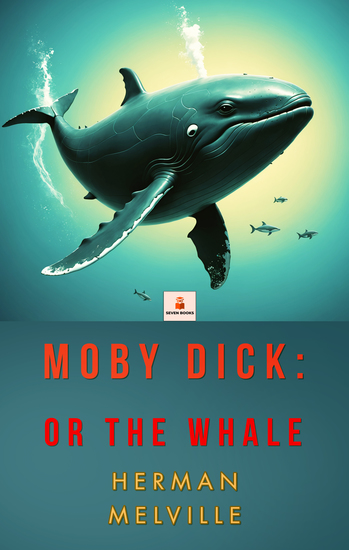
Moby Dick - "Or The Whale" - cover

Moby Dick - "Or The Whale"

Anonym

Verlag: Seven Books

  • 0
  • 0
  • 0

Beschreibung

Moby-Dick; or, The Whale is an 1851 epic novel by American writer Herman Melville. The book is centered on the sailor Ishmael's narrative of the maniacal quest of Ahab, captain of the whaling ship Pequod, for vengeance against Moby Dick, the giant white sperm whale that bit off his leg on the ship's previous voyage. A contribution to the literature of the American Renaissance, Moby-Dick was published to mixed reviews, was a commercial failure, and was out of print at the time of the author's death in 1891. Its reputation as a Great American Novel was established only in the 20th century, after the 1919 centennial of its author's birth. William Faulkner said he wished he had written the book himself, and D. H. Lawrence called it "one of the strangest and most wonderful books in the world" and "the greatest book of the sea ever written". Its opening sentence, "Call me Ishmael", is among world literature's most famous.
Verfügbar seit: 11.12.2024.
Drucklänge: 750 Seiten.

Weitere Bücher, die Sie mögen werden

  • War and Peace - cover

    War and Peace

    Leo Tolstoy

    • 0
    • 0
    • 0
    War and Peace is a literary work by Russian author Leo Tolstoy. Set during the Napoleonic Wars, the work mixes fictional narrative with chapters discussing history and philosophy. First published serially beginning in 1865, the work was rewritten and published in its entirety in 1869. It is regarded as Tolstoy's finest literary achievement and remains an internationally praised classic of world literature.
    The work chronicles the Napoleonic era within Russia, notably detailing the French invasion of Russia and its aftermath. The book highlights the impact of Napoleon on Tsarist society through five interlocking narratives following different Russian aristocratic families. Portions of an earlier version, titled The Year 1805, were serialized in The Russian Messenger from 1865 to 1867 before the novel was published in its entirety in 1869.
    Tolstoy said that the best Russian literature does not conform to standards and hence hesitated to classify War and Peace, saying it is "not a novel, even less is it a poem, and still less a historical chronicle". Large sections, especially the later chapters, are philosophical discussions rather than narrative. He regarded Anna Karenina as his first true novel.
    Zum Buch
  • Shades A Phantasy - Ukranian born Korolenko creates a fictional dialogue of Socrates to examine lifes biggest questions - cover

    Shades A Phantasy - Ukranian...

    Vladimir Korolenko

    • 0
    • 0
    • 0
    Vladimir Galaktionovich Korolenko was born in Zhytomyr, Ukraine, then part of the Russian Empire on 27th July 1853. 
     
    His father died when he was 13 and life was then often struck with bouts of poverty, which resulted in his education being somewhat erratic.   A spell in exile at 23 was followed by another as the politics of the times opposed his volatile but heart-felt passions. 
     
    Writing was also coming to the fore and in 1879 his debut short story telling of a young Narodnik searching for social and spiritual identity, was published. 
     
    In 1881, Korolenko refused to swear allegiance to the new Russian Tsar and was again exiled, this time much farther afield.  He spent the next three years doing manual work, but took time to study local customs and history.  These impressions in exile provided rich material for his writings. 
     
    In 1885 he was allowed to settle in Nizhny, where again he repeatedly questioned the authorities.  That same year ‘Makar's Dream’ established his literary reputation and was part of his first collection ‘Sketches and Stories’, the following year. 
     
    In the early 1890’s when famine struck Central Russia, he went to work on relief missions, collecting donations, supervising the delivery and distribution of food, opening 45 free canteens, all this while writing the graphic reports that would later be published as ‘In the Year of Famine’ in 1893. 
     
    By 1896 despite some psychological disorders, he was well regarded amongst Russian writers and was even a member of the Russian Academy of Sciences.  Throughout his writing career Korolenko was a staunch advocate of human rights, putting that sacred activity above what he called his 'part-time-writing'. 
     
    In the Revolutionary year of 1905, under his editorship, Russkoye Bogatstvo published the Manifest by the Petersburg Soviet of the Workers' deputies. Korolenko was now repeatedly harassed by the authorities, had his flat raided many times and materials confiscated. 
     
    As a lifetime opponent of Tsarism, he guardedly welcomed the Revolution of 1917.  Once the nature of Bolshevism was established, he soon started to criticize it. During the Russian Civil War that ensued, he condemned both the Red Terror and the White Terror.  
     
    Despite suffering from a progressive heart disorder, he collected food packages for children in famine-stricken Moscow and Petrograd as well as organised orphanages and shelters for the homeless.  
     
    Vladimir Korolenko died in Poltava, Ukraine, of the complications of pneumonia on 25th December 1921.  He was 68. 
     
    In this story Korolenko invokes the characters of Socrates and Elpidias who, after their deaths, involve themselves in a debate on God.  This is a tour-de-force of conception and execution.
    Zum Buch

  • War and Peace - Book 1: 1805 (Unabridged) - cover

    War and Peace - Book 1: 1805...

    Leo Tolstoy

    • 0
    • 0
    • 0
    War and Peace is a literary work mixed with chapters on history and philosophy by the Russian author Leo Tolstoy. It was first published serially, then published in its entirety in 1869. It is regarded as one of Tolstoy's finest literary achievements and remains an internationally praised classic of world literature.
    Book 1: 1805: "Well, Prince, so Genoa and Lucca are now just family estates of the Buonapartes. But I warn you, if you don't tell me that this means war, if you still try to defend the infamies and horrors perpetrated by that Antichrist I really believe he is Antichrist I will have nothing more to do with you and you are no longer my friend, no longer my 'faithful slave,' as you call yourself! But how do you do? I see I have frightened you sit down and tell me all the news."
    Zum Buch
  • The Autobiography of an Ex-Colored Man - cover

    The Autobiography of an...

    James Weldon Johnson

    • 0
    • 0
    • 0
    'I was not white enough to be white, nor black enough to be black.'
    
    First published anonymously in 1912, The Autobiography of an Ex-Colored Man became one of James Weldon Johnson's most famous works, and remains a testament to the lives and experiences of both Johnson and his peers.
    
    Although primarily a work of fiction, The Autobiography of an Ex-Colored Man offers many parallels with the life of Johnson himself. Set shortly after the Civil War, this powerful fictional memoir recounts the life of a biracial man, grappling with questions around identity, race and justice. Born to a Black mother and white father, our protagonist moves through different social worlds – from Black communities to elite white circles – witnessing heinous crimes against Black people and having to make the painful decision to 'pass' as white to keep safe. Deeply poignant and revolutionary for its time, The Autobiography of an Ex-Colored Man cements itself as a classic of American literature.
    James Weldon Johnson (1871 – 1938) was an American writer and activist. A dedicated campaigner during the civil rights movement, he was a leader of the National Association for the Advancement of Coloured People. His literary work is famed for championing the poems and spirituals of Black culture, and is still widely read to this day.
    Zum Buch
  • Living - cover

    Living

    Henry Green

    • 0
    • 0
    • 0
    Living immerses us in the daily lives of a group of ordinary people working in a post-WWI iron factory.
    
    Through fragmented perspectives, Green captures the beauty and chaos of everyday existence—love, loss, and the fleeting moments of joy amidst routine. As the characters navigate their lives, the line between their inner worlds and external realities blurs, revealing the quiet yet profound battles that define the human experience.
    Zum Buch
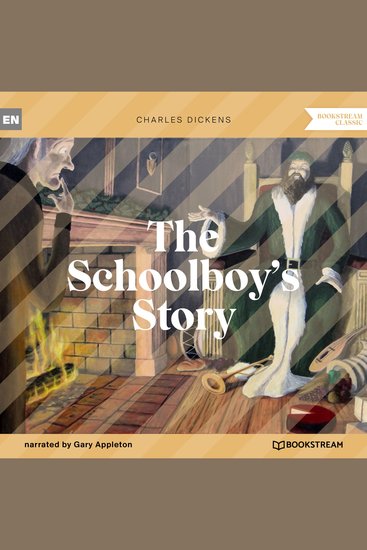
  • Schoolboy's Story The (Unabridged) - cover

    Schoolboy's Story The (Unabridged)

    Charles Dickens

    • 0
    • 0
    • 0
    The Schoolboy's Story is a short stories by Charles Dickens. Charles John Huffam Dickens (7 February 1812 - 9 June 1870) was an English writer and social critic. He created some of the world's most memorable fictional characters and is generally regarded as the greatest novelist of the Victorian period. During his life, his works enjoyed unprecedented fame, and by the twentieth century his literary genius was broadly acknowledged by critics and scholars. His novels and short stories continue to be widely popular. Born in Portsmouth, England, Dickens was forced to leave school to work in a factory when his father was thrown into debtors' prison.
    Being rather young at present--I am getting on in years, but still I am rather young--I have no particular adventures of my own to fall back upon. It wouldn't much interest anybody here, I suppose, to know what a screw the Reverend is, or what a griffin SHE is, or how they do stick it into parents--particularly hair-cutting, and medical attendance. One of our fellows was charged in his half's account twelve and sixpence for two pills--tolerably profitable at six and threepence a-piece, I should think--and he never took them either, but put them up the sleeve of his jacket.
    Zum Buch