Join us on a literary world trip!
Add this book to bookshelf
Grey
Write a new comment Default profile 50px
Grey
Subscribe to read the full book or read the first pages for free!
All characters reduced
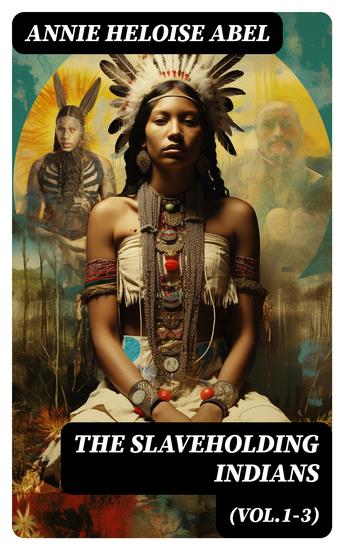
The Slaveholding Indians (Vol1-3) - Native Americans as Slaveholder as Participants in the Civil War & Under Reconstruction - cover

The Slaveholding Indians (Vol1-3) - Native Americans as Slaveholder as Participants in the Civil War & Under Reconstruction

Annie Heloise Abel

Publisher: DigiCat

  • 0
  • 0
  • 0

Summary

Annie Heloise Abel's monumental work, "The Slaveholding Indians" (Vol. 1-3), presents an exhaustive examination of the complex relationship between Native American tribes and the institution of slavery in the United States. Written in a narrative style that is both scholarly and engaging, Abel meticulously unveils the historical intricacies surrounding tribes such as the Cherokee, Choctaw, and Creek, who not only participated in slavery but also adapted their social structures to incorporate enslaved African Americans. Her research is anchored in primary sources, providing a nuanced perspective that challenges the oversimplified narratives prevalent in contemporary historiography regarding Indigenous peoples and American slavery. An influential historian, Abel's pioneering work arose from her commitment to amplifying marginalized voices in history. Born in 1871, she became a prominent figure in the early 20th-century academic landscape, at a time when the contributions of women and minority groups were often overlooked. Her deep understanding of American history and culture undoubtedly fueled her investigation, revealing the multidimensional identities of Native tribes that included both sovereignty and complicity in the institution of slavery. This groundbreaking trilogy is a must-read for anyone interested in American history, Indigenous studies, or the history of slavery. Abel's thorough analysis not only enriches our understanding of the complexities of race and culture but also invites readers to reconsider their preconceptions about Native American history. Her work remains an essential contribution to the field, illuminating a crucial chapter in the American historical narrative.
Available since: 11/13/2023.
Print length: 794 pages.

Other books that might interest you

  • Why We Click - The Emerging Science of Interpersonal Synchrony - cover

    Why We Click - The Emerging...

    Kate Murphy

    • 0
    • 0
    • 0
    Why do you immediately click with some people while others just as inexplicably turn you off? Do people emit vibes? Is it possible to read a room? Are bad habits contagious?This program is read by the author."Narrating her own work, [Kate] Murphy is certainly worthy of the listener's attention. She offers a sincere, passionate voice that is capable of delivering some hard truths about the current state of things while also showing the way toward a truly connected society." —AudioFile on You're Not Listening  Kate Murphy,  author of the international bestseller You’re Not Listening, answers these and other fascinating questions in Why We Click, the first book that explores the emerging science and outsize impact of interpersonal synchrony, the most consequential social dynamic most people have never heard of. Interpersonal synchrony is the seemingly magical, yet now scientifically documented, tendency of human beings to fall into rhythm and find resonance with one another.Not only do we subconsciously match one another’s movements, postures, facial expressions, and gestures; recent breakthroughs in technology have revealed we also sync up our heart rates, blood pressure, brainwaves, pupil dilation, and hormonal activity. The result is that emotions, moods, attitudes, and subsequent behaviors can be as infectious as any disease, and can have just as profound an impact on our health and well-being.Interweaving science, philosophy, literature, history, business management theory, pop-culture, and plenty of relatable, real world examples, Why We Click explains why being “in sync,” “in tune,” “in step,” and “on the same wavelength” are more than just turns of phrase. From the bedroom to the boardroom and beyond, Murphy reveals with characteristic curiosity, concision, and wit how our instinct to sync with others drives much of our behavior and how our deepest desires—to be known, admired, loved, and connected—are so often thwarted in modern life.A Macmillan Audio production from Celadon Books
    Show book
  • Europe without Borders - A History - cover

    Europe without Borders - A History

    Issac Stanley-Becker

    • 0
    • 0
    • 0
    Europe is a place of free movement among nations—or is it? The Schengen area, established in 1985 and today encompassing twenty-nine European countries, allows people, goods, and capital to cross borders without restraint. Schengen transformed European life, advancing both a democratic project of transnational citizenship and a neoliberal project of international free trade. But the right of free movement always excluded non-Europeans, especially migrants of color from former colonies of the Schengen states. In Europe without Borders, Isaac Stanley-Becker explores the contested creation of free movement in Schengen. 


    Schengen laid the groundwork for the making of a single market and the founding of the European Union. Yet its emergence is one of the great untold stories of modern European history, one hidden in archives long embargoed. Stanley-Becker is among the first to have access to records of the treatymaking and Europe without Borders offers a pathbreaking account of Schengen's creation. Stanley-Becker argues that Schengen gave a humanist cast to a market paradigm; but even in pairing the border crossing of human beings with the principles of free-market exchange, this vision of free movement was hedged by alarm about foreign migrants. Meanwhile, these migrants—the sans-papiers—saw in the promise of a borderless Europe only a neocolonial enterprise.
    Show book
  • Theaetetus - What Is Knowledge? – A Foundational Dialogue on Epistemology and Perception - cover

    Theaetetus - What Is Knowledge?...

    Plato, Tim Zengerink

    • 0
    • 0
    • 0
    What if knowledge was just a feeling—and not a fact? 
    Plato’s Theaetetus is a dynamic and challenging exploration of knowledge, perception, and belief. In this dialogue, Socrates meets Theaetetus, a bright youth, to examine what it really means to "know" something. Through probing questions and clever counterarguments, Socrates reveals the limits of perception, the pitfalls of assumption, and the elusive nature of certainty. 
    What you'll discover inside: 
    •	A Powerful Dialogue on Knowledge – Socratic reasoning that explores the foundations of thought 
    •	The Roots of Western Epistemology – Ideas that continue to influence how we understand truth 
    •	A Modern, Accessible Translation – Making classical wisdom engaging for today’s listeners 
    •	A Journey of Intellectual Exploration – An encounter with doubt that leads to deeper understanding 
    Perfect for listeners seeking intellectual stimulation and philosophical reflection, Theaetetus invites you to re-examine the way you see the world. Join Socrates on a quest to uncover the essence of knowledge.
    Show book
  • On Decline - Stagnation Nostalgia and Why Every Year is the Worst One Ever - cover

    On Decline - Stagnation...

    Andrew Potter

    • 0
    • 0
    • 0
    A Winnipeg Free Press Top Read of 2021
    		 
    What if David Bowie really was holding the fabric of the universe together?
    		 
    The death of David Bowie in January 2016 was a bad start to a year that got a lot worse: war in Syria, the Zika virus, terrorist attacks in Brussels and Nice, the Brexit vote—and the election of Donald Trump. The end-of-year wraps declared 2016 “the worst … ever.” Four even more troubling years later, the question of our apocalypse had devolved into a tired social media cliché. But when COVID-19 hit, journalist and professor of public policy Andrew Potter started to wonder: what if The End isn’t one big event, but a long series of smaller ones?
    		 
    In On Decline, Potter surveys the current problems and likely future of Western civilization (spoiler: it’s not great). Economic stagnation and the slowing of scientific innovation. Falling birth rates and environmental degradation. The devastating effects of cultural nostalgia and the havoc wreaked by social media on public discourse. Most acutely, the various failures of Western governments in their responses to the COVID-19 pandemic. If the legacy of the Enlightenment and its virtues—reason, logic, science, evidence—has run its course, how and why has it happened? And where do we go from here?
    Show book
  • Women Rising - cover

    Women Rising

    Megan Dalla-Camina

    • 0
    • 0
    • 0
    It’s time to create a future where feminine power and leadership is celebrated. It’s time for a radical awakening and a revolution. It’s time for women to rise. 
     
    In Women Rising, you’ll discover how to recognise and resist the very real forces of power that limit how you work and live as a woman. Are you tired of being asked to ‘lean in,’ fit in, perform and conform? The truth is that women today continue to be constrained by pervasive ideas about how we ‘should’ act and behave. 
     
    To break free, we need to understand the forces that limit our potential. Those forces are external and internal, without and within, and they sabotage the very success we work so hard for. In Women Rising, author and award-winning empowerment expert Megan Dalla-Camina shows you how to see and cut the invisible strings holding you back. 
     
    Women Rising unveils the 6 external paradoxes that impact how women lead and succeed. You’ll uncover how these power paradoxes affect our visibility, empowerment, confidence, success, motherhood and leadership. 
     
    Turning inward, you’ll discover how our internal narratives, the stories we tell ourselves, can also serve to keep us stuck. Women Rising unmasks 13 archetypes that keep us striving for impossible standards as a Perfectionist, an Overachiever, a Good Girl, a People Pleaser and more. 
     
    Finally, Women Rising illuminates the path forward. It shares real, practical tools and strategies that women everywhere can use to craft a future where we succeed on our own terms. Grounded in leadership experience from the world’s largest organisations, Megan Dalla-Camina’s hands-on toolkit shows you how to find your vision and purpose — and evolve as a confident, authentic leader. 
     
    It's time to rise and to step into your power. This guide will show you how.
    Show book
  • It's Our School It's Our Time - A Companion Guide to Whole-School Collaborative Decision-Making - cover

    It's Our School It's Our Time -...

    Geraldine Rowe

    • 0
    • 0
    • 0
    It's Our School, It's Our Time outlines a whole-school approach to teacher–pupil collaboration, illustrating how aspects of social inequality can be addressed by involvement in the school community and active participation in decision-making from an early age. The book presents insights into the psychological processes that are at work when pupils and teachers share decision-making, and how this can harness and increase motivation for teachers and pupils. 


    Combining both theory and examples of practice, this book provides clarity about the impact of collaborative decision-making and how it can help pupils to take ownership of their classrooms and promote greater cooperation and productivity. This book: 


    ● Draws on stories from Dr. Rowe's own study and experiences, and the accounts of other educators and researchers 


    ● Shows how teachers and school leaders have overcome common hurdles that those in conventional schools might encounter 


    ● Provides research-evidence and practical examples from real-life classrooms 


    This companion guide will help teachers to transform achievement, behavior, and motivation through greater collaboration with their pupils.
    Show book