Rejoignez-nous pour un voyage dans le monde des livres!
Ajouter ce livre à l'électronique
Grey
Ecrivez un nouveau commentaire Default profile 50px
Grey
Abonnez-vous pour lire le livre complet ou lisez les premières pages gratuitement!
All characters reduced
Heedless Hetty - cover

Heedless Hetty

Annette Lyster

Maison d'édition: Good Press

  • 0
  • 0
  • 0

Synopsis

In 'Heedless Hetty', Annette Lyster weaves a richly textured narrative that explores the tumultuous realities of early 20th-century life through the lens of its eponymous protagonist. With a keen eye for detail, Lyster employs a blend of lyrical prose and vivid imagery, encapsulating Hetty's chaotic journey as she grapples with societal expectations, personal ambitions, and the elusive nature of self-discovery. The novel is marked by its poignant exploration of themes such as gender, class, and the complexities of human relationships, situating it within a broader literary context of feminist literature that emerged in the wake of modernist shifts in storytelling and character development. Annette Lyster, a seasoned writer and scholar, draws upon her own experiences and the historical background of early 20th-century Europe to craft this compelling narrative. Her academic familiarity with feminist discourse and cultural history informs her nuanced portrayal of Hetty, allowing for a profound understanding of the societal constraints that shaped women's lives during this transformative period. Lyster's insights are illuminated by her dedication to amplifying underrepresented voices, which resonated deeply in her creation of Hetty's character. 'Heedless Hetty' is an essential read for those interested in the intersections of gender and identity within historical fiction. Lyster's engaging style and thought-provoking themes invite readers to reflect on the intricacies of autonomy and the societal pressures faced by women, making this novel a vital addition to contemporary discussions surrounding feminism and literature. You are encouraged to delve into Hetty's compelling world and engage with the questions it raises about personal freedom and societal constraints.
Disponible depuis: 02/03/2025.
Longueur d'impression: 145 pages.
D'autres livres qui pourraient vous intéresser

  • After the Funeral - From their pens to your ears genius in every story - cover

    After the Funeral - From their...

    Mary Butts

    • 0
    • 0
    • 0
    Mary Frances Butts was born on 13th December 1890 in Poole, Dorset. 
    Her early years were spent at Salterns, an 18th-century house overlooking Poole Harbour.  Sadly in 1905 her father died, and she was sent for boarding at St Leonard's school for girls in St Andrews. 
    Her mother remarried and, from 1909, Mary studied at Westfield College in London, and here, first became aware of her bisexual feelings.  She was sent down for organising a trip to Epsom races and only completed her degree in 1914 when she graduated from the London School of Economics.  By then Mary had become an admirer of the occultist Aleister Crowley and she was given a co-authorship credit on his ‘Magick (Book 4)’. 
    In 1916, she began the diary which would now detail her future life and be a constant reference point for her observations and her absorbing experiences. 
    During World War I, she was doing social work for the London County Council in Hackney Wick, and involved in a lesbian relationship.  Life changed after meeting the modernist poet, John Rodker and they married in 1918. 
    In 1921 she spent 3 months at Aleister Crowley's Abbey of Thelema in Sicily; she found the practices dreadful and also acquired a drug habit.  Mary now spent time writing in Dorset, including her celebrated book of short stories ‘Speed the Plough’ which saw fully develop her unique Modernist prose style. 
    Europe now beckoned and several years were spent in Paris befriending many artists and writing further extraordinary stories.   
    She was continually sought after by literary magazines and also published several short story collections as books. Although a Modernist writer she worked in other genres but is essentially only known for her short stories.  Mary was deeply committed to nature conservation and wrote several pamphlets attacking the growing pollution of the countryside. 
    In 1927, she divorced and the following year her novel ‘Armed with Madness’ was published.  A further marriage followed in 1930 and time was spent attempting to settle in London and Newcastle before setting up home on the western tip of Cornwall.  By 1934 the marriage had failed. 
    Mary Butts died on 5th March 1937, at the West Cornwall Hospital, Penzance, after an operation for a perforated gastric ulcer. She was 46.
    Voir livre
  • Confessions of a Thug - An Indian Strangler Tells His Life - cover

    Confessions of a Thug - An...

    Meadows Taylor

    • 0
    • 0
    • 0
    The confession of Ameer Ali, a professional strangler of the Thug brotherhood, taken down as testimony. Meadows Taylor served in the Nizam's police and interrogated real thugs; Queen Victoria had the sheets sent to her as they came from the press. This edition is bound with 54 plates of paintings, among them works by Edvard Munch, Agostino Brunias and Bhawani Das, dating from 1730 to 1919.
    Voir livre
  • The Old English Baron - cover

    The Old English Baron

    Clara Reeve

    • 0
    • 0
    • 0
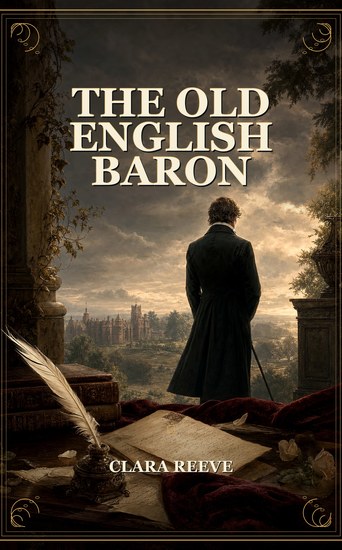
    The Old English Baron opens with Sir Phillip Harclay returning to England after years of foreign service to find his friend Arthur Lord Lovel dead, and the family castle sold to Baron Fitz-Owen. Among the baron's children, Harclay takes notice of the adopted son Edmund, a peasant from the nearby village. The knight feels an immediate connection with the child and offers to adopt him as his own. From there, the tale continues with a mix of adventure, mystery, romance, and the supernatural, telling of the tragic fate of the Lovel family. The Old English Baron is an influential early Gothic novel. It was first published anonymously in 1777 as The Champion of Virtue , and a year later was republished under its current title and Reeve's name. Written as an offspring of Walpole's The Castle of Otranto , the novel follows a similar plot. It retains some of the ghostly tropes that define the genre, but avoids the more fantastical elements of its spiritual predecessor, to achieve Reeve's stated goal of "uniting the most attractive and interesting circumstances of the ancient romance and modern novel." Clara Reeve (died 1807) was a celebrated writer of the Romantic era. Their work has endured across generations and continues to be read and studied worldwide. As a work of classic literary fiction, The Old English Baron exemplifies the narrative craft and social insight that defined great storytelling of its era. Literary fiction of this period was characterized by careful attention to character psychology, social milieu, and the moral questions that animated public discourse.
    Voir livre
  • A Pen-and-Ink Effect - From their pens to your ears genius in every story - cover

    A Pen-and-Ink Effect - From...

    Frances E Huntley the writing...

    • 0
    • 0
    • 0
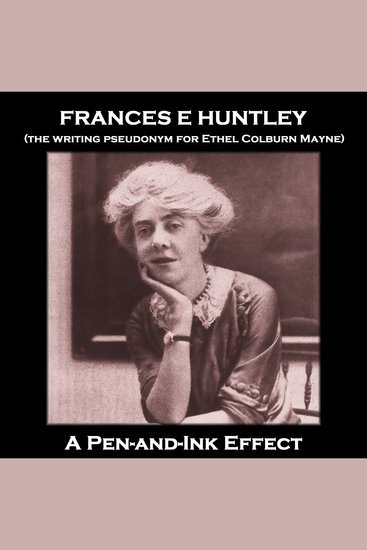
    The bookshelves of British literature are incredible collections that have gathered together centuries of very talented authors.  From these Isles their fame spread and whilst among their number many are now forgotten or neglected their talents endure.  Among them is Ethel Colburn Mayne.
    Voir livre
  • Via Crucis - A Romance of the Second Crusade - cover

    Via Crucis - A Romance of the...

    F. Marion Crawford

    • 0
    • 0
    • 0
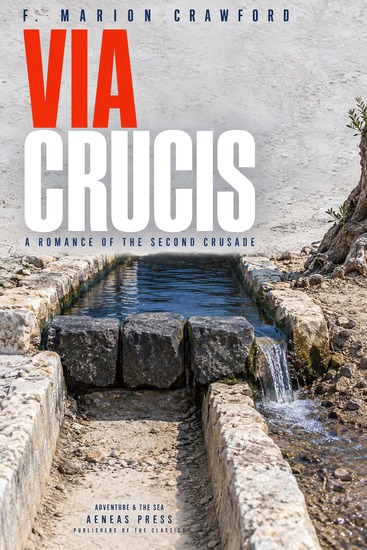
    The Second Crusade: Eleanor of Aquitaine rides with her own army to the Holy Land, her husband the King of France cannot control her, and a young Englishman who loves her is caught between. Crawford lived above Sorrento and wrote more than forty books at a pace his publishers could not keep up with; the Eleanor here is drawn from the chronicles, and she is the most interesting person in the book by a distance. Forty-seven paintings from 1764 to 1890, including work by Edwin Hayes, turn on the same crusader castles and coastal waters that carry Eleanor's army to the Holy Land.
    Voir livre
  • Quo Vadis - A Narrative of the Time of Nero - cover

    Quo Vadis - A Narrative of the...

    Henryk Sienkiewicz

    • 0
    • 0
    • 0
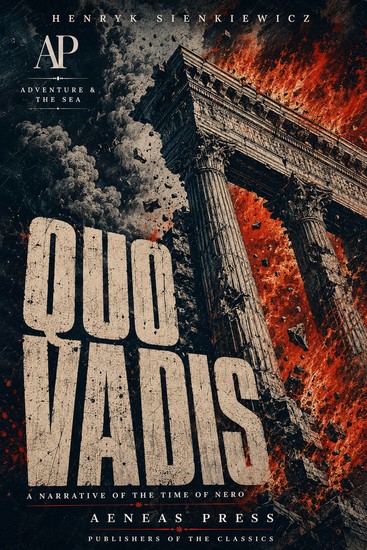
    A Roman officer wants a hostage girl from a barbarian court, and cannot understand why she will not simply be taken — she belongs to a sect that meets in the catacombs. Sienkiewicz wrote for a Poland that did not exist on any map, said his work was meant to strengthen the hearts of his readers, and took the Nobel in 1905. Nero burns the city on schedule. Its 179 original illustrations have been carefully restored and coloured for this edition.
    Voir livre