Rejoignez-nous pour un voyage dans le monde des livres!
Ajouter ce livre à l'électronique
Grey
Ecrivez un nouveau commentaire Default profile 50px
Grey
Abonnez-vous pour lire le livre complet ou lisez les premières pages gratuitement!
All characters reduced
Agnes Grey - cover

Agnes Grey

Anne Brontë

Maison d'édition: Phoemixx Classics Ebooks

  • 0
  • 0
  • 0

Synopsis

Agnes Grey Anne Bronte - Agnes Grey is the debut novel of English author Anne Brontë, first published in December 1847, and republished in a second edition in 1850. The novel follows Agnes Grey, a governess, as she works within families of the English gentry. Scholarship and comments by Anne's sister Charlotte Brontë suggest the novel is largely based on Anne Brontë's own experiences as a governess for five years. Like her sister Charlotte's novel Jane Eyre, it addresses what the precarious position of governess entailed and how it affected a young woman. The choice of central character allows Anne to deal with issues of oppression and abuse of women and governesses, isolation and ideas of empathy. An additional theme is the fair treatment of animals. Agnes Grey also mimics some of the stylistic approaches of bildungsromans, employing ideas of personal growth and coming to age, but representing a character who in fact does not gain in virtue. The Irish novelist George Moore praised Agnes Grey as "the most perfect prose narrative in English letters,"and went so far as to compare Anne's prose to that of Jane Austen. Modern critics have made more subdued claims admiring Agnes Grey with a less overt praise of Brontë's work than Moore.
Disponible depuis: 09/12/2021.
Longueur d'impression: 333 pages.
D'autres livres qui pourraient vous intéresser

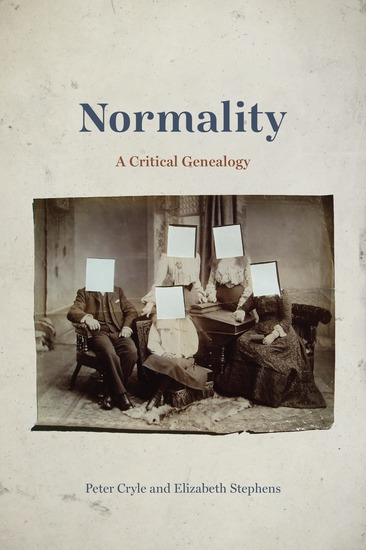
  • Normality - A Critical Genealogy - cover

    Normality - A Critical Genealogy

    Elizabeth Stephens, Peter Cryle

    • 0
    • 0
    • 0
    The concept of normal is so familiar that it can be hard to imagine contemporary life without it. Yet the term entered everyday speech only in the mid-twentieth century. Before that, it was solely a scientific term used primarily in medicine to refer to a general state of health and the orderly function of organs. But beginning in the middle of the twentieth century, normal broke out of scientific usage, becoming less precise and coming to mean a balanced condition to be maintained and an ideal to be achieved.  In Normality, Peter Cryle and Elizabeth Stephens offer an intellectual and cultural history of what it means to be normal. They explore the history of how communities settle on any one definition of the norm, along the way analyzing a fascinating series of case studies in fields as remote as anatomy, statistics, criminal anthropology, sociology, and eugenics. Cryle and Stephens argue that since the idea of normality is so central to contemporary disability, gender, race, and sexuality studies, scholars in these fields must first have a better understanding of the context for normality. This pioneering book moves beyond binaries to explore for the first time what it does—and doesn’t—mean to be normal.
    Voir livre
  • The Third British Empire - cover

    The Third British Empire

    Alfred Eckhard Zimmern

    • 0
    • 0
    • 0
    The Third British Empire. Sir Alfred Eckhard Zimmern (1879–1957) was an English classical scholar, historian, and political scientist writing on international relations. His book, The Third British Empire, was among the first to apply the expression "British Commonwealth" to the British Empire. He is also credited with the phrase "welfare state", which was made popular a few years later by William Temple.
    Voir livre
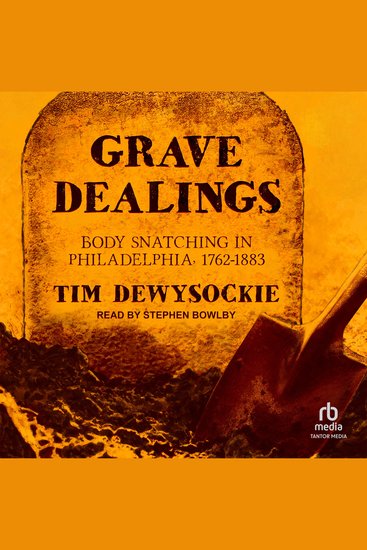
  • Grave Dealings - Body Snatching in Philadelphia 1762–1883 - cover

    Grave Dealings - Body Snatching...

    Tim Dewysockie

    • 0
    • 0
    • 0
    In the eighteenth century the first American medical school was established in Philadelphia. Following the model of European universities, anatomical lectures were conducted with cadavers. But where did the bodies come from? Dissection was viewed as a fate worse than death, and the only legal source of "stiffs" was executed criminals. But there were not enough. As the medical profession and its need for "anatomical material" grew, a new, macabre practice emerged: body snatching. 


    Body snatchers secretly obtained bodies from cemeteries and sold them to medical schools for dissection. But how did body snatching work? How did body snatchers and medical schools avoid getting caught, and what happened when they did? How did the era of the body snatchers end? Grave Dealings: Body Snatching In Philadelphia, 1762-1883 digs through archives to unearth the forgotten history of a time of graveyard patrols and anatomy riots, when the dead needed protection from the living. Philadelphia pioneered and became the center of American medical education and practice–and body snatching–in the eighteenth and nineteenth centuries. 


    Grave Dealings explores the social, cultural, practical, and legal aspects of body snatching in America's first capital city and relates it to the continuing ethical struggles that surround the treatment of human remains to this day.
    Voir livre
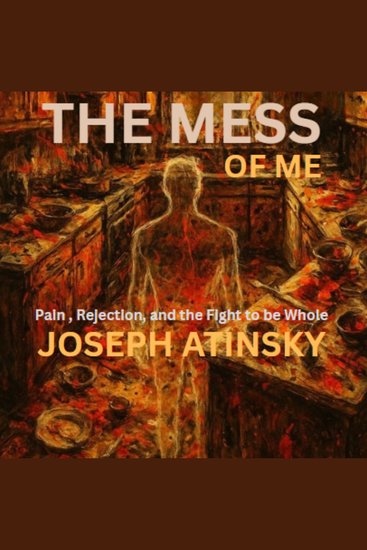
  • The Mess of Me - Pain Rejection and the Fight to be Whole - cover

    The Mess of Me - Pain Rejection...

    Joseph Atinsky

    • 0
    • 0
    • 0
    The Mess of Me: Pain, Rejection, and the Fight to be Whole, is a raw, compassionate memoir about facing the truth we hide—and discovering that in the mess, we are still deeply loved.Joe Atinsky doesn’t offer a sanitized story or a tidy path to healing. Instead, he opens the door to his own lived experience—years of perfectionism, buried shame, spiritual pressure, and the unraveling of everything he thought would save him. But this isn’t a story about falling apart. It’s a story about what begins to grow when the hiding stops.With honesty and gentleness, Joe invites listeners into his journey—not to shock, but to show. To offer a voice for those who may never feel safe to share their pain out loud. Whether you’re walking through faith deconstruction, emotional exhaustion, identity confusion, or the long, quiet work of healing from childhood wounds—this story is here to meet you in your own mess.Through therapy, spiritual honesty, and the grace of real community, Joe finds a way forward. He doesn’t abandon faith—he rebuilds it. Not through performance, but through presence. Not by becoming someone else, but by finally becoming himself.The Mess of Me speaks to the silent parts inside us all. It’s for anyone who’s been told to be perfect, to be strong, to hold it together no matter the cost. And it’s for those ready to begin again—not by fixing what’s broken, but by honoring what’s real.In the mess, we are seen. In the mess, we are loved. In the mess, there is a beginning, a middle, and an end. And in that sacred space, wounded purpose can recover—and the real you can finally begin to live.
    Voir livre
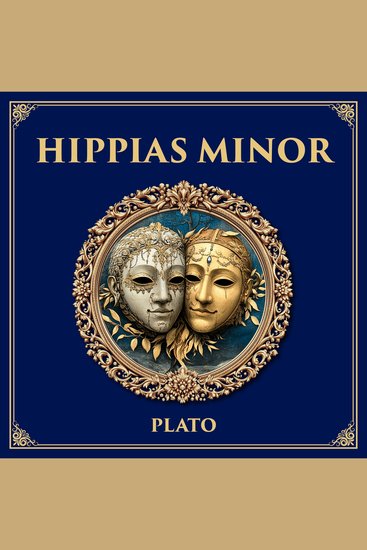
  • Hippias Minor - A Dialogue on Lying and Intention – Can the Better Man Do Wrong on Purpose? - cover

    Hippias Minor - A Dialogue on...

    Plato, Tim Zengerink

    • 0
    • 0
    • 0
    What if the better man is the one who knows he’s doing wrong—and does it anyway? 
    In Hippias Minor, Plato stages one of his most paradoxical and unsettling dialogues. Socrates questions whether a person who lies intentionally is actually better than someone who lies out of ignorance. The result is a sharp philosophical exchange that challenges our most basic ideas of morality and virtue. 
    This modern translation keeps Plato’s wit and depth intact while making the argument accessible and compelling for today’s listener. 
    What you'll discover inside: 
    •	A Bold Ethical Challenge – Socrates questions whether intentional wrongdoing shows greater intellect 
    •	Plato’s Paradox on Virtue – Explore the tension between knowledge and morality 
    •	A Lively Clash Between Sophist and Philosopher – Homer, Achilles, and deception take center stage 
    •	A Contemporary Translation for Clear Insight – Ideal for readers exploring deep ethical questions 
    Can a knowing liar be morally superior to an honest fool? Discover the argument that still unsettles philosophers today.
    Voir livre
  • Kaale Hath Gorey Hath - cover

    Kaale Hath Gorey Hath

    Balbir Sandha Dadwindi

    • 0
    • 0
    • 0
    Kaale Hath Gorey Hath by Balbir Sandha Dadwindi is a collection of 15 unique chapters portraying the real-life struggles of middle-class and hardworking individuals. Through themes like greed, caste discrimination, and social injustice, the book reflects the emotional and social realities that listeners can deeply relate to.
    Voir livre