Rejoignez-nous pour un voyage dans le monde des livres!
Ajouter ce livre à l'électronique
Grey
Ecrivez un nouveau commentaire Default profile 50px
Grey
Abonnez-vous pour lire le livre complet ou lisez les premières pages gratuitement!
All characters reduced
Saudade - The Possibilities of Place - cover

Saudade - The Possibilities of Place

Anik See

Maison d'édition: Coach House Books

  • 0
  • 0
  • 0

Synopsis

Beside me, on the stone steps of this quiet courtyard, there is a lame man – the sweeper. He is so thin that the end of his belt comes back around to its buckle. He’s trying to feed a puppy the rest of his lunch. He reminds me that we all need something to need us, and that maybe that’s why we Westerners, who are so independent, mostly fail to understand family in this way, and need to come up with things like ‘quality time’ to justify such a base need. Everyone here asks if my family is in Sri Lanka, if that’s why I’ve come here. When I say no, they’re back in Canada, this confuses them. It’s a black mark against me. Why would I leave them? I am a selfish person. (I am.)
   
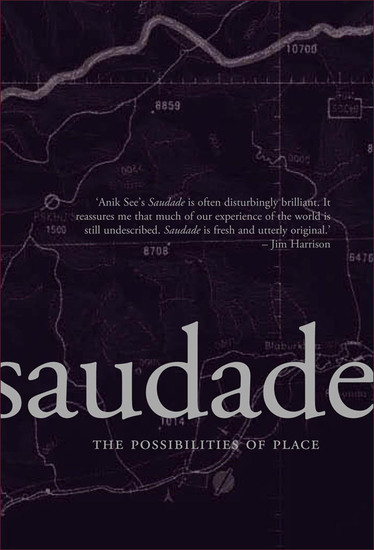
The Portuguese word saudade has no direct English translation. In its simplest sense, it describes a feeling of longing for something that is now gone, and may yet return, but in all likelihood can never be recaptured. In Saudade, traveller Anik See traces her attempts to reclaim this loss in a series of informal essays that take us from the salt plains of Wood Buffalo National Park and the mountains of British Columbia to the fishing ports of Sri Lanka and the rough roads of Tbilisi, Georgia.
   
Whether at a fishfry in the Northwest Territories, at the post-9/11 Canada-US border, on the ultimate road trip through Australia or at a summer carnival in Santiago de Cuba, See is on a continual quest for simplicity, interrogating the perceived distance between privilege and want. Quietly, insistently, these thoughtful essays ask what we might accomplish if we said no to entitlement; if, instead, we used our privilege to help us better understand human nature. Throughout this psychogeographic diary, crowded with rituals of faith, death and renewal, See asks, again and again, 'How much will be enough?'
   
Praise for Saudade:
   
'Anik See's Saudade is often disturbingly brilliant. It reassures me that much of our experience of the world is still undescribed. Saudade is fresh and utterly original.' – Jim Harrison
   
'See's meditations on loss, technology, design, and borders are like long-exposure photographs: richly textured, dreamy, observant of even the slightest movement.'
   
– GLOSS Magazine
Disponible depuis: 05/10/2008.
Longueur d'impression: 200 pages.
D'autres livres qui pourraient vous intéresser

  • The New Kingdom of Egypt - Empire and Expansion - cover

    The New Kingdom of Egypt -...

    Omar Khalil

    • 0
    • 0
    • 0
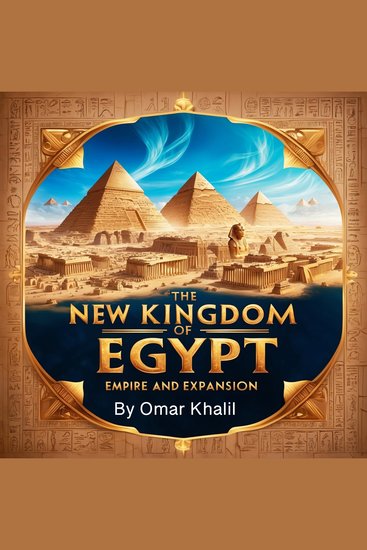
    The rise of the New Kingdom marks one of the most pivotal periods in Egyptian history, signaling the transformation of Egypt from a regional power to an expansive empire. This era began with the fall of the Middle Kingdom, a time of political instability and foreign invasions. As Egypt struggled with weak leadership and incursions from Asiatic and Nubian forces, the foundations were laid for the emergence of a new, more robust regime. 
    The decisive moment came with the reign of Ahmose I, who is credited with founding the 18th Dynasty and expelling the Hyksos invaders from the Delta region. Ahmose's victory over these foreign rulers was symbolic not only of military prowess but also of a reassertion of Egyptian identity and unity. This victory allowed the pharaohs of the New Kingdom to solidify their power and embark on territorial expansion that would characterize much of their rule. 
    Ahmose's successors built upon his military success. They began to push Egypt's borders further into Nubia to the south and the Levant to the north, extending Egypt’s reach and influence. The New Kingdom was thus defined by an ambitious policy of imperial expansion, which required a well-organized military and a stable central government. The initial successes of the 18th Dynasty laid the groundwork for the period's most famous rulers, such as Thutmose III, whose campaigns in Syria and Palestine created an empire that stretched far beyond Egypt’s traditional borders.
    Voir livre
  • Red Sauce Brown Sauce: A British Breakfast Odyssey - cover

    Red Sauce Brown Sauce: A British...

    Felicity Cloake

    • 0
    • 0
    • 0
    The charming and joyful follow-up book from ‘the nation’s taster in chief,’ Felicity Cloake. 
    If there’s one thing that truly unites Britain, from Aberdeen to Aberystwyth, St Ives to St Pancras, it’s an obsession with breakfast. 
    We all have an opinion on the merits of brown sauce versus ketchup on our morning bacon sarnie. In this eagerly awaited follow-up to One More Croissant for the Road, the nation’s favourite taster-in-chief Felicity Cloake sets off on a cycle trip of condimental proportions to investigate and celebrate the legendary Great British Breakfast. Travelling the length and breadth of the UK to establish once and for all what makes a perfect fry-up, she rates them on criteria from the crispness of the bacon to how long they keep her pedalling. But a woman cannot live by All Day Breakfast alone, so as well as recipes for the Savoy's Omelette Arnold Bennett and proper Scottish porridge, she lavishes her attention on the regional specialities she encounters along the way, from a desi breakfast in Birmingham to a Greggs Geordie stottie cake. This is a freewheeling gastronomical tour like no other. 
    Eaten with as much relish in The Wolseley on Piccadilly as in Glasgow’s University Cafe, Britain loves nothing more than a good breakfast. The only question is: what do you have with yours? 
    In RED SAUCE BROWN SAUCE, Felicity Cloake, the nation's favourite taster-in-chief, combines her love for cycling and cooking to present a unique travelogue. She explores the best of British breakfasts, from the Welsh desi breakfast to the Scottish stottie cake, making it a top pick for food and travel enthusiasts. 
    For fans of Stanley Tucci (What I Ate in One Year), Peter Mayle (My Twenty-Five Years in Provence), Nigella Lawson (Cook, Eat, Repeat), Max Halley (Max's Sandwich Book), and Janine Marsh (My Four Seasons in France). 
    HarperCollins 2022
    Voir livre
  • Skiing Around The World - Launching Oneself From Places On Top Of The Planet! - cover

    Skiing Around The World -...

    Owen Jones

    • 0
    • 0
    • 0
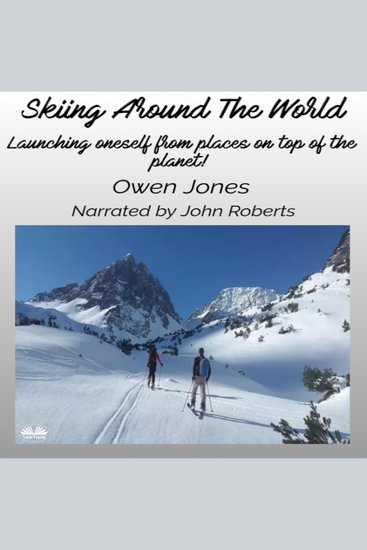
    Embark on a thrilling journey into the heart of extreme skiing with our exploration, Skiing Around The World. This book invites you to delve into the adrenaline-charged world of those who dare to defy gravity, pushing the boundaries of conventional skiing into uncharted territory. From the formidable slopes of Chamonix to the untouched powder of Alaska's vast wilderness, we unravel the tales of intrepid skiers navigating the steepest descents our planet has to offer. Join us as we venture into the back-country, where untracked snow and the raw beauty of nature set the stage for an exhilarating dance with gravity. Safety gear in hand and skills finely tuned, these thrill-seekers document their descents, sharing the heart-stopping moments and awe-inspiring landscapes through the lens of extreme skiing films. Skiing Around The World is your passport to the world of skiing, where every descent is a conquest, every slope a challenge, and every adventure an ode to the indomitable spirit of those who seek the thrill of the steepest descents on Earth. Get ready to experience the rush, the beauty, and the sheer audacity of extreme skiing like never before.
    Voir livre
  • Acropolis and the Agora The: The History of Ancient Athens’ Most Important Sites - cover

    Acropolis and the Agora The: The...

    Editors Charles River

    • 0
    • 0
    • 0
    The Acropolis, which literally means “a city on the heights,” is a citadel whose currently surviving structures were mostly built during the 5th century B.C. in honor of Athena, the patron goddess of Athens. It functioned as a sacred precinct that contained the city’s most important religious and municipal structures, many of which have remained relatively intact for over 2,000 years. The Propylaea (the gateway to the Acropolis), the Parthenon (the principal shrine to the goddess), the Erechtheion (a shrine that supposedly houses the burial grounds of mythical Athenian kings), and the Temple of Athena Nike all survive to this day, and for these reasons, the Acropolis is perhaps the definitive and most eloquent expression of classical architecture, if not of the classical form itself. The Acropolis, which literally means “a city on the heights,” is a citadel whose currently surviving structures were mostly built during the 5th century B.C. in honor of Athena, the patron goddess of Athens.  
    	The center of political and commercial interaction in the Ancient Greek polis was the agora. The word essentially means a gathering place or an open space, and in all Greek city states, the agora was central to all aspects of daily life and commerce. As the agora developed as a civic space, particularly from the 6th century B.C. onward in Athens, the architectural splendor of the buildings associated with it became an ever more obvious demonstration of the power and glory of Athenian democracy. 	In its earliest forms, an agora in maritime cities was invariably situated near the sea, while in inland urban centers, it was usually located at the foot of the hill that normally provided the city’s ultimate defense. The agora was always the oldest part of any city and, as such, and as well as being the commercial hub of the area, also became the center of the religious and political life of the polis.
    Voir livre
  • Trip to Russia - cover

    Trip to Russia

    Stefan Zweig

    • 0
    • 0
    • 0
    "What journey within our immediate world today would be remotely as interesting, enchanting, instructive and exciting as that to Russia? While our Europe, and especially the capitals, are subject to the inexorably contemporary process of mutual assimilation and resemblance, Russia remains utterly unparalleled." Stephen Zweig, 1928. After Stefan Zweig's bourgeois world collapsed with the First World War, he went searching for alternative forms of society, which culminated in a journey through the at that time still young Soviet Union. His perceptions and impressions during the trip remained ambivalent and moved between the generally prevailing glorification of the USSR by parts of the Western European intelligentsia and the harsh reality of life among the population. Stefan Zweig's non-political trip to the USSR is probably one of the most extraordinary travelogues of the 1920s and appears today almost 90 years later as a kaleidoscope into a past that is once again up-to-date.
    Voir livre
  • Kofun Period - The Mysterious Tomb Builders and the Roots of Imperial Japan - cover

    Kofun Period - The Mysterious...

    Rolf Hedger

    • 0
    • 0
    • 0
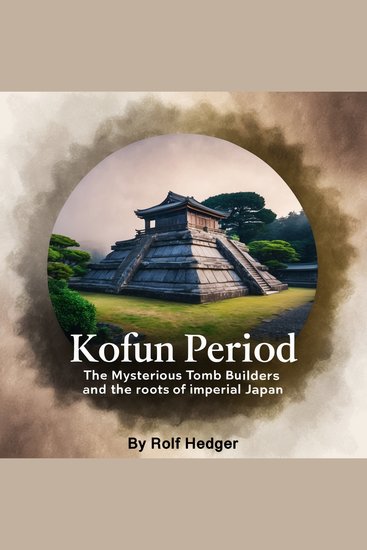
    The Kofun Period, which lasted from approximately 250 to 600 AD, marks a significant era in early Japanese history. This period is named after the distinct burial mounds, or "kofun," that were constructed during this time. These mounds vary in size and shape but are most commonly recognized for their keyhole-like design. The Kofun Period is pivotal as it represents a time of political consolidation, the development of social structures, and the emergence of a powerful ruling elite that would lay the foundation for the imperial system in Japan. 
    The beginning of the Kofun Period is closely tied to the formation of more complex societies in the Japanese archipelago. By this time, a system of chiefdoms had developed, and the early Yamato state began to emerge as a dominant political force. The period sees the consolidation of power under a centralized leadership, which eventually paved the way for the establishment of the imperial family that still exists today. During the Kofun Period, society transitioned from small, localized groups to more organized and hierarchical structures, a shift that was reflected in the elaborate tombs built for the elites. 
    The most notable characteristic of the Kofun Period is the construction of large burial mounds for the ruling class. These tombs were not only elaborate final resting places for powerful individuals but also symbolized the political power and religious authority of the deceased. The kofun mounds varied in size, with some measuring several hundred meters in length. These tombs were often surrounded by moats and would contain a wealth of grave goods, such as weapons, jewelry, and pottery, which reflected both the material culture of the time and the importance of the individual being buried.
    Voir livre