Begleiten Sie uns auf eine literarische Weltreise!
Buch zum Bücherregal hinzufügen
Grey
Einen neuen Kommentar schreiben Default profile 50px
Grey
Jetzt das ganze Buch im Abo oder die ersten Seiten gratis lesen!
All characters reduced
The Consolation of Philosophy (translated by H R James MA) - cover

The Consolation of Philosophy (translated by H R James MA)

Anicius Manlius Severinus Boethius

Verlag: DigiCat

  • 0
  • 0
  • 0

Beschreibung

In "The Consolation of Philosophy," originally penned by Anicius Manlius Severinus Boethius in the early 6th century, the author merges philosophy with a poetic narrative style, reflecting the tensions of a world in crisis. Written while Boethius was imprisoned and awaiting execution, this text marvelously explores themes of fortune, happiness, and the transient nature of worldly power. Boethius employs a dialogue between himself and Lady Philosophy, who serves as his guide through an array of philosophical inquiries, ultimately asserting that true happiness lies in the pursuit of virtue rather than material wealth. Boethius, a Roman philosopher, statesman, and Christian thinker, drew upon a rich intellectual heritage, intertwining Platonic and Aristotelian elements with Christian ethos. His position in the tumultuous political landscape of the late Roman Empire, coupled with his personal misfortunes, deeply informed the poignant reflections found in this work. Boethius's unique ability to articulate his despair and his quest for understanding resonates profoundly in both philosophical and theological discourse. "The Consolation of Philosophy" is an essential read for anyone seeking insight into the human condition, offering timeless wisdom that remains relevant in contemporary discussions of ethics and happiness. Its fusion of prose and verse invites readers to ponder life's most pressing questions, making it a remarkable companion for both casual readers and serious scholars alike.
Verfügbar seit: 25.05.2022.
Drucklänge: 250 Seiten.

Weitere Bücher, die Sie mögen werden

  • The Republic (Hero Classics) - cover

    The Republic (Hero Classics)

    Plato

    • 0
    • 0
    • 0
    Part of the Hero Classics series 
    “I am the wisest man alive, for I know one thing, and that is that I know nothing.” 
    The Republic, a pioneering work of political philosophy, is a dialogue that does not feature Plato directly as at the heart is Socrates – his teacher. Even though the conversations between Socrates and Athenians as well as foreigners take place thousands of years ago, the questions Plato addresses in the volume are far from archaic. Should men and women have equal rights? Should rulers be responsible for the well-being of their citizens and the healthcare system in general? Is it ever acceptable to lie, especially if it is a so-called ‘noble lie’? And of course, how far can we stretch social mobility? Although many of Plato’s ideas are utopian and will be regarded as immensely positive aspirations by contemporary society, some conclusions drawn by the thinker might arouse our questioning or even disdain. In particular, Plato argues that censorship can underpin the citizens’ goodness and orderly life of the whole community – an affirmation that is unlikely to be embraced by modern-day democracies. 
    Because the philosopher prefers to construct an imaginary city in order to regard his ideas, his political ruminations can be read with a pragmatic mind but also for its artistic richness and literary thrill as Plato does not shy away from metaphors and allegories. The text is one of the most studied and referenced after the Bible and akin to the Holy text it does not have to be read in a single sitting but rather carefully revised and meditated upon to grasp its nuances and their applicability to our modern lives. It is an insight into the history of human civilization and the functionings of an individual within society – the read that is likely to be worthwhile for an advanced bibliophile and casual reader alike. 
    The Hero Classics series:MeditationsThe ProphetA Room of One’s OwnIncidents in the Life of a Slave GirlThe Art of WarThe Life of Charlotte BronteThe RepublicThe PrinceNarrative of the Life of Frederick Douglass, an American SlaveUtopia
    Zum Buch
  • Beyond Proportionality - Israel's Just War in Gaza - cover

    Beyond Proportionality -...

    Thane Rosenbaum

    • 0
    • 0
    • 0
    Imagine a war without battlefields. There are no uniforms. Civilians and combatants are indistinguishable. Homes, schools, hospitals, and religious buildings are used as command and communication centers, and for the warehousing of weapons. Apartment rooftops are launching pads; the civilians who live inside . . . human shields. There are over 300 miles of reinforced tunnels, all outfitted with weapons and passageways for terrorists to take hostages and travel freely. 


    Beyond Proportionality examines Israel's battles against Hamas and Hezbollah under the laws of war and concludes that its wartime conduct was based on military necessity and fought justly. The targets are terrorists, weapons, and tunnels—not civilians. Israel relies upon verifiable intelligence, deploys precise weapons, and endangers its own soldiers in order to minimize civilian death. 


    The bombings over Hiroshima, Nagasaki, and Dresden, and the urban warfare in Iraq and Afghanistan, produced large numbers of civilian dead that were not considered acts of genocide; the war in Gaza was no different.
    Zum Buch
  • How to Stop Overthinking - Keep Worry Overanalyzing Rumination Intrusive Thoughts From Controlling Your Life and Find Inner Peace - cover

    How to Stop Overthinking - Keep...

    Dean Bishop

    • 0
    • 0
    • 0
    Are your thoughts constantly spiraling, making it hard to focus on the present? 
    Do you feel like your overthinking is holding you back from truly living? 
    Do you find yourself trapped in a cycle of endless rumination? 
    I've been there. I know the weight of those thoughts, the heaviness they bring, and the yearning for peace. You're not alone in this journey. 
    Does any of these situations sound familiar? 
    - Hesitating on decisions due to fear of error. 
    - Replaying interactions, analyzing every detail. 
    - Ruminating on past mistakes, hindering progress.. 
    - Pursuit of perfection leaves you fearing every judgment. 
    - Nights are restless, thoughts spinning without pause. 
    - Constantly tired, but the mind won't stop racing. 
    - Overthinking causing relationship strains. 
    Here’s just a fraction of what you’ll discover inside: 
    - The secret to figuring out when your mind is playing tricks on you  
    - Everything you need to know about overthinking to gain a better grasp of it 
    - Conquering analysis paralysis — discover how to never be overwhelmed by your choices ever again 
    - Tips and tricks on how to tackle the number one cause (and consequence) of overthinking: stress 
    - The key to setting goals that don’t leave any room for your mind to wander 
    - An essential relaxation toolkit to help you reach a calm and peaceful state of mind, whether you’ve got 20 minutes… or just one 
    - Mastering the art of decision making 
    - Daily habits to keep your emotional equilibrium and ensure mental wellness and cognitive clarity 
    And so much more… 
    You might be thinking that nothing will work for you because your situation is beyond help, but that’s just your cognitive distortions dragging you down.Remember, as an overthinker, you can’t believe everything you think.
    Zum Buch
  • Scorched Earth - Beyond the Digital Age to a Post-Capitalist World - cover

    Scorched Earth - Beyond the...

    Jonathan Crary

    • 0
    • 0
    • 0
    Refusing the digital world of late capitalism 


    In this uncompromising essay, Jonathan Crary presents the obvious but unsayable reality: our "digital age" is synonymous with the disastrous terminal stage of global capitalism and its financialization of social existence, mass impoverishment, ecocide, and military terror. Scorched Earth surveys the wrecking of a living world by the internet complex and its devastation of communities and their capacities for mutual support. 


    This polemic by the author of 24/7 dismantles the presumption that social media could be an instrument of radical change and contends that the networks and platforms of transnational corporations are intrinsically incompatible with a habitable earth or with the human interdependence needed to build egalitarian post-capitalist forms of life.
    Zum Buch
  • Olmecs - One of the Earliest Mesoamerican Civilizations We Know - cover

    Olmecs - One of the Earliest...

    Kelly Mass

    • 0
    • 0
    • 0
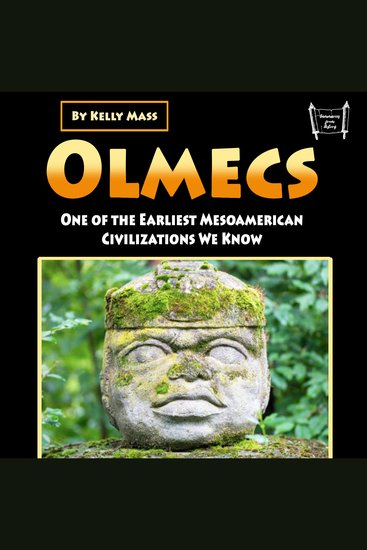
    The Olmecs are often regarded as the first significant civilization in Mesoamerica, a region that includes parts of modern-day Mexico and Central America. They emerged in the tropical lowlands of what is now the Mexican states of Veracruz and Tabasco, following a gradual development in the Soconusco region. It is believed that the Olmecs were influenced by neighboring cultures, particularly the Mokaya and Mixe–Zoque tribes, who inhabited the areas around them. These early interactions may have played a role in shaping Olmec society, laying the foundation for their eventual rise as one of the most influential cultures in Mesoamerican history. 
    The Olmecs flourished during the formative period of Mesoamerican civilization, which lasted from approximately 1500 BCE to 400 BCE. The early phase of Olmec culture began around 1600 BCE, with the establishment of their first major center at San Lorenzo Tenochtitlán, located in the southeastern Veracruz region near the coast. While pre-Olmec cultures had been developing in the region since around 2500 BCE, it was by 1600 BCE that the Olmecs began to solidify their cultural and political dominance in the region. They are considered the earliest of the Mesoamerican civilizations, and their cultural achievements and innovations would influence many of the civilizations that followed, including the Maya, Zapotec, and Aztec.
    Zum Buch
  • The State and Revolution - cover

    The State and Revolution

    Vladimir Lenin

    • 0
    • 0
    • 0
    The State and Revolution (1917), by Vladimir Lenin, describes the role of the State in society, the necessity of proletarian revolution, and the theoretic inadequacies of social democracy in achieving revolution to establish the dictatorship of the proletariat.
    Lenin began the composition of an early draft of State and Revolution while in exile in Switzerland in 1916, under the title "Marxism on the State".
    "Soviets", legislative bodies of workers and peasants were the de facto governments of Petrograd and many smaller cities. The Russian public was deeply upset with the continuation of Russia's involvement in World War One and the continued economic difficulties that it brought on. On November 7th The Congress of Soviets officially elected a coalition of Bolsheviks, Socialist Revolutionaries and Mensheviks to govern. Through the Red Guards, paramilitary organizations of revolutionary workers, sailors and soldiers; the Soviet government was able to storm The Winter Palace and officially abolishing the Provisional government. The revolution was not uniformly accepted among all Russians, resistance and disruption would occur routinely leading up to The Russian Civil War. A particular issue that Lenin covers in The State and Revolution was the right of nations to secession (The right to self determination); during the composition of this book The Mensheviks of Georgia declared independence soon after The Revolution forming The Democratic Republic of Georgia.
    Among other famous Marxists there were also: Georgi Plekhanov, Joseph Stalin, Leon Trotsky, Karl Marx, Friedrich Engels, Ernst Bloch, Pyotr Kropotkin, Jean-Paul Charles Aymard Sartre, Wilhelm Reich, Perry Anderson.
    Zum Buch