Rejoignez-nous pour un voyage dans le monde des livres!
Ajouter ce livre à l'électronique
Grey
Ecrivez un nouveau commentaire Default profile 50px
Grey
Abonnez-vous pour lire le livre complet ou lisez les premières pages gratuitement!
All characters reduced
A Manual of Moral Philosophy - Enriched edition - cover

A Manual of Moral Philosophy - Enriched edition

Andrew P. Peabody

Maison d'édition: DigiCat

  • 0
  • 0
  • 0

Synopsis

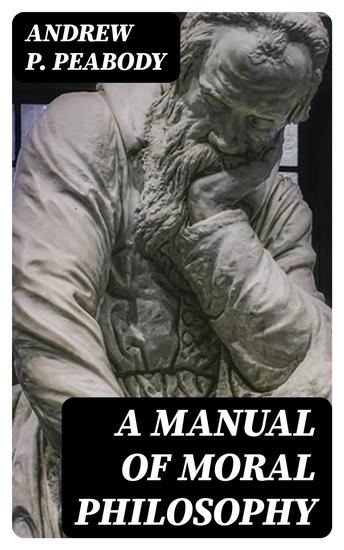
In "A Manual of Moral Philosophy," Andrew P. Peabody engages readers with a comprehensive exploration of ethical principles and moral reasoning. The book is crafted in a didactic style, aiming both to enlighten and to provoke critical thought about moral issues. Peabody structures his work methodically, integrating discussions of deontological and consequentialist theories that reflect the philosophical debates of his time. Contextually, the work emerges from the 19th-century backdrop of American transcendentalism and utilitarianism, as it wrestles with the complexities of morality in a rapidly changing social landscape. Andrew P. Peabody, an esteemed theologian and educator, drew from his extensive background in theology and philosophy to articulate a vision of moral philosophy that balances individual conscience with collective responsibility. His academic journey and personal convictions likely influenced his approach, positioning moral philosophy as a crucial guide for navigating ethical dilemmas in both personal and societal contexts. Peabody's unique perspective as a Unitarian minister lends a spiritual dimension, enriching his exploration of ethics. This indispensable work is highly recommended for philosophers, theologians, and anyone interested in the evolution of moral thought. Peabody's lucid prose and structured arguments foster a deeper understanding of ethical principles, making it a valuable resource for both students and scholars alike.

In this enriched edition, we have carefully created added value for your reading experience:
- Hand‐picked Memorable Quotes shine a spotlight on moments of literary brilliance.
- Interactive footnotes clarify unusual references, historical allusions, and archaic phrases for an effortless, more informed read.
Disponible depuis: 04/09/2022.
Longueur d'impression: 146 pages.

D'autres livres qui pourraient vous intéresser

  • Beyond the Bird: Modern Meditations on Thanksgiving - Essays on History Hospitality and the Human Heart - cover

    Beyond the Bird: Modern...

    Hang Nguyen

    • 0
    • 0
    • 0
    This thoughtful, essay-style audiobook invites you to look past the pilgrims and pumpkin spice. Exploring topics from the complex history of the holiday to the pressures of modern hosting and the science of gratitude, these meditations are narrated with a soothing, insightful tone. It's the perfect intellectual and emotional companion for a quiet walk during the long holiday weekend. Each essay offers a unique perspective on what it means to give thanks in today's world, blending historical analysis, cultural commentary, and personal reflection to create a deeply resonant listening experience.
    Voir livre
  • The American Transportation Revolution - A Social and Cultural History - cover

    The American Transportation...

    Aaron W. Marrs

    • 0
    • 0
    • 0
    In the first half of the nineteenth century, transportation in the United States underwent an extraordinary transformation. In The American Transportation Revolution, Aaron W. Marrs explores the cultural influence of steamboats and railroads, which fascinated Americans across the country. 


    Demonstrating the wide cultural reach of steam transit, Marrs draws from an eclectic set of sources, including children's books, comic almanacs, musical works, sermons, etiquette guides, cartoons, and employee rulebooks. This rich tapestry of cultural production helped "naturalize" steam technology for Americans before they ever encountered steam transit in person. Before ever seeing a railroad, Americans could read a novel that took place on a railroad, see an image of a train on currency, or purchase piano music imitating a train. These cultural artifacts made these new forms of transport feel familiar and natural. 


    Marrs examines how cultural norms about travel emerged through the prescriptions of etiquette authors and the actions of travelers themselves, how enslaved people made innovative use of transportation networks to escape from slavery, and much more. Marrs convincingly demonstrates steam transportation's broad cultural impact on the United States, and how Americans, in turn, imprinted their own meaning on this new technology.
    Voir livre
  • Iron Catastrophes - A Global History of Train Disasters - cover

    Iron Catastrophes - A Global...

    P Agrawal

    • 0
    • 0
    • 0
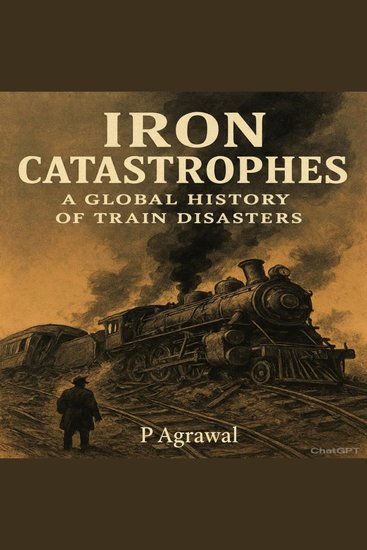
    This audiobook is narrated by an AI Voice.   
    From the dawn of the railway age to the sleek high‑speed trains of the twenty‑first century, the story of the railroad has always carried a double edge—an instrument of triumph and transformation, and at the same time an arena of grief and devastation. Iron Catastrophes: A Global History of Train Disasters is a sweeping chronicle of how progress raced forward on steel tracks while continually stumbling into tragedy. 
    This book journeys across continents and centuries to chart the history of railway disasters in all their complex dimensions. Beginning with the earliest accidents of the nineteenth century, when untested locomotives burst their boilers or derailed on fragile tracks, it shows how railway travel was stamped by peril from its very birth. The death of British politician William Huskisson in 1830, struck down on the Liverpool and Manchester line’s opening day, symbolized how quickly innovation could turn lethal. Soon after came infernos, collisions in the fog, bridge collapses, and explosions that shocked a society intoxicated by speed yet horrified by risk. 
    The narrative then widens to explore disasters across Europe, America, Asia, Africa, and the colonial world. Chapters recount Europe’s notorious horrors—from Britain’s Harrow collision to France’s Versailles fire and Spain’s Torre del Bierzo tragedy—where crashes shattered faith in modernity. In America, endless expansion created reckless improvisations: wooden bridges that collapsed, locomotives that burned, collisions that littered small towns with wreckage. In Asia, the disasters grew on an almost unimaginable scale. India’s catastrophic wrecks, Japan’s cultural trauma at Amagasaki, Sri Lanka’s tsunami train engulfed by waves, and China’s modern tragedy at Wenzhou illustrate that even regions most reliant on the rails suffered losses measured in the thousands.
    Voir livre
  • Nerva-Antonine Dynasty The: The History and Legacy of the Emperors Who Ruled the Roman Empire at Its Peak - cover

    Nerva-Antonine Dynasty The: The...

    Editors Charles River

    • 0
    • 0
    • 0
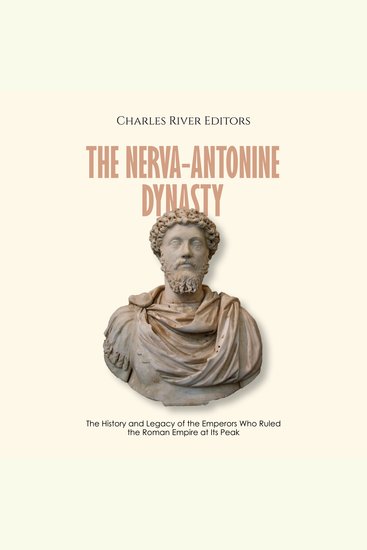
    “The Five Good Emperors,” a reference to the five emperors who ruled the Roman Empire between 96 and 180 CE (Nerva, Trajan, Hadrian, Antoninus Pius, and Marcus Aurelius), was a term first coined by Machiavelli and later adopted and popularized by historian Edward Gibbon, who said that under these men, the Roman Empire “was governed by absolute power under the guidance of wisdom and virtue.”  
    	This period of 84 years is generally regarded as the high point of the Roman Empire, at least after Augustus, but what is uncertain and a matter of ongoing debate is whether the five emperors were personally responsible for the situation and the accompanying prosperity enjoyed throughout the empire at the time or if they were simply the beneficiaries of the Pax Romana, inaugurated by Augustus in the early part of the 1st century CE. In other words, historians have wondered whether anyone in power during those years would have enjoyed the same rewards.  
    	The description of these rulers as “good” is also a matter of interpretation, with some scholars suggesting they were only “good” in comparison to the preceding emperor (Domitian) and the emperor who followed Marcus Aurelius (Commodus). Both of them were horrible rulers in every aspect, making their near contemporaries look all the better.  
    	Regardless, it is clear that the era of the Five Good Emperors was one of unparalleled success and wealth, and the reasons Rome reached its zenith at this time are worthy of scrutiny. Perhaps most noteworthy is that none of these five emperors were blood relatives - while the final two are often referred to as the Antonines, they were not, in fact, related except by adoption, a practice that may in itself provide at least part of the answer to the question as to why this particular period was so magnificent.
    Voir livre
  • Robert E Lee’s Greatest Victories - cover

    Robert E Lee’s Greatest Victories

    Editors Charles River

    • 0
    • 0
    • 0
    After Lee succeeded the wounded Johnston, he pushed McClellan’s Army of the Potomac away from Richmond and back up the Peninsula in late June, only to then swing his army north to face a second Union army, John Pope’s Army of Virginia. Needing to strike out before the Army of the Potomac successfully sailed back to Washington and linked up with Pope’s army, Lee daringly split his army to threaten Pope’s supply lines, forcing Pope to fall back to Manassas to protect his flank and maintain his lines of communication. At the same time, it left half of Lee’s army (under Stonewall Jackson) potentially exposed against the larger Union army until the other wing (under James Longstreet) linked back up. Thus, in late August 1862, the Army of Northern Virginia and the Army of Virginia found themselves fighting over nearly the exact same land the South and North fought over in the First Battle of Bull Run 13 months earlier.  
    Of all the Civil War battles fought, and of all the victories achieved by Robert E. Lee at the command of the Confederate Army of Northern Virginia, the Battle of Chancellorsville is considered the most tactically complex and ultimately the most brilliant Confederate victory of the war. In early May 1863, the Army of the Potomac was at the height of its power as it bore down on Robert E. Lee’s Army of Northern Virginia near Fredericksburg, where the Confederates had defeated them the previous December. The Union behemoth had spent most of the winter season being reorganized and drilled by “Fighting Joe” Hooker, an aggressive commander who had fought hard at places like Antietam. With an army nearing 130,000 men, Hooker’s Army of the Potomac was twice the size of the Army of Northern Virginia. Lee’s heavily outnumbered army went on to win the most stunning victory of the war, but it cost them nearly 25% of their men and Stonewall Jackson.
    Voir livre
  • The Great School Rethink - cover

    The Great School Rethink

    Frederick M. Hess

    • 0
    • 0
    • 0
    In The Great School Rethink, education policy sentinel Frederick M. Hess offers a pithy and perceptive appraisal of American schooling and finds, in the uncertain period following pandemic disruption, an ideal moment to reimagine US education. Now is the time, he asserts, to ask hard questions about how schools use time and talent, how they work with parents, what they do with digital tools, and how they meet the needs of their communities. 


    As Hess explains, to rethink is to acknowledge the realities of the education system while opening one's mind to possibility. With characteristic verve and wit, Hess guides listeners through his rethink process, a versatile and easily implemented approach to identifying issues and brainstorming possible responses. He encourages listeners to explore what improvements might alleviate current pressures and frustrations, such as teacher shortages and burnout, declining student performance, and compromised learning time. Whether their goal is to achieve better student engagement, increase parent involvement, or implement personalized learning, listeners will develop the mindset to ask the right questions, to fully understand the problem that's being solved, and to evaluate the probable effectiveness of proposed solutions.
    Voir livre