Begleiten Sie uns auf eine literarische Weltreise!
Buch zum Bücherregal hinzufügen
Grey
Einen neuen Kommentar schreiben Default profile 50px
Grey
Jetzt das ganze Buch im Abo oder die ersten Seiten gratis lesen!
All characters reduced
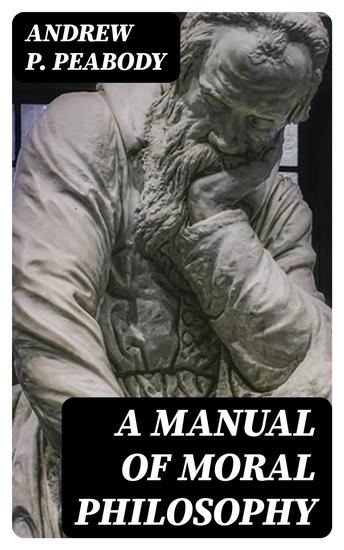
A Manual of Moral Philosophy - Enriched edition - cover

A Manual of Moral Philosophy - Enriched edition

Andrew P. Peabody

Verlag: DigiCat

  • 0
  • 0
  • 0

Beschreibung

In "A Manual of Moral Philosophy," Andrew P. Peabody engages readers with a comprehensive exploration of ethical principles and moral reasoning. The book is crafted in a didactic style, aiming both to enlighten and to provoke critical thought about moral issues. Peabody structures his work methodically, integrating discussions of deontological and consequentialist theories that reflect the philosophical debates of his time. Contextually, the work emerges from the 19th-century backdrop of American transcendentalism and utilitarianism, as it wrestles with the complexities of morality in a rapidly changing social landscape. Andrew P. Peabody, an esteemed theologian and educator, drew from his extensive background in theology and philosophy to articulate a vision of moral philosophy that balances individual conscience with collective responsibility. His academic journey and personal convictions likely influenced his approach, positioning moral philosophy as a crucial guide for navigating ethical dilemmas in both personal and societal contexts. Peabody's unique perspective as a Unitarian minister lends a spiritual dimension, enriching his exploration of ethics. This indispensable work is highly recommended for philosophers, theologians, and anyone interested in the evolution of moral thought. Peabody's lucid prose and structured arguments foster a deeper understanding of ethical principles, making it a valuable resource for both students and scholars alike.

In this enriched edition, we have carefully created added value for your reading experience:
- Hand‐picked Memorable Quotes shine a spotlight on moments of literary brilliance.
- Interactive footnotes clarify unusual references, historical allusions, and archaic phrases for an effortless, more informed read.
Verfügbar seit: 04.09.2022.
Drucklänge: 146 Seiten.
Weitere Bücher, die Sie mögen werden

  • Beyond the Bird: Modern Meditations on Thanksgiving - Essays on History Hospitality and the Human Heart - cover

    Beyond the Bird: Modern...

    Hang Nguyen

    • 0
    • 0
    • 0
    This thoughtful, essay-style audiobook invites you to look past the pilgrims and pumpkin spice. Exploring topics from the complex history of the holiday to the pressures of modern hosting and the science of gratitude, these meditations are narrated with a soothing, insightful tone. It’s the perfect intellectual and emotional companion for a quiet walk during the long holiday weekend. Each essay offers a unique perspective on what it means to give thanks in today's world, blending historical analysis, cultural commentary, and personal reflection to create a deeply resonant listening experience.
    Zum Buch
  • Battleground - 10 Conflicts that Explain the New Middle East - cover

    Battleground - 10 Conflicts that...

    Christopher Phillips

    • 0
    • 0
    • 0
    The essential guide to geopolitics in the modern Middle East 


    The Middle East is in crisis. The shocking events of the war in Gaza have rocked the entire region. More than a decade ago, the Arab Spring had raised hopes of a new beginning but instead ushered in a series of civil wars, coups, and even harsher autocracies. Tensions were exacerbated by the meddling of outsiders, as regional and global powers sought to further their interests. The United States, for so long the dominant actor, had stepped back, leaving a vacuum behind it to be fought over. 


    Christopher Phillips explores geopolitical rivalries in the region, and the major external powers vying for influence: Russia, China, the European Union, and the United States. Moving through ten key flashpoints, from Syria to Palestine, Phillips argues that the United States' overextension after the Cold War, and retreat in the 2010s, has imbalanced the region. Today, the Middle East remains blighted by conflicts of unprecedented violence and a post-American scramble for power—leaving its fate in the balance.
    Zum Buch
  • Karmic Practices for Daily Life - cover

    Karmic Practices for Daily Life

    Philip Goldberg

    • 0
    • 0
    • 0
    Karma is incompletely understood and frequently misapplied. For those who wish to understand karmic law more deeply, here we explore the parallels between different spiritual traditions, spiritual insights, and doctrines regarding karma, as they relate to individual responsibility for leading our best lives. Philip Goldberg is an acclaimed author, public speaker, and spiritual counselor. He has studied and taught about the world's spiritual wisdom for more than 50 years. Goldberg teaches private online courses on the Bhagavad-Gita, The Upanishads, and other topics. He hosts the Podcast, “Spirit Matters with Philip Goldberg” at mindbodyspirit.fm. His  books include American Veda: from Emerson to the Beatles to Yoga and Meditation, How Indian Spirituality Changed the West (Harmony 2010), The Life of Yogananda: The Story of the Yogi Who Became the First Modern Guru (Hay House 2018), Spiritual Practice for Crazy Times: Powerful Tools to Cultivate Calm, Clarity, and Courage (Hay House 2020) and Karmic Relief: Harnessing the Laws of Cause-and-Effect for a Joyful Meaningful Life (Monkfish 2025) 
     Interview Date: 8/8/2025         Keywords: Philip Goldberg, consequences, Upanishads, Vedanta, Bhagavad Gita, Book of Job, H.H. the Dalai Lama, Ram Dass, Hinduism. Metta Practice, Yoga Sutras, The Golden Rule, Rabbi Hillel, Aquarian Age, Armageddon, Buddhism, Personal Transformation, Psychology
    Zum Buch
  • Colonization and Decolonization of Africa The: The History and Legacy of European Imperialism across the African Continent - cover

    Colonization and Decolonization...

    Editors Charles River

    • 0
    • 0
    • 0
    The modern history of Africa was, until very recently, written on behalf of the indigenous races by the white man, who had forcefully entered the continent during a particularly hubristic and dynamic phase of European history. In 1884, Prince Otto von Bismark, the German chancellor, brought the plenipotentiaries of all major powers of Europe together, to deal with Africa's colonization in such a manner as to avoid provocation of war. This event—known as the Berlin Conference of 1884-1885—galvanized a phenomenon that came to be known as the Scramble for Africa. The conference established two fundamental rules for European seizure of Africa. The first of these was that no recognition of annexation would granted without evidence of a practical occupation, and the second, that a practical occupation would be deemed unlawful without a formal appeal for protection made on behalf of a territory by its leader, a plea that must be committed to paper in the form of a legal treaty. 
    This began a rush, spearheaded mainly by European commercial interests in the form of Chartered Companies, to penetrate the African interior and woo its leadership with guns, trinkets and alcohol, and having thus obtained their marks or seals upon spurious treaties, begin establishing boundaries of future European African colonies. The ease with which this was achieved was due to the fact that, at that point, traditional African leadership was disunited, and the people had just staggered back from centuries of concussion inflicted by the slave trade. Thus, to usurp authority, to intimidate an already broken society, and to play one leader against the other was a diplomatic task so childishly simple, the matter was wrapped up, for the most part, in less than a decade. 
    This audiobook examines the turbulent history of imperialism across Africa and the consequences it has had.
    Zum Buch
  • Civil War in 1862 The: The Battles that Saved Both the North and South - cover

    Civil War in 1862 The: The...

    Editors Charles River

    • 0
    • 0
    • 0
    Americans have long been fascinated by the Civil War and its biggest battles, particularly Gettysburg, Antietam, and Shiloh, all of which involved Robert E. Lee or Ulysses S. Grant. But one of the 6 biggest battles of the war, and the one that took the heaviest toll by % on both armies was fought at the end of 1862 in Tennessee, and it involved neither of those generals.  
    	In late December 1862, William Rosecrans’s Union Army of the Cumberland was contesting Middle Tennessee against Braxton Bragg’s Army of Tennessee, and for three days the two armies savaged each other as Bragg threw his army at Rosecrans in a series of desperate assaults. Bragg’s army was unable to dislodge the Union army, and he eventually withdrew his army after learning that Rosecrans was on the verge of receiving reinforcements. Though the battle was stalemated, the fact that the Union army was left in possession of the field allowed Rosecrans to declare victory and embarrassed Bragg.  
    	Though Stones River is mostly overlooked as a Civil War battle today, it had a decisive impact on the war. The two armies had both suffered nearly 33% casualties, an astounding number in 1862 that also ensured Rosecrans would not start another offensive campaign in Tennessee until the following June. The Union victory also ensured control of Nashville, Middle Tennessee, and Kentucky for the rest of the war, prompting Lincoln to tell Rosecrans, “You gave us a hard-earned victory, which had there been a defeat instead, the nation could scarcely have lived over." The battle and its results also set into motion a chain of events that would lead to Rosecrans and Bragg facing off at the crucial battle of Chickamauga in September 1863, a battle that is often viewed as the last gasp for the Confederates’ hopes in the West. 
    Zum Buch
  • Worrying Is Optional - Break the Cycle of Anxiety and Rumination That Keeps You Stuck - cover

    Worrying Is Optional - Break the...

    LCSW Ben Eckstein, PhD Lisa W....

    • 0
    • 0
    • 0
    We live in an increasingly uncertain world, and if you struggle with worry, you aren't alone. You should also know that there's nothing wrong with worry. Worry happens to all of us—and it can even be helpful at times. But excessive worrying—the kind that keeps us up at night, interferes with our thinking during the day, and hijacks our ability to make decisions—is a big problem. The good news is that, while worry is inevitable, worrying is completely optional. This book will show you how to break free from the unhelpful thinking habits that keep you stuck in a loop of rumination and anxiety. 


    With help from this guide, you'll learn to build your own customizable, anti-worrying toolbox using skills and strategies from metacognitive therapy, acceptance and commitment therapy (ACT), and cognitive behavioral therapy (CBT). You'll discover the science behind why you worry, and how to put the brakes on unhelpful rumination and anxious thoughts—before they kick your worry and anxiety into high gear. 


    There's no one-size-fits-all treatment, but by assembling an arsenal of tools, skills, and strategies, excessive worry can be managed. This book will help you get started now. 


    Contains mature themes.
    Zum Buch