Rejoignez-nous pour un voyage dans le monde des livres!
Ajouter ce livre à l'électronique
Grey
Ecrivez un nouveau commentaire Default profile 50px
Grey
Abonnez-vous pour lire le livre complet ou lisez les premières pages gratuitement!
All characters reduced
Wage labour in modern society - The current realities and the challenge of change - cover

Wage labour in modern society - The current realities and the challenge of change

Andreas N. Lytras

Maison d'édition: PAPAZISI PUBLICATIONS

  • 0
  • 0
  • 0

Synopsis

This elaboration is a political analysis within sociological theory. The study has as subject the main propositions of a theoretical framework on the current structure of employment and on the question of the abolition of (the dependent and therefore) wage labour. I note that the latter does not have, as a precondition, the overcoming of capitalism. The analysis, in the form of an intellectual test, examines the methods and the thoroughness of enforcing the new situation of a single work status within the economic activity. This type of labour has morphological similarities to self-employment or otherwise to the own account workers.
Disponible depuis: 03/05/2023.
D'autres livres qui pourraient vous intéresser

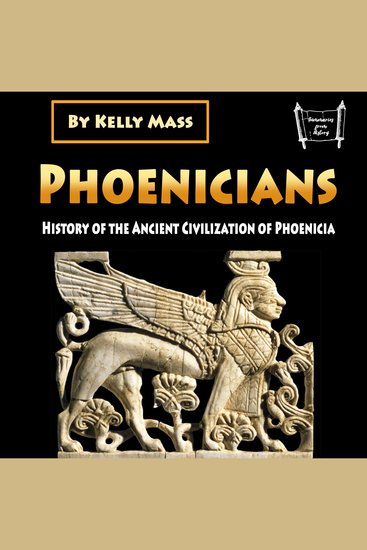
  • Phoenicians - History of the Ancient Civilization of Phoenicia - cover

    Phoenicians - History of the...

    Kelly Mass

    • 0
    • 0
    • 0
    The term "Phoenicians" describes the people living in Phoenicia, a sometimes-forgotten civilization that was age-old and remarkable. Let's check out the tradition, the history, and the specifics of Phoenicia. 
    Phoenicia was a thalassocratic (a state with mostly maritime worlds) society that thrived in the eastern Mediterranean's Levant area, mainly in modern-day Lebanon. It was fixated the coast of Lebanon, with some seaside parts of modern-day Syria and Galilee included for good procedure, varying as far north as Arwad and as far south as Acre and perhaps Gaza. Phoenician civilization stretched the Mediterranean from Cyprus to the Iberian Peninsula between 1100 and 200 BC. 
    The Phoenicians were a Semitic-speaking people who appeared in the Levant roughly 3000 BC and spoke a Semitic language. 
    In this book, you will learn more about this ancient civilization.
    Voir livre
  • Racial Emotion at Work - Dismantling Discrimination and Building Racial Justice in the Workplace - cover

    Racial Emotion at Work -...

    Tristin K. Green

    • 0
    • 0
    • 0
    This timely book unravels race and emotion in the workplace—exploring why racial emotion is often left out of equity conversations and why we must confront it. 


    Racial Emotion at Work is an invitation to understand our own emotions and associated behaviors around race—and much more. With this surprising and timely book, Tristin K. Green takes us beyond diversity trainings and other individualized solutions to discrimination and inequality in employment, calling for sweeping changes in how the law and work organizations treat and shape racial emotions. 


    Green provides listeners with the latest research on racial emotions in interracial interactions and ties this research to thinking about discrimination and disadvantage at work. We see how our racial emotions can result in discrimination, and how our institutions—the law and work organizations—value and skew our racial emotions in ways that place the brunt of negative consequences on people of color. It turns out we need to reset our institutional and not just our personal radars on racial emotion to advance racial justice. Racial Emotion at Work shows how we can rise to the task.
    Voir livre
  • TREASON - The Biden Administration’s Strategic and Malicious Destruction of America’s Sovereignty - cover

    TREASON - The Biden...

    J. Carrell

    • 0
    • 0
    • 0
    President Biden and his Administration have weaponized illegal immigration to fundamentally transform the United States of America. The intentional act of opening the borders of the United States of America is Treason. In this book, the evidence of this treason will be presented, as it would be by a federal agent, as a criminal case to an Assistant United States Attorney. Detailed evidence will be provided describing what the manifestation of this crime has wrought American cities and towns. A case will be laid out of treason against Joe Biden, Kamala Harris, Alejandro Mayorkas and the administrative state that controls our government.
    Voir livre
  • Greatest Indigenous Empires in the Americas The: The History of the Groups that Dominated the Western Hemisphere Before Columbus - cover

    Greatest Indigenous Empires in...

    Editors Charles River

    • 0
    • 0
    • 0
    The Olmec people are widely recognized as the first major civilization of Mexico and are thus generally regarded as the mother civilization of Mesoamerica, making them the people from which all subsequent Mesoamerican cultures derived. In fact, the term Olmec is thought to have originated with the Aztec people, as Olmec in their Nahuatl language means “the rubber people”, a reference to the inhabitants of the land from which they accessed rubber. By and large, the Olmec culture is perhaps best identifiable by their so-called colossal heads, mammoth basalt head-statues wearing helmet-like headdresses found throughout Olmec habitation sites. 
    	From the moment Spanish conquistador Hernan Cortes first found and confronted them, the Aztecs have fascinated the world, and they continue to hold a unique place both culturally and in pop culture. Nearly 500 years after the Spanish conquered their mighty empire, the Aztecs are often remembered today for their major capital, Tenochtitlan, as well as being fierce conquerors of the Valley of Mexico who often engaged in human sacrifice rituals. Ironically, and unlike the Mayans, the Aztecs are not widely viewed or remembered with nuance, in part because their own leader burned extant Aztec writings and rewrote a mythologized history explaining his empire’s dominance less than a century before the Spanish arrived.  
    	While scholars continue to debate whether the Toltec were an actual historical group, there is an added layer of mystery to the fact that the settlement at Tula has a lot in common with the famous Mayan settlement at Chichén Itzá. The architecture and art at both sites are so similar that archaeologists and anthropologists have assumed they had the same cultural influences, even as historians struggle to determine the historical timelines, and thus whether Tula influenced Chichén Itzá or vice versa. 
    Voir livre
  • Community Development - Empowering Urban Neighborhood - cover

    Community Development -...

    Lyric Vale

    • 0
    • 0
    • 0
    Community development lies at the heart of creating sustainable, thriving, and inclusive urban neighborhoods. It is a process that empowers residents, organizations, and stakeholders to work together toward shared goals, addressing pressing issues while building resilience and fostering a sense of belonging. This approach is not merely about improving infrastructure or economic growth; it is about nurturing the human connections that sustain communities and drive positive change. 
    At its core, community development is rooted in the idea that the people who live in a community are its greatest resource. Empowering individuals to take ownership of their neighborhoods fosters a sense of pride, responsibility, and collective action. By identifying and addressing local challenges—such as affordable housing, access to education, and environmental sustainability—residents can transform their shared spaces into vibrant, dynamic environments where everyone has the opportunity to thrive. 
    The importance of community development is particularly evident in urban areas, where challenges like overcrowding, economic disparity, and social fragmentation often intersect. These densely populated neighborhoods are microcosms of society, representing both its struggles and its potential for innovation and progress. Community development efforts help bridge divides by fostering dialogue, collaboration, and mutual understanding among diverse groups. Through initiatives such as leadership training, mentorship programs, and local events, urban residents can strengthen their networks and create a culture of support and inclusivity.
    Voir livre
  • How to Recognize Toxic Time Management - cover

    How to Recognize Toxic Time...

    Olivia Werner

    • 0
    • 0
    • 0
    [How to Recognize Toxic Time Management] delves into the intricate dance between human consciousness and temporal existence, unraveling the subtle violence we inflict upon ourselves in our desperate attempts to control time. With unflinching precision, this meditation on modern life exposes how we've weaponized our hours against ourselves, transforming productivity tools into instruments of self-harm. Through lyrical prose that echoes the intimacy of internal dialogue, the book illuminates the spaces between our intentions and actions, where toxicity breeds in the guilt of rest and the shame of pause. Drawing from deep psychological insights and embodied wisdom, it maps the territory of our temporal anxiety while offering a revolutionary perspective: that true freedom comes not from mastering time, but from transforming our relationship with it. This isn't just another time management guide; it's a radical reimagining of how we move through our days, challenging the cultural narratives that have taught us to view every moment as a unit of production to be optimized.
    Voir livre