Rejoignez-nous pour un voyage dans le monde des livres!
Ajouter ce livre à l'électronique
Grey
Ecrivez un nouveau commentaire Default profile 50px
Grey
Abonnez-vous pour lire le livre complet ou lisez les premières pages gratuitement!
All characters reduced
The Oqual Cycle In A Nutshell: The 84-Year Rhythm of Human Civilization (2024) - cover

The Oqual Cycle In A Nutshell: The 84-Year Rhythm of Human Civilization (2024)

Amjad Farooq

Maison d'édition: Oquannium Xpress

  • 0
  • 0
  • 0

Synopsis

With much of the world having been in a precipitous meltdown over the past couple of decades and continuing to hit a new low with each passing year with no end in sight, one wonders whether this is the new normal or whether the ongoing madness will eventually end so as to usher in a brighter dawn.

Fortunately, Mother Nature has blessed us with a hitherto unknown phenomenon dubbed the “oqual cycle” that helps us to revitalize our society after we have gone astray as is the case across much of the globe today—coined from Latin, the adjective "oqual" literally means "84-year". 

In a manner that the daily cycle lends us an indispensable mechanism for recharging our batteries during the night after a hectic day at work, the oqual cycle is equally necessary to reboot our society after it becomes corrupted and choppy over what appears to be a period of 84 years on average.

Since our childhood, we have not only heard ad nauseam the cliché that history is cyclical but it has also been shoved down our throat time and again.  

Well, our gurus and mentors were truly onto something in that we now know that history is in fact oquacyclical—it repeats exactly 84 years on average courtesy of the unavoidable spell of oqual cycle on our precarious civilization. 

In short, the oqual cycle serves as a model par excellence for making sense of the ongoing sociopolitical trials-and-tribulations of our own times that in no small part elicit a wistful yearning for the rather sweet memories of our recent past from the second half of the 20th century. 

Why in the world virtually all nations today have hit rock bottom as if they were joined at the hip?

Why almost all countries today are experiencing such a societal meltdown simultaneously or in synchrony with each other?

Why has humanity lost its moral compass today? 

Why are our leaders clueless about how to change course? 

How will the ongoing madness around the globe end? 

Are we teetering on the brink of a nuclear armageddon? 

When will the good old days return? 

The oqual cycle has you covered from every angle. 
 
Disponible depuis: 12/03/2024.

D'autres livres qui pourraient vous intéresser

  • I Was Never Here - My True Canadian Spy Story of Coffees Code Names and Covert Operations in the Age of Terrorism - cover

    I Was Never Here - My True...

    Andrew Kirsch

    • 0
    • 0
    • 0
    An ex-spy lifts the lid on life in the secret serviceA Globe and Mail and Toronto Star bestseller!Andrew Kirsch didn’t grow up watching spy movies, or dreaming about being a real-life James Bond. He was hardly aware that Canada even had its own intelligence service—let alone knew what its officers did. But when a terrorist attack occurred near the office of his financial services job, all of a sudden fighting terrorism meant a lot more to him than the markets. Within 18 months he had landed a job with the Canadian Security Intelligence Service (CSIS)—where he spent the next decade of his life.In I Was Never Here, Kirsch (now an in-demand security consultant) spills the secrets of what life as an intelligence officer is really like, and dispels a few myths along the way. With humour, honesty, and candour, Kirsch shares his on-the-ground experience (or as much of it as he’s allowed to) of becoming a member of CSIS: from his vetting and training, to his initial desk job as a policy analyst, to his rise up the ranks to leading covert special operations missions. If you’ve ever wondered whether spies can have real dating lives, how they handle family responsibilities, or how they come up with cover stories or aliases, you’re in luck.From the time he tried to get the code names “Burgundy” and “Anchorman” assigned to human sources (with no luck), to the night a covert operation was almost thwarted by a flyer delivery man, Kirsch takes you behind the scenes with an authentic view of Canada’s spy agency, and the intricate intelligence-sharing apparatus that works day and night to keep us safe. I Was Never Here is also a testament to one man’s drive to serve his country, and the sacrifices, big and small, that he made along the way.
    Voir livre
  • Social Entrepreneurship in Germany - An Analysis of the Media Discourse from 1999 to 2021 - cover

    Social Entrepreneurship in...

    Philipp Kenel

    • 0
    • 0
    • 0
    Public and political interest in social entrepreneurship (SE) is increasing while it remains a contested and ambiguous concept. Philipp Kenel traces the popular media representation of SE in Germany over time (1999—2021), making an important empirical contribution to the sociological and political understanding of the phenomenon. He shows that until 2008, SE was mainly understood as a reform of the welfare infrastructure (including public and non-profit institutions). From 2009, SE was increasingly conceptualised as part of the economy, while sometimes challenging and other times reaffirming mainstream economic logics. More recently, in somewhat competing perspectives, SE has been framed as part of the ›start-up‹ world or as a force for deeper social and ecological transformation.
    Voir livre
  • Beyond States - Powers Peoples and Global Order - cover

    Beyond States - Powers Peoples...

    Anthony Pagden

    • 0
    • 0
    • 0
    Today, the majority of the peoples of the planet live in nation-states, based upon the idea, if never the reality, of a single people, a single culture, a single rule of law, and a single source of sovereign authority. But will they continue to do so in the future? 


    None of the major challenges that confront humanity today—from climate change to disease, from terrorism to mass migration—can be handled effectively by single nation-states, no matter how powerful. The world is no longer made up only of states but also of an ever-increasing multitude of interstate networks and organizations which recognize no borders. We are beginning to be able to imagine the very real possibility of a new global civil society. But what political form should this take? 


    By examining the history of the evolution of human society from the world's first empires to today's world of interstate networks, this book argues that there now exists the possibility of the emergence of a new political form, a global 'federation of federations', that will bring the species closer to the possibility of a more harmonious, equitable, and secure future.
    Voir livre
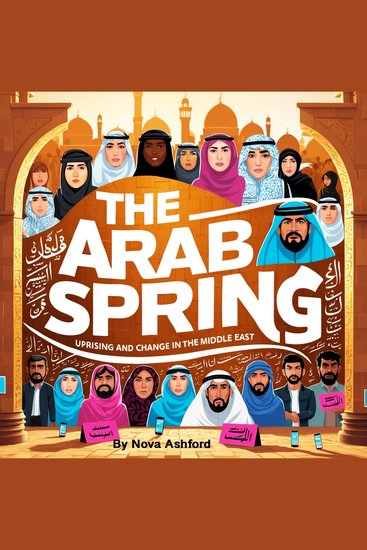
  • The Arab Spring - Uprising and Change in the Middle East - cover

    The Arab Spring - Uprising and...

    Nova Ashford

    • 0
    • 0
    • 0
    The Arab Spring, a series of pro-democracy uprisings, protests, and revolutions that swept across the Arab world beginning in late 2010, marked a significant turning point in the modern history of the Middle East. The movement, which began in Tunisia and quickly spread to other countries including Egypt, Libya, Yemen, Syria, and Bahrain, was driven by widespread discontent with authoritarian regimes, economic inequality, and a lack of political freedoms. The Arab Spring was not a single, unified event but rather a collection of distinct yet interconnected uprisings fueled by both longstanding grievances and immediate catalysts. It highlighted the power of ordinary citizens in challenging deeply entrenched political systems, showing the world that the will for change could be powerful even in the face of brutal government repression. 
    The Arab Spring began on December 17, 2010, when Mohamed Bouazizi, a street vendor in Tunisia, set himself on fire in protest of police harassment and government corruption. His act of desperation sparked mass protests throughout Tunisia, which eventually led to the ousting of President Zine El Abidine Ben Ali in January 2011. This success encouraged similar uprisings in neighboring countries, particularly in Egypt, where mass protests in Cairo’s Tahrir Square forced President Hosni Mubarak to resign after 30 years in power. These initial successes ignited a wave of hope across the Arab world that authoritarian regimes could be overthrown and democratic reforms could be achieved.
    Voir livre
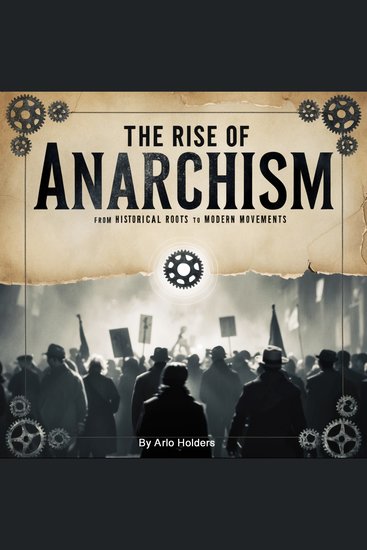
  • The Rise of Anarchism - From Historical Roots to Modern Movements - cover

    The Rise of Anarchism - From...

    Arlo Holders

    • 0
    • 0
    • 0
    Anarchism is a political philosophy that advocates for a society without rulers, where individuals are free to govern themselves without the interference of centralized authority. It is a broad and diverse ideology that challenges traditional systems of power, particularly the state, while emphasizing voluntary cooperation and mutual aid among individuals. Anarchism is rooted in the belief that human beings are capable of organizing themselves in non-hierarchical, egalitarian structures, and that the imposition of authority and coercive institutions is both unjust and unnecessary. 
    At its core, anarchism rejects the concept of a state or any institution that wields power over others. Anarchists argue that the state is inherently oppressive and coercive, often serving the interests of the powerful rather than the people it is supposed to protect. The state's monopoly on violence, enforcement of laws, and control over resources are seen as mechanisms of domination that restrict human freedom and dignity. Instead of these top-down systems, anarchism envisions decentralized, voluntary forms of organization where individuals and communities govern themselves through direct democracy and mutual aid. 
    The philosophy of anarchism is built on a commitment to freedom, autonomy, and the abolition of all forms of hierarchy, including not only state power but also social, economic, and cultural hierarchies. Anarchists seek to dismantle systems of oppression such as capitalism, patriarchy, and racism, which they view as intertwined with state power. The idea of freedom in anarchism is not just the absence of external constraints, but the presence of opportunities for people to fully develop their potential and live in harmony with others.
    Voir livre
  • The Art of War - cover

    The Art of War

    Sun Tzu

    • 0
    • 0
    • 0
    The Art of War by Sun Tzu is the definitive ancient guide to military strategy, leadership, and psychological warfare — a masterpiece of timeless wisdom as relevant today as it was over 2,000 years ago. 
    Structured as a series of maxims, this foundational text offers insights into the nature of conflict, the value of preparation, and the dynamics of victory and defeat. In this authoritative English translation by Lionel Giles (first published in 1910), the text is presented with clarity, elegance, and scholarly precision. 
    From generals and CEOs to athletes and philosophers, The Art of War has been studied across disciplines for its profound understanding of power, discipline, and adaptability. This audiobook is essential listening for anyone interested in leadership, decision-making, and the strategy of life itself.
    Voir livre