Join us on a literary world trip!
Add this book to bookshelf
Grey
Write a new comment Default profile 50px
Grey
Subscribe to read the full book or read the first pages for free!
All characters reduced
Wealth Distribution - cover

Wealth Distribution

Amelia Scott

Translator A AI

Publisher: Publifye

  • 0
  • 0
  • 0

Summary

"Wealth Distribution" explores the complex mechanisms behind wealth concentration and the effectiveness of redistribution policies, highlighting the profound impact of wealth inequality on social mobility and political stability. The book challenges the notion that wealth distribution is a natural outcome, arguing instead that it's shaped by policy choices, institutional structures, and historical events. For example, seemingly neutral tax laws can significantly affect wealth accumulation. 

 
The book progresses by first introducing fundamental concepts of wealth and inequality, then examines the key drivers of wealth concentration such as returns to capital, inheritance, and access to financial markets. It delves into policies like progressive taxation and social welfare programs designed to redistribute wealth. 

 
A unique aspect of this book is that it combines economic analysis with political and sociological perspectives, offering a comprehensive understanding of how power dynamics and social norms influence wealth distribution. Drawing on quantitative and qualitative data from sources like the World Bank and OECD, the book connects economics with fields like sociology and political science. 

 
By integrating these diverse perspectives, "Wealth Distribution" provides readers with a nuanced understanding of the ongoing debates surrounding economic policy, economic regulation, and the ethical dimensions of wealth inequality, equipping them to critically evaluate policy proposals and their potential impacts.
Available since: 02/28/2025.
Print length: 78 pages.


Other books that might interest you

  • Jews in the Garden - A Holocaust Survivor the Fate of His Family and the Secret History of Poland in World War II - cover

    Jews in the Garden - A Holocaust...

    Judy Rakowsky

    • 0
    • 0
    • 0
    Villages of Poland hide the lost secrets of World War II 


    1944: Heavy footfalls thud on the road on a rainy May night. A band of gunmen scour a hilltop farm, acting on rumors that it harbors a Jewish family. For 18 months, the Rozeneks have been hiding safely, but their luck is about to run out. Only one from the family of six will live to see the sunrise. Sixteen-year-old Hena Rozenek shelters in the woods until morning . . . and then she runs. 


    Forty years later: Holocaust survivor Sam Rakowski Ron has lived in the United States for decades, never thinking he could return to the Polish village he fled as a teenager. But now he's ready to talk about what he heard, what he saw, and what he knows about two separate families of cousins who were his neighbors, and presumably were killed during the war. The story Poland presents to the world is that Poles saved more Jews than citizens of any other nation, that any murders in Poland were committed by Nazis and Nazis alone. But Sam, while defending his countrymen, suspects a painful truth. The stories he shares with his younger cousin, Judy, an investigative journalist, send them off on a decades-long journey unlike any other to find out what happened to the Rozenek family and ultimately reveal the secrets the Polish government is still desperate to keep.
    Show book
  • Study Guide for Decoding To Kill a Mockingbird - With Typical Questions and Answers - cover

    Study Guide for Decoding To Kill...

    Steven Smith

    • 0
    • 0
    • 0
    This comprehensive study guide for Harper Lee's seminal work is tailored for students, educators, and literary aficionados alike, the guide meticulously explores the novel's profound thematic elements, complex character dynamics, and the pivotal historical backdrop against which the story unfolds, offering a layered understanding of its continued relevance and impact. 
    "Decoding To Kill a Mockingbird" is an in-depth analysis of the novel's exploration of themes such as racial injustice, moral integrity, empathy, and the transition from innocence to a nuanced understanding of the world. This guide dissects the intricate relationships and development of characters, including Scout, Atticus Finch, Tom Robinson, and Boo Radley, offering insights into their motivations and contributions to the novel's moral and ethical questions. It also delves into the narrative structure and the use of symbolism-such as the iconic mockingbird-enhancing appreciation for Lee's literary craftsmanship. 
    Understand the broader historical context of the American South in the 1930s, enriching the narrative's social and cultural commentary. The study guide is replete with thought-provoking questions and discussion prompts designed to foster deep reflection and debate, making it an invaluable resource for classroom discussions and book club meetings. From detailed accounts of the novel's climax and resolution to considerations of its legacy and cultural impact, this guide provides comprehensive coverage to fully grasp and appreciate Harper Lee's masterpiece. 
    Whether approaching "To Kill a Mockingbird" for academic purposes, preparing to teach it, or seeking to delve deeper into the novel's rich layers of meaning, this study guide is an essential companion. It equips readers with the tools and insights necessary to engage with this enduring classic fully, ensuring a deeper connection with the novel's themes and its portrayal of the human condition.
    Show book
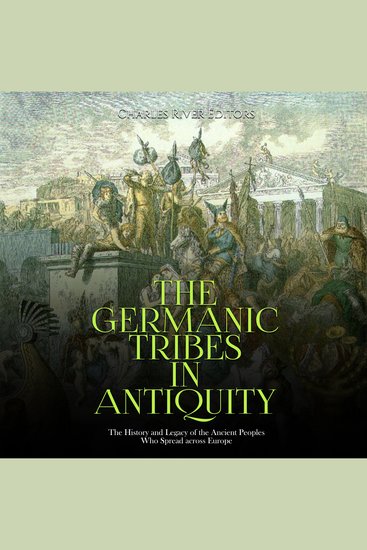
  • Germanic Tribes in Antiquity The: The History and Legacy of the Ancient Peoples Who Spread across Europe - cover

    Germanic Tribes in Antiquity...

    Editors Charles River

    • 0
    • 0
    • 0
    Despite all the accomplishments and widespread victories and conquests that the ancient Romans accrued over the centuries, one of their most critical failures was the inability to subjugate Germany. Indeed, historians have singled out this one failure as central to the ultimate downfall of Rome, as the constant wars against the Germanic tribes and the need to defend the frontier on the Rhine helped bring the Roman Empire to its knees. 
    There are elements of truth in such a conclusion, but the reality was far more fluid than is often realized. From the 1st century BCE until the collapse of the Western Roman Empire in the 5th century CE, the relationships between the Romans and those living in what is now modern Germany were extremely complicated, involving much more than simple warfare. As a Roman territory, Germania at one point included significant areas of land east of the Rhine, all the way up to the Elbe. The Romans would maintain a significant force on this eastern side until the 3rd century CE, but eventually a Frankish invasion ended that presence, and the term Germania came to refer specifically to the territory west of the Rhine, which included the two provinces of Germania Superior and Germania Inferior, or Upper and Lower Germany. Those provinces were key to the defense of the empire, so much so that Triers provided the location of one of the four seats of government near the end of Rome’s reign. 
    The people that came to be known as Germans originally came from Scandinavia and were mainly shepherds and hunters, but they comprised a number of distinct groups. Within each group, there were separate tribes, and as their populations grew, the land they occupied in Scandinavia was unable to support them, so they began migrating south, settling outside the borders of the Roman Empire. The Germans were fierce warriors who employed rather crude but effective tactics in battle.
    Show book
  • Radionics and Life Force Technologies - Hieronymus Radionics Kirlian Tesla and Orgone Devices - cover

    Radionics and Life Force...

    Martin K Ettington

    • 0
    • 0
    • 0
    Radionics is the term for machines which manipulate life forces. This is often for healing or increasing psychic perceptions. 
    The Author is an engineer and has many decades of experience with the paranormal and well as time learning and experimenting with radionics devices from the 1970s. 
    While radionics devices are often considered pseudoscience, those opinions don’t take into account the sensitivities of individuals who have incredible paranormal and healing abilities. 
    In my first year of engineering school at Rensselaer Polytechnic Institute in Troy, New York I met a man who became my mentor in the Paranormal and other things too. This was in 1973. 
    I learned to meditate and how to open my crown chakra to take in vital forces which allowed me to do many things including healing others. 
    In addition I also met another middle aged guy at a Psychic Fair in Saratoga Springs, New York. He was a researcher in the arcane field of Kirlian Photography. 
    In this book the history of radionics is discussed, some of the major influencers on that history, how these devices are used for healing, and even some plans for building radionics devices.  
    My hope is that this book will give you a good grounding in radionics to learn to use it productively for your own efforts.
    Show book
  • A Rare Recording of James Joyce Reading From His Novel Finnegan's Wake - cover

    A Rare Recording of James Joyce...

    James Joyce

    • 0
    • 0
    • 0
    James Augusta Joyce (February 2, 1882 - January 13, 1941), born in Dublin, was an Irish novelist, poet, and literary critic. He contributed to the modernist avant-garde movement and is regarded as one of the most influential and important writers of the twentieth century. The following recording was made in 1929 by C.K. Odgen in the studio of the Orthological Society in Cambridge during which Joyce read from his novel, “Finnegans Wake.”
    Show book
  • How To Make People Like You: Read People Like A Book Master Small Talk Develop Influence and Charisma to Learn How to Talk to Anyone Win Friends and Build Meaningful Relationships - cover

    How To Make People Like You:...

    Sebastian Clark

    • 0
    • 0
    • 0
    Become the social butterfly you’ve always wanted to be!  
    People are complex creatures and it can be difficult to understand them. 
    We all want to be liked by others, but sometimes it's hard to know how to go about it. 
    It can be tough to make friends and develop meaningful relationships. You may feel like you're always putting yourself out there, but not getting the results you want. 
    This bundle will teach you everything you need to know about social interaction, from making small talk to developing influence and charisma. 
    You'll learn how to identify the important elements of successful conversations, master your body language, and use effective communication strategies. 
    Connect with anyone on a deeper level and create lasting relationships that matter! 
    Be confident enough to talk to anyone — from your boss at work to the new person you just met. 
    You’ll learn the secrets of small talk and master the art of conversation, like:The importance of eye contact, body language, and the power of verbalizing your thoughtsHow to start conversations in any situationTips for developing influential relationshipsStrategies for building genuine connections with peopleTechniques for nurturing relationships over timeKnowing when to rely on your intuitionHow to listen, process, and digest words and emotions before speakingThe power of silence 
    Listening to these audiobooks is the first step on your journey to becoming a social butterfly! 
    Soon enough, you will have friends everywhere and meaningful relationships with almost everyone you know.Scroll up, get the audiobook, and start listening!
    Show book