Rejoignez-nous pour un voyage dans le monde des livres!
Ajouter ce livre à l'électronique
Grey
Ecrivez un nouveau commentaire Default profile 50px
Grey
Abonnez-vous pour lire le livre complet ou lisez les premières pages gratuitement!
All characters reduced
Trade Time - cover

Trade Time

Amelia Scott

Traducteur A AI

Maison d'édition: Publifye

  • 0
  • 0
  • 0

Synopsis

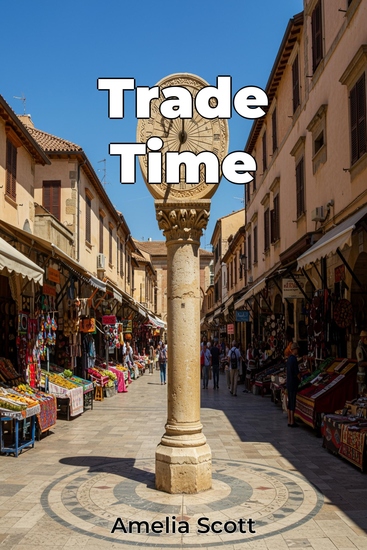
Trade Time argues that the evolution of calendars was significantly shaped by the demands of ancient trade networks, not solely by agricultural or religious needs. This fresh perspective highlights how economic imperatives drove the standardization and refinement of timekeeping systems across cultures like Mesopotamia, Egypt, and the Roman Empire. The book reveals that calendars were indispensable tools for economic planning and coordinating long-distance commerce.

 
One intriguing insight is how the Roman Empire adapted the Egyptian calendar for administrative purposes, showcasing the practical applications of timekeeping in governance and trade facilitation.

 
The book progresses chronologically, starting with rudimentary timekeeping methods and tracing their evolution into complex, standardized calendars. By examining archaeological evidence, merchant contracts, and astronomical observations, Trade Time demonstrates the correlation between increased trade activity and the sophistication of calendar systems. The book analyzes ancient trade documents, revealing how merchants used calendars to schedule shipments, calculate interest, and resolve disputes.

 
This novel approach offers a unique understanding of how the need to efficiently buy, sell, and transport goods shaped one of humanity's most fundamental inventions.
Disponible depuis: 05/03/2025.
Longueur d'impression: 58 pages.
D'autres livres qui pourraient vous intéresser

  • Megalithic Temples of Malta The: The History and Legacy of Europe’s Oldest Standing Structures - cover

    Megalithic Temples of Malta The:...

    Editors Charles River

    • 0
    • 0
    • 0
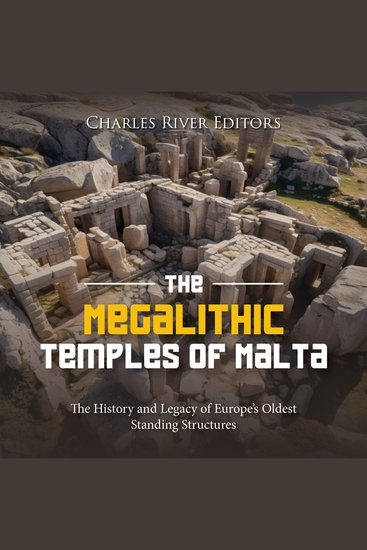
    Malta’s history goes back further than many know, which can be attested to by the numerous Neolithic and Bronze Age era megaliths that dot the island of Malta proper as well as the island of Gozo to the north. Naturally, when European archaeologists began unearthing the megaliths of Malta in the 19th century, they did not know what to think, which led to a plethora of theories, many of them quite fantastic. At least 23 of these temples were uncovered, but because the people who built them lacked the knowledge of writing, speculation over who built them and why remained well into the 20th century (Rountree 2003, 26). Some people theorized that the Malta megaliths were built by a race of giants, while others believed that it was the center of a “Mother Earth” cult that later spread through Neolithic Europe.  
    Early archaeologists were also perplexed about the physical origins of the Maltese megalith builders. Because Malta is such an isolated location, the builders had to have migrated there from elsewhere, but debates raged over the location. Equally confusing was when the megaliths were built. Although most legitimate historians believed from an early time that they were Neolithic structures, some argued that they were built much later and influenced by the Minoans and/or the Mycenaeans.  
    Even as some answers have arrived, scholars still debate the purpose of the megaliths. Although there is a near consensus that they served as religious temples, the deities that were worshiped as well as the rituals carried out in the structures remain a mystery and sources of further debate. As such, the ancient monuments remain enigmatic and serve as sources of pride for the modern Maltese people and awe-inspiring to all those who visit them.
    Voir livre
  • Make Your Mess Your Memoir - cover

    Make Your Mess Your Memoir

    Anna David

    • 0
    • 0
    • 0
    We’ve all made a mess.And that means we all have a message.This is the book that shows you how to take the former and make it into the latter.FROM THE NY TIMES BESTSELLING AUTHORWhen Anna David got sober and sold a book about her recovery to the biggest publisher in the world, she thought she’d made it. She was wrong.Still, after years of struggle and self-discovery, she ended up thriving personally and professionally. Now she’s sharing what she’s learned—and showing others how to do the same.In this page-turning and useful memoir-meets-manual, David reveals her personal lows (doing cocaine by herself while contemplating suicide), her career lows (a past-his-prime celebrity hurling a phone at her as she wrote his biography) and how her life today wouldn’t be possible without those experiences.The last quarter of the book is a practical guide so that readers can make their own mess into a message—and memoir.In this completely comprehensive “biz-oir” packed with proven and authentic tools and techniques, memoirists-in-the-making will travel with David on her journey from struggling addict to New York Times bestselling writer/entrepreneur and also learn:-How to determine a memoir message and “why” -How to select scenes-The advantages and disadvantages of traditional and self-publishing-How to come up with a title, rewrite a book and hire editors -Potential legal concerns and how to avoid them -How to gather blurbs, write acknowledgments and arrange for a foreword-How to be set up for success on Amazon -The importance of an Advanced Reader Team And much more.The best time to write a book was 10 years ago. The second best time is now. To start creating the business tool that will change your career—and life—click ADD TO CART before the price changes.
    Voir livre
  • Louis XIV - - cover

    Louis XIV -

    Santiago Machain

    • 0
    • 0
    • 0
    This audiobook is narrated by an AI Voice.   
    This book offers a complete and profoundly human portrait of Louis XIV of France, the celebrated Sun King, from his childhood marked by the Fronde to his final days dominated by illness, mourning, and concern for the future of his kingdom. Through this second installment, the reader traverses the construction of absolute power, the birth of Versailles as a political stage, the wars that led France to glory and exhaustion, the intimate life of the monarch with his family and his lovers, the cultural brilliance of the seventeenth century, and the religious decisions that left a legacy of intolerance and exile.
    Voir livre
  • Partition of India and the British Mandate of Palestine The: The Controversial History of Great Britain’s Post-War Partition Plans and the Aftermath - cover

    Partition of India and the...

    Charles River Editors

    • 0
    • 0
    • 0
    British India ultimately covered some 54 percent of the landmass and 77 percent of the population. By the time the British began to contemplate a withdrawal from India, 565 princely states were officially recognized, in addition to thousands of zamindaris and jagirs, which were in effect feudal estates. The stature of each Princely State was defined by the number of guns fired in salute upon a ceremonial occasion honoring one or other of the princes. These ranged from nine-gun to twenty-one-gun salutes and, in a great many cases, no salute at all. 	It stands to reason, therefore, as India began the countdown to independence after World War II, that the Indian Muslim leadership would begin to express anxiety over the prospect of universal suffrage and majority rule. At less than 20 percent of the population, Indian Muslims would inevitably find themselves overwhelmed by the Hindu majority, and as the British prepared to divest themselves of India, ancient enmities between Hindu and Muslim, long papered over by the secular and remote government of Britain, began once again to surface. 
    The Ottoman Empire quickly collapsed after World War I, and its extensive lands were divvied up between the French and British. While the French gained control of the Levant, which would later become modern day nations like Syria, the British were given the Mandate for Palestine from the newly created League of Nations. The British Mandate for Palestine gave the British control over the lands that have since become Jordan, Israel, the West Bank, and the Gaza Strip. The terms of the British Mandate incorporated the language of the Balfour Declaration, recognizing the “historical connection of the Jewish people with Palestine.” The British were also tasked with creating a Jewish state, which the United States Congress endorsed in 1922. 
    Voir livre
  • The Creole Rebellion - The Most Successful Slave Revolt in American History - cover

    The Creole Rebellion - The Most...

    Bruce Chadwick

    • 0
    • 0
    • 0
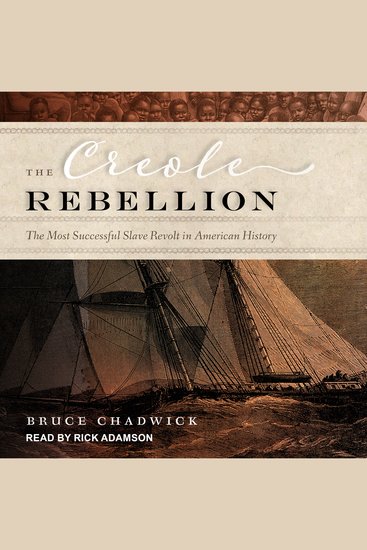
    The Creole Rebellion tells the suspenseful story of a successful mutiny on board the slave ship Creole. En route for a New Orleans slave-auction block in November 1841, nineteen captives mutinied, killing one man and injuring several others. After taking control of the vessel, mutineer Madison Washington forced the crewmen to sail to the Bahamas. Despite much local hysteria upon their arrival, all of the 135 slaves aboard the ship won their freedom there. 


    The revolt significantly fueled and amplified the slave debate within a divided nation that was already hurtling toward a Civil War. While this is a book about the United States confronting the ugly and tumultuous issue of slavery, it is also about the 135 enslaved men and women who were unwilling to take their oppression any longer and rose up to free themselves in a bloody fight. Part history, part adventure, and part legal drama, Bruce Chadwick chronicles the most successful slave revolt in the pages of American history.
    Voir livre
  • Radiolab: Journey Through The Human Body - cover

    Radiolab: Journey Through The...

    Radiolab

    • 0
    • 0
    • 0
    Radiolab invites you to join us on a scientific journey through the body. Our bodies are so complex that many processes can go unnoticed. In this audiobook, not only do we notice, but we explore how our anatomy has shaped the human experience. These five chapters explore your guts, private parts, womb, butt, and brain. We’ll hear stories from scientists, anthropologists, professors, doctors, mothers, fathers, and storytellers. We answer questions like what organ is a baby's best friend and the mother's worst nightmare, what is the evolutionary reason for our butts, and how does your brain know that you, are you?
    Voir livre