Begleiten Sie uns auf eine literarische Weltreise!
Buch zum Bücherregal hinzufügen
Grey
Einen neuen Kommentar schreiben Default profile 50px
Grey
Jetzt das ganze Buch im Abo oder die ersten Seiten gratis lesen!
All characters reduced
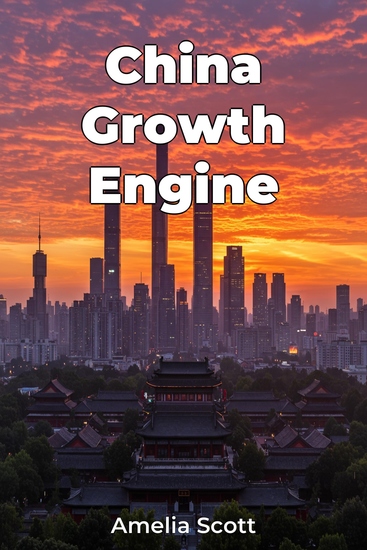
China Growth Engine - cover

China Growth Engine

Amelia Scott

Übersetzer A AI

Verlag: Publifye

  • 0
  • 0
  • 0

Beschreibung

China Growth Engine examines how China transformed into a global economic powerhouse in a few decades. It delves into the country's economic reforms, manufacturing dominance, and global investment strategies. The book argues China's success stems from a unique combination of state-led development and strategic global integration. For instance, the establishment of Special Economic Zones facilitated foreign investment and spurred economic activity.

 
The book explores China's economic development systematically, starting with pre-reform era context to highlight the magnitude of Deng Xiaoping's reforms. It then analyzes China's manufacturing capabilities and its global investment strategy, like the Belt and Road Initiative. The book uses empirical evidence and interviews to provide a balanced assessment of China's economic performance and acknowledges ongoing debates such as the role of state-owned enterprises.

 
The book adopts a fact-based approach, making it accessible to a broad audience interested in economics and politics. It progresses by first establishing key themes, then focusing on economic reforms, followed by analyzing China's manufacturing prowess, and finally investigating China's global investment strategy. This approach offers a holistic view of China's economic trajectory and its impact on the world.
Verfügbar seit: 27.02.2025.
Drucklänge: 73 Seiten.

Weitere Bücher, die Sie mögen werden

  • The Meme Humanoids - Modern Myths or Real Monsters - cover

    The Meme Humanoids - Modern...

    Lon Strickler

    • 0
    • 0
    • 0
    In 2012, an incredible phenomenon began to occur. Internet users, in earnest, began reporting frightening encounters with emaciated, pale, hairless humanoids that, for the most part, crawled on all fours. Internet users attempted to equate these entities with characters of Native American mythology, oblivious to the fact that the humanoids in these encounters bore a resemblance to the fictional Rake. Many witnesses suggested that they were "Skinwalkers," medicine men or witches of traditional Navajo lore who possess the ability to transform into animals. Others proposed that these emaciated humanoids were manifestations of the "Wendigo," a malevolent cannibalistic spirit of Cree and Algonquin legend. Others still began to invent new names for these creatures, such as "Fleshgaits" and "Crawlers," the latter evoking the 2005 movie entities that likely helped to inspire the Rake originally. 


    The humanoid encounters and sightings that are detailed in this book over varied glimpses into the phenomenon. Ask yourself—are these humanoids actual corporeal beings that are manifested by the human mind and perceivable by others? Or are we witnessing the nexus of an unknown and monstrous species of humanoid?
    Zum Buch
  • We Are All Armenian - Voices from the Diaspora - cover

    We Are All Armenian - Voices...

    Aram Mrjoian

    • 0
    • 0
    • 0
    A collection of essays about Armenian identity and belonging in the diaspora. 


    In the century since the Armenian Genocide, Armenian survivors and their descendants have written of a vast range of experiences using storytelling and activism, two important aspects of Armenian culture. Wrestling with questions of home and self, diasporan Armenian writers bear the burden of repeatedly telling their history, as it remains widely erased and obfuscated. Telling this history requires a tangled balance of contextualizing the past and reporting on the present, of respecting a culture even while feeling lost within it. 


    We Are All Armenian brings together established and emerging Armenian authors to reflect on the complications of Armenian ethnic identity today. These personal essays elevate diasporic voices that have been historically silenced inside and outside of their communities, including queer, multiracial, and multiethnic writers. The eighteen contributors to this contemporary anthology explore issues of displacement, assimilation, inheritance, and broader definitions of home. Through engaging creative nonfiction, many of them question what it is to be Armenian enough inside an often unacknowledged community.
    Zum Buch
  • 8 Keys to Safe Trauma Recovery Workbook - cover

    8 Keys to Safe Trauma Recovery...

    Vanessa Bear, Babette Rothschild

    • 0
    • 0
    • 0
    Exercises of healing and transformation for trauma survivors. 


    Drawing from neuroscience and psychotherapy with empowering strategies to take charge of healing from trauma, this workbook follows the theme of each of the eight keys in 8 Keys to Safe Trauma Recovery. The two books complement each other; but it is not necessary to have listened to the original to benefit from this workbook, which presents practical exercises and activities integral to safe trauma recovery and designed to support listeners' control of their mind, body, and life in the aftermath of trauma. 


    One thing is for sure: there is no one-size-fits-all method for healing trauma. This workbook will help listeners identify, assess, and celebrate the resources they already have, and add more resources to their toolbox. 


    Most importantly, the authors do not subscribe to the old motto "no pain, no gain," fostering instead the concept that healing from trauma should not be traumatic.
    Zum Buch
  • Escaping the Gulags: The History of the Most Famous Attempts to Escape the Soviet Union’s Notorious Labor Camps - cover

    Escaping the Gulags: The History...

    Editors Charles River

    • 0
    • 0
    • 0
    One of the most idiosyncratic horrors of Soviet Russia was the Gulag system, an extensive network of forced labor and concentration camps. Part of the rationale behind this system was that it could serve as slave labor in the drive for industrialization, while also serving as a form of punishment. The name Gulag is in fact an acronym, approximating to “Main Administration of Camps” (in Russian: Glavnoe Upravlenie Lagerei) and operated by the Soviet Union’s Ministry of the Interior.[1] The Gulag consisted of internment camps, forced labor camps, psychiatric hospital facilities, and special laboratories, and its prisoners were known as zeks. Such was the closed and secretive nature of the Soviet state that to this day, knowledge of the Gulag system comes mainly from Western studies, firsthand accounts by prisoners such as Aleksandr Solzhenitsyn, and some local studies after the fall of communism. 
    	The most recognisable version of the Gulag, a term that was never pluralized in Russia itself, existed from the 1930s-1950s, a period in which a huge network of camps and prisons was established across the vast Soviet federation. Prisoners were often used as forced labor, made to do physically arduous and soul-destroying tasks. Some workers helped to build large infrastructure projects, and indeed the system was partly rationalized in terms of economics.  
    	By the early 1960s, Gulags were synonymous with various forms of punishments, including house arrest, imprisonment in isolated places, or confinement to a mental hospital where a prisoner would be declared insane or diagnosed with a “political” form of psychosis. In its later years, the Gulags held a particular place in the public’s imagination, both within the USSR and in the outside world. They could mean exile, brutal punishment, or simply being banished to Siberia.
    Zum Buch
  • A Rare Recording of Malcolm X's The Ballot or The Bullet Speech - cover

    A Rare Recording of Malcolm X's...

    Malcolm X

    • 0
    • 0
    • 0
    Malcolm X (born Malcolm Little, later Malik el-Shabazz; May 19, 1925 - February 21, 1965) was an American Muslim minister and human rights activist who was a prominent figure during the civil rights movement of the 1950s and 60s. A spokesman for the Nation of Islam until 1964, he was a vocal advocate for Black empowerment and the promotion of Islam within the Black community. On February 21, 1965, he was assassinated in New York City. Three Nation members were charged with the murder and given indeterminate life sentences; in 2021, two of the convictions were vacated. Speculation about the assassination and whether it was conceived or aided by leading or additional members of the Nation, or with law enforcement agencies, has persisted for decades.
    Zum Buch
  • Dragged Up Proppa - Growing up in Britain’s Forgotten North - cover

    Dragged Up Proppa - Growing up...

    Pip Fallow

    • 0
    • 0
    • 0
    Read by the author, Dragged Up Proppa is the story of growing up working class in a forgotten England.'Very compelling, beautifully written memoir of a time and England that no longer exists but remains just as important today as ever' – Sebastian Payne, author of Broken HeartlandsPip Fallow was born in the coal-miner’s cottage where his family of eight lived, in a village near Durham. Pip was destined to join his father down the pit, but the closure of his village’s mine in the 1980s saw him at the back of the dole queue like the rest. This is Pip’s story of being ‘dragged up proppa’, living by his wits, working and travelling the world – before finally settling a few miles from where he grew up.A lot has been written about the red wall in recent years, but Pip Fallow has lived it. This is his account of some of the most important issues affecting Britain today – from levelling-up and the north-south divide, to social mobility and class, and the devastating social upheaval caused by decades of deindustrialization and government neglect. He shows how broken promises of the past impact his village and the politics of today.This is the memoir of a man who left school illiterate, but has now written a book. The story of a lost generation who were prepared for a life that had disappeared by the time they were ready for it, of communities with once strong social ties that have now disintegrated, and a way of living that simply no longer exists in Britain today.'Fallow's memoir is not just a classic piece of working-class writing, but a truly gripping narrative' – Brian Groom, author of Northerners: A History
    Zum Buch