Begleiten Sie uns auf eine literarische Weltreise!
Buch zum Bücherregal hinzufügen
Grey
Einen neuen Kommentar schreiben Default profile 50px
Grey
Jetzt das ganze Buch im Abo oder die ersten Seiten gratis lesen!
All characters reduced
World Leaders Secrets - cover

World Leaders Secrets

Amelia Khatri

Übersetzer A AI

Verlag: Publifye

  • 0
  • 0
  • 0

Beschreibung

World Leaders Secrets uncovers the veiled lives and clandestine actions of influential figures throughout history, revealing the intricate relationship between power, personality, and historical consequences. By exploring hidden scandals and covert operations, the book aims to provide a more complete understanding of the forces shaping our world. Consider, for instance, how a leader’s personal life might influence critical policy decisions or how intelligence gathering impacts international relations. The book examines leaders from ancient times, such as Julius Caesar and Cleopatra, to modern figures like Winston Churchill and John F. Kennedy, dissecting their decision-making processes. It emphasizes that a leader’s public image is often a carefully constructed facade, concealing complex realities. The approach involves analyzing primary sources like personal letters and declassified intelligence reports, integrating historical analysis with insights from political psychology. Each chapter focuses on specific leaders within a particular historical period, offering a nuanced exploration of their hidden lives and historical impact.

 
Understanding the hidden influences on leaders has significant political and social implications. By examining past successes and failures, we can gain insights into improving leadership and promoting more ethical governance. This book contributes to ongoing debates about the nature of leadership and the impact of personal failings on public life, offering a fresh perspective by integrating historical analysis.
Verfügbar seit: 15.02.2025.
Drucklänge: 62 Seiten.

Weitere Bücher, die Sie mögen werden

  • Love and Saint Augustine - cover

    Love and Saint Augustine

    Hannah Arendt

    • 0
    • 0
    • 0
    Hannah Arendt, the author of The Origins of Totalitarianism and The Human Condition, began her scholarly career with an exploration of Saint Augustine's concept of caritas, or neighborly love, written under the direction of Karl Jaspers and the influence of Martin Heidegger. After her German academic life came to a halt in 1933, Arendt carried her dissertation into exile in France, and years later took the same battered and stained copy to New York. 


    During the late 1950s and early 1960s, Arendt was simultaneously annotating and revising her dissertation on Augustine, amplifying its argument with terms and concepts she was using in her political works. The dissertation became a bridge over which Arendt traveled back and forth between 1929 Heidelberg and 1960s New York, carrying with her Augustine's question about the possibility of social life in an age of rapid political and moral change. 


    In Love and Saint Augustine, political science professor Joanna Vecchiarelli Scott and philosophy professor Judith Chelius Stark make this important early work accessible for the first time. Here is a completely corrected and revised English translation that incorporates Arendt's own substantial revisions and provides additional notes based on letters, contracts, and other documents as well as the recollections of Arendt's friends and colleagues.
    Zum Buch
  • Lucifera - From their pens to your ears genius in every story - cover

    Lucifera - From their pens to...

    Anthony Hope

    • 0
    • 0
    • 0
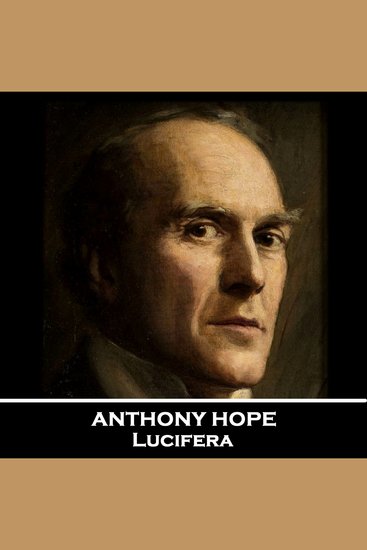
    Sir Anthony Hope Hawkins was born on 9th February 1863 in Clapton, London.  
    He was educated at St John's School, Leatherhead, Marlborough College and Balliol College, Oxford.  Hope trained as a lawyer and barrister and was called to the Bar by the Middle Temple in 1887. Despite what was thought to be a promising legal career he had literary ambitions and wrote in his spare time. 
    His early works appeared in various periodicals of the day but for his first book ‘A Man of Mark’ (1890), with no publisher interested, he published with his own resources.  
    More novels and short stories followed, including the mildly successful ‘Mr Witt's Widow’ in 1892. Hope even found time to run as the Liberal candidate for Wycombe in the election that same year but was unsuccessful. 
    His first major literary success came with ‘The Dolly Dialogues’, a collection of previously published magazine pieces followed very quickly by his instant classic, ‘The Prisoner of Zenda’. He now gave up the vestiges of his legal career to pursue writing full-time. 
    Despite never again reaching the same pinnacle of success he was popular and wrote prolifically across novels, plays and of course, short stories though his writing output rapidly diminished after the war. 
    In 1918 he was knighted for his contribution to propaganda efforts during World War I.  
    His short stories are delicate, mannered and often surprising with their wit, humour and interplay of characters who say one thing and usually mean another.  He was very definitely a writer of escapist rather than serious fare but they are no less enjoyable for that. 
    Anthony Hope died of throat cancer on 8th July 1933 at his country home, Heath Farm at Walton-on-the-Hill in Surrey. He was 70.
    Zum Buch
  • Under the Rose - cover

    Under the Rose

    Anatole France, Michael Corday...

    • 0
    • 0
    • 0
     THE greater part of the unpublished remains of Anatole France consists of Dialogues which he intended to entitle Under the Rose. 
    He liked that old-fashioned expression. In the course of an essay on the Emperor Julian in Life and Letters, he says : 
    “ One evening I heard Monsieur Renan say under the rose, ‘ Julian ! Why, the man was a reactionary.’ ” 
    But nowadays the phrase is seldom used, and its real significance is almost forgotten. The big dictionaries of the day know it not. 
    He had, as a matter of fact, begun to write these Dialogues just after the war, and he had, no doubt, been prompted to enroll them beneath the emblem of Peace. The reader will observe in due course how one of his characters alludes to this auspicious date. “ Let us celebrate tog'ether,” so the words run, “ in these days of peace and repose, here beneath the sacred olive, the serene orgies of metaphysics. Let us drink our fill of wisdom.”
    Zum Buch
  • Hurlbut's Story of the Bible Part 4 - cover

    Hurlbut's Story of the Bible Part 4

    Jesse Lyman Hurlbut

    • 0
    • 0
    • 0
    Some years ago, the editor of an English magazine sent a communication to "the hundred greatest men in Great Britain" asking them this question: "If for any reason you were to spend a year absolutely alone, in a prison for instance, and could select from your library three volumes to be taken with you as companions in your period of retirement please to inform us what those three books would be." The inquiry was sent to peers of the realm, prominent leaders in politics, judges, authors, manufacturers, merchants, gentlemen of leisure—men who would represent every aspect of successful life. In the answers it was found that ninety-eight of the hundred men named "The Bible" first on the list of the three books to be chosen. (From Book introduction)
    Zum Buch
  • Extra Pauline Letters The: Beyond the New Testament Epistles - 3 Corinthians Laodiceans and Other Lost Writings Attributed to Paul - A Modern Translation - Adapted for the Contemporary Reader - cover

    Extra Pauline Letters The:...

    Various Early Christian Sources

    • 0
    • 0
    • 0
    What if the apostle Paul penned (or inspired) letters beyond the thirteen we know—letters that shaped communities before fading into obscurity? 
    This collection, rendered in modern English, introduces texts like 3 Corinthians and the Epistle to the Laodiceans, once circulated under Paul’s name. Supplemented with the Correspondence of Paul and Seneca and relevant segments from the Acts of Paul, these writings reveal how the apostle’s authority was invoked to address emerging heresies or unify believers—rightly or wrongly. 
    Included Texts:3 Corinthians – Found in some Eastern canons, combating Gnostic influences.Epistle to the Laodiceans – A medieval compilation from Pauline phrases.Correspondence of Paul & Seneca – Alleged philosophical exchange.Excerpts of Acts of Paul – Context for these extraneous letters. 
    What You’ll Discover Inside:The Reach of Pauline Authority – How churches shaped or fabricated letters in Paul’s honor.Early Heresy Battles – 3 Corinthians’ stance on bodily resurrection and creation.Literary Forgery or Genuine Legacy? – Insights into scribal and doctrinal motives.Paul’s Ongoing Influence – See how his persona framed theological unity beyond the canonical corpus. 
    Journey beyond the familiar Pauline epistles and explore how early Christians wrestled with apostolic authenticity. Could these letters enrich your understanding of Paul’s lasting impact?
    Zum Buch
  • The Wife of Bath - A Biography - cover

    The Wife of Bath - A Biography

    Marion Turner

    • 0
    • 0
    • 0
    From the award-winning biographer of Chaucer, the story of his most popular and scandalous character, from the Middle Ages to #MeToo 
     
    Ever since her triumphant debut in Chaucer’s Canterbury Tales, the Wife of Bath, arguably the first ordinary and recognisably real woman in English literature, has obsessed readers—from Shakespeare to James Joyce, Voltaire to Pasolini, Dryden  
    to Zadie Smith. Few literary characters have led such colourful lives or matched her influence or capacity for reinvention in poetry, drama, fiction, and film. In The Wife of Bath, Marion Turner tells the fascinating story of where Chaucer’s  
    favourite character came from, how she related to real medieval women, and where her many travels have taken her since the fourteenth century, from Falstaff and Molly Bloom to #MeToo and Black Lives Matter.  
     
    A sexually active and funny working woman, the Wife of Bath, also known as Alison, talks explicitly about sexual pleasure. She is also a victim of domestic abuse who tells a story of rape and redemption. Formed from misogynist sources, she  
    plays with stereotypes. Turner sets Alison’s fictional story alongside the lives of real medieval women—from a maid who travelled around Europe, abandoned her employer, and forged a new career in Rome to a duchess who married her fourth  
    husband, a teenager, when she was sixty-five. Turner also tells the incredible story of Alison’s postmedieval life, from seventeenth-century ballads and Polish communist pop art to her reclamation by postcolonial Black British womenwriters. 
     
    Entertaining and enlightening, funny and provocative, The Wife of Bath is a oneof-a-kind history of a literary and feminist icon who continues to capture the imagination of readers.
    Zum Buch