Join us on a literary world trip!
Add this book to bookshelf
Grey
Write a new comment Default profile 50px
Grey
Subscribe to read the full book or read the first pages for free!
All characters reduced
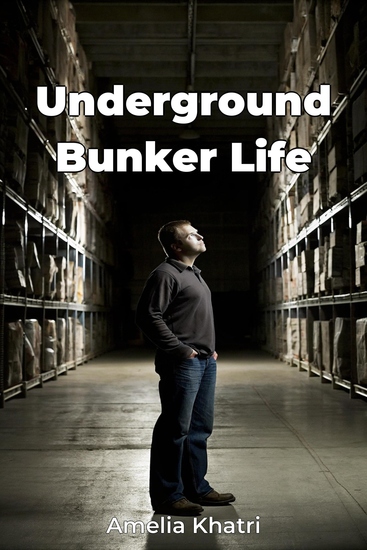
Underground Bunker Life - cover

Underground Bunker Life

Amelia Khatri

Translator A AI

Publisher: Publifye

  • 0
  • 0
  • 0

Summary

Underground Bunker Life explores the complex realities of surviving in subterranean shelters, a topic gaining relevance amid increasing geopolitical instability, climate change, and pandemics. It examines the history of these shelters, from ancient dwellings to Cold War bunkers, and delves into the practical considerations of bunker habitation, such as food storage, waste management, and power generation. A key insight involves understanding that while technological preparedness is crucial, the psychological and sociological factors are equally vital for long-term survival, including mental health and group cohesion. The book uniquely emphasizes the interconnectedness of technology and human factors, challenging the notion that survival solely depends on physical resources. It progresses by first establishing the historical context, then examining technical aspects, and finally focusing on the human element through research on psychology of isolation and social challenges. Drawing from historical archives, government documents, and first-hand accounts, Underground Bunker Life offers practical recommendations for individuals and communities planning for long-term bunker habitation, emphasizing the importance of psychological preparedness and effective leadership.
Available since: 02/15/2025.
Print length: 86 pages.

Other books that might interest you

  • Political Choice in a Polarized America - How Elite Polarization Shapes Mass Behavior - cover

    Political Choice in a Polarized...

    Joshua N. Zingher

    • 0
    • 0
    • 0
    What motivates citizens to support one party over the other? Do they carefully weigh all of the relevant issues and assess which party or candidate best matches their own positions? Or do people look at politics as something more akin to a team sport—the specifics do not matter as long as you know what side your team is on? Answering these questions requires us to think about how much the average American knows about politics. Many scholars of public opinion believe that the majority of Americans only pay passing attention to politics. Thus the electorate's apparent lack of political competence presents a direct challenge to normative theories of democracy. How are citizens supposed to exert control over the government if they have no idea what is going on? 


    In Political Choice in a Polarized America, Joshua N. Zingher argues that these fears are overblown. Not only do individuals have core beliefs about what the government should or should not do, but individuals have become more likely to support the party that best matches their policy attitudes by both identifying as a member of that party and voting for that party in elections. However, as Zingher demonstrates, voters' ability to match their attitudes to a party or candidate varies according to signals sent by elites and increases as parties become more polarized.
    Show book
  • The Wagner Group - Yevgeny Prigozhin's Mercenaries and Their Ties to Vladimir Putin - cover

    The Wagner Group - Yevgeny...

    Owen Wilson

    • 0
    • 0
    • 0
    Few military organisations have had a greater importance than the Wagner Group: at a cursory glance no more than a disreputable private mercenary group dedicated to committing war crimes yet also, astonishingly, the challengers of the Kremlin on 23-24 June, 2023-unheard of in over two decades of Vladimir Putin's rule. From its inception in 2014 this nebulous organisation operating from Russia was intentionally cloaked in questions. How was it able to operate alongside Russia's top government officials? How could it deploy the logistical systems of the Russian army up to and including ordering air attacks with fighter planes of the Russian Federation, despite the deep antipathy of Russia's powerful defence minister Sergei Shoigu? Why did the Kremlin provide such an ample helping hand to its leader, Yevgeny Prigozhin, for over a decade? In this compelling book, former Financial Times journalist Owen Wilson investigates the Wagner Group and their ties to Vladimir Putin. It skilfully sets out its history and the dramatic death of Yevgeny Prigozhin to cast a searching light on the person who ultimately stands behind the group.
    Show book
  • Knight of Molokai - cover

    Knight of Molokai

    Eva K. Betz

    • 0
    • 0
    • 0
    Hurricane! Volcano eruptions and fire! Leprosy! Nothing deterred Father Damien from doing the work to which he had been called. Outstandingly big and strong as a boy, he was notably kind as a young man. He needed all his strength and kindness when he went to live at the leper colony of Molokai.This children’s biography of Father Damien of Molokai was written by Eva K. Betz, a prolific Catholic writer of history and biography books for children. (Introduction from an original dust jacket and Maria Therese)
    Show book
  • HE'S BACK REMEMBER WHEN 2025 - 365 Days that Shook the Global Order - cover

    HE'S BACK REMEMBER WHEN 2025 -...

    CHRISTOPHER GRAHAM

    • 0
    • 0
    • 0
    What happens when a political comeback becomes a turning point for a nation? 
    HE’S BACK: Remember When 2025 — 365 Days That Shook the Global Order examines the year that reshaped American governance and forced institutions, markets, and allies around the world to recalibrate. Following Donald Trump’s return to the presidency, this audiobook traces the first twelve months of a second administration defined not by restoration, but by confrontation between executive authority and entrenched institutions. 
    From the opening weeks of executive action to clashes with courts, federal agencies, and state governments, the year unfolded as a period of rapid policy shifts and institutional tension. Immigration enforcement, energy expansion, and regulatory reversals became the front lines of a broader struggle over who ultimately controls the machinery of government. 
    At the same time, parallel conflicts emerged across the media landscape, the technology sector, and the global arena. Allies adjusted their strategies. Adversaries reassessed American power. Financial markets recalculated political risk. Within Washington, long-standing assumptions about authority, accountability, and institutional limits were tested in real time. 
    Supporters viewed the moment as a long-overdue correction—an effort to restore executive leadership and challenge bureaucratic inertia. Critics saw a presidency intensifying pressure on institutions designed to restrain political power. Both perspectives pointed to a deeper reality: the American political system itself was being pushed into a new phase. 
    More than a political chronicle, HE’S BACK explores how leadership, institutions, and public momentum collided during one of the most consequential years in modern American politics. 
    2025 did not simply reopen old debates. It changed the frame of them.
    Show book
  • Plagues and Their Aftermath - How Societies Recover from Pandemics - cover

    Plagues and Their Aftermath -...

    Brian Michael Jenkins

    • 0
    • 0
    • 0
    From a plague in Athens during the Peloponnesian War in 430 BCE, to another in 540 that wiped out half the population of the Roman empire, down through the Black Death in the Middle Ages and on through the 1918 flu epidemic (which killed between 50 and 100 million people) and this century's deadly SARS outbreak, plagues have been a much more relentless fact of life than many realize. 


    The legacy of epidemics, Brian Michael Jenkins observes, is not only one of lives lost but of devastated economies and social disorder, all of which have severe political repercussions. 


    Thus, each chapter of Plagues and Their Aftermath draws on those historical precursors to focus on one particular aspect of their aftermath: What happens to political systems? What happens in the area of crime and terrorism? Do wars happen? What are the effects on cultures? What was the impact of widespread fear and public hysteria, of increased suspicion and scapegoating, of the spread of rumors and conspiracy theories? 


    Jenkins's sobering analysis is riveting and thought-provoking listening for general listeners and specialists alike, and throws welcome light into what many fear is a dark future.
    Show book
  • EU Enlargement and European Integration: Challenges and Perspectives - 14th Network Europe Conference - Stockholm 25–26 September 2023 - cover

    EU Enlargement and European...

    Andreas Kellerhals, Tobias...

    • 0
    • 0
    • 0
    This publication comprises the contributions presented at the 14th Network Europe Conference held in Stockholm/Sweden, in September 2023. The conference addressed various challenges for the European integration process in light of current global crises, as well as aspects of the EU enlargement perspectives.
    Show book