
Rejoignez-nous pour un voyage dans le monde des livres!
Ajouter ce livre à l'électronique
Grey
Ecrivez un nouveau commentaire Default profile 50px
Grey
Abonnez-vous pour lire le livre complet ou lisez les premières pages gratuitement!
All characters reduced
Tigris River History - cover

Tigris River History

Amelia Khatri

Traducteur A AI

Maison d'édition: Publifye

  • 0
  • 0
  • 0

Synopsis

Tigris River History explores the profound role of the Tigris River in shaping Mesopotamian civilization and its lasting impact on world history. The book examines how this vital water source influenced the rise of agriculture and urban centers like Sumer and Akkad, and how it shaped the political and social structures of ancient Mesopotamia. By focusing on the river, the book offers a unique perspective on how natural resources can dictate the trajectory of entire civilizations.

 
The narrative progresses chronologically, beginning with the river's geological origins and moving through the development of complex societies, empires, trade, warfare, and religious beliefs. For example, the book analyzes archaeological evidence of irrigation systems alongside historical accounts of water management policies.

 
The book also delves into the river's significance in the modern era, exploring issues of water management, environmental challenges, and geopolitical tensions in contemporary Iraq, demonstrating the river's continuing relevance. Through an interdisciplinary approach, the book integrates insights from archaeology, history, geography, and political science.

 
The book argues that the Tigris was not merely a geographical feature but an active agent in shaping the cultural, economic, and political landscape of Mesopotamia. The book draws upon archaeological findings, ancient texts, and contemporary scientific studies to provide a comprehensive and accessible account suitable for both academic readers and the general public.
Disponible depuis: 12/02/2025.
Longueur d'impression: 62 pages.
D'autres livres qui pourraient vous intéresser

  • The Roman Emperor Aurelian - Restorer of the World: New Revised Edition - cover

    The Roman Emperor Aurelian -...

    John F. White

    • 0
    • 0
    • 0
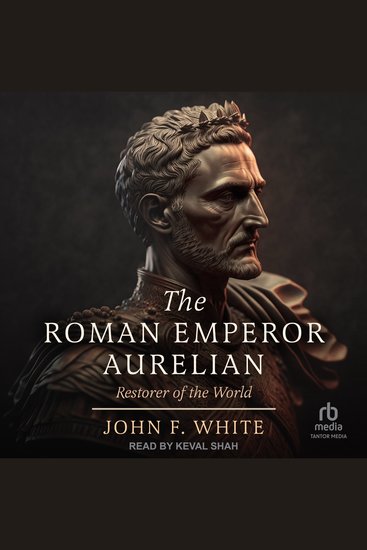
    Aurelian saved the Roman Empire from foreign invasion and collapse, earning him the title Restorer of the World from a grateful Senate. This is his story as restorer of the world. 


    The ancient Sibylline prophecies had foretold that the Roman Empire would last for 1000 years. As the time for the expected dissolution approached in the middle of the third century AD, the empire was lapsing into chaos, with seemingly interminable civil wars over the imperial succession. The western empire had seceded under a rebel emperor and the eastern empire was controlled by another usurper. Barbarians took advantage of the anarchy to kill and plunder all over the provinces. Yet within the space of just five years, the general, later emperor Aurelian had expelled all the barbarians from with the Roman frontiers, reunited the entire empire and inaugurated major reforms of the currency, pagan religion, and civil administration. 


    His accomplishments have been hailed by classical scholars as those of a superman, yet Aurelian himself remains little known to a wider audience. His achievements enabled the Roman Empire to survive for another two centuries, ensuring a lasting legacy of Roman civilization for the successor European states. Without Aurelian, the Dark Ages would probably have lasted centuries longer. This is a new, revised edition.
    Voir livre
  • How I Found the Lost Atlantis! by Dr Paul Schliemann - narrated by Michael Henrik Wynn - cover

    How I Found the Lost Atlantis!...

    Dr. Paul Schliemann

    • 0
    • 0
    • 0
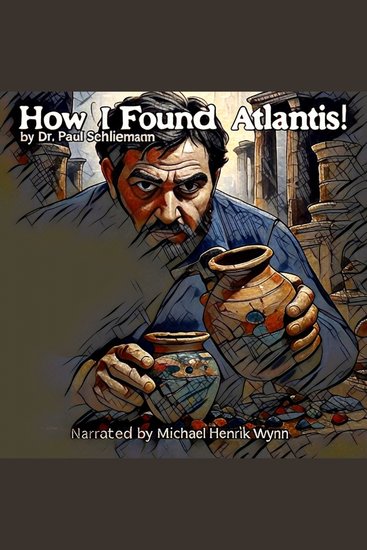
    The article on which this audio book is based was published in the 'New York American' on October 20th, 1912.  
    The author, Dr. Paul Schliemann, was the grandson of Heinrich Schliemann (1822 - 1890), a founder of modern archaeology. In this famous archaeological hoax he makes outrageous and sensational claims about the lost continent Atlantis, and his grandfather’s research.  
    The text was written in an age when many of the Victorian adventure writers, like H. Rider Haggard in Britain, Emilio Salgari in Italy and Karl May in Germany topped reading lists. In 1912, the jungle calls of Tarzan echoed through American pulp magazines for the very first time.  
    Paul Schliemann capitalizes on the contemporary craze for his grandfather’s archaeological discoveries, for lost worlds and legendary characters like the queen of Sheba and Prester John. Since 1907, Howard Carter had been excavating in Egypt, and in 1922 Carter made his historical discovery of the tomb of Tutankhamun. 
    Paul Schliemann’s article is highly entertaining, and features passages reminiscent of Indiana Jones. Michael Henrik Wynn, the editor of the educational net radio stream Historyradio.org, gives a spirited performance of what has become a classic and much loved hoax in archaeological circles.
    Voir livre
  • From Hormones to Neurons - Understanding Puberty's Role in Adolescent Brain Evolution And The Role of Technology - cover

    From Hormones to Neurons -...

    Brian Gibson

    • 0
    • 0
    • 0
    In the tumultuous landscape of adolescence, a period marked by profound transformation and discovery, the interplay between hormones and brain development forms the cornerstone of human growth. "From Hormones to Neurons: Understanding Puberty's Role in Adolescent Brain Evolution And The Role of Technology" delves into the intricate biological processes that shape the adolescent mind and explores how modern technology influences this critical stage of life. This book aims to unravel the complexities of puberty, illustrating how hormonal changes trigger a cascade of neural developments that underpin emotional, cognitive, and social maturation. 
    Physical changes and significant brain structure and function reconfigurations mark the journey from childhood to adulthood. Moreover, in an era where technology permeates every aspect of life, understanding its role in adolescent development is more critical than ever. This book addresses how digital engagement — from social media and video games to educational platforms — interacts with the brain's evolving landscape. The dual influence of biology and technology presents a unique framework for comprehending the contemporary adolescent experience.
    Voir livre
  • The Ageless Call to Serve - Rethinking Military Service for a Changing World - cover

    The Ageless Call to Serve -...

    LTC Lanny Snodgrass MD

    • 0
    • 0
    • 0
    An eighteen-year-old in the United States is still barred from buying alcohol, acquiring a pilot's license, or stepping into a casino. Yet, astonishingly, they can be enlisted in the military and deployed to a war zone. On the other side of the age spectrum, individuals over thirty-nine often encounter insurmountable obstacles to enlistment. 


    Break this mold and meet Lanny Snodgrass, who, at the age of sixty-three, became the oldest American to join the Army and complete officer basic training. It was 2003, the Iraq War had just started, and the Pentagon momentarily relaxed age requirements. 


    With around four decades of experience treating veterans and active-duty military personnel, many teenagers grappling with psychiatric illnesses such as PTSD, depression, and suicidality, Dr. Snodgrass bears unique insight into the perils of sending young soldiers to war. 


    Dr. Snodgrass poses critical questions about the limits of service and whether these age constraints should be maintained or relaxed. It's not an overstatement, then, to say that The Ageless Call to Serve presents a life-and-death proposition on how to build a more resilient, professional military force.
    Voir livre
  • The Sword of Deborah - cover

    The Sword of Deborah

    F. Tennyson Jesse

    • 0
    • 0
    • 0
    The Sword of Deborah contains the reflections of a woman journalist visiting women working behind the lines in France during World War I.  She writes: "I was glad to have seen all the different convoys I had, because no two had been to me alike, and to each I am indebted for a differing expression of the same vision, which is the vision splendid of a duty undertaken gladly and sustained with courage. From my first convoys -- the Fannies and the G.S.V.A.D.'s -- I got the wonderful facts of it, at the V.A.D. Convoy at E---- I caught that side of it which I as most glad of all to encounter, and at the V.A.D. Convoy at T----- I found that delightful spirit of sheer joy in danger which is too precious to be allowed to die out of the worked just because their happens to be, at present, such a great deal too much danger let loose upon it." (Summary by MaryAnn)
    Voir livre
  • Third class in Indian railways - cover

    Third class in Indian railways

    Mahatma Gandhi

    • 0
    • 0
    • 0
    "Third Class in Indian Railways" by Mahatma Gandhi is a poignant essay that illuminates the harsh realities faced by third-class passengers in India's railway system. Drawing from his own experiences, Gandhi vividly describes the overcrowded, unsanitary conditions endured by the poorest travellers. Through this powerful critique, he highlights broader societal inequalities and advocates for reforms. The essay showcases Gandhi's commitment to social justice, compassion, and the upliftment of the marginalized.
    Voir livre