Rejoignez-nous pour un voyage dans le monde des livres!
Ajouter ce livre à l'électronique
Grey
Ecrivez un nouveau commentaire Default profile 50px
Grey
Abonnez-vous pour lire le livre complet ou lisez les premières pages gratuitement!
All characters reduced
The Power Grid - cover

The Power Grid

Amelia Khatri

Traducteur A AI

Maison d'édition: Publifye

  • 0
  • 0
  • 0

Synopsis

"The Power Grid" explores the evolution and engineering of electrical power systems, detailing how electricity generation has transformed societies worldwide. It examines the critical infrastructure that supports modern life, from early experiments with electric light to today's expansive, interconnected networks. One intriguing fact is the pivotal role of alternating current (AC) in enabling long-distance power transmission, which revolutionized how electricity is distributed.

 
The book progresses from fundamental concepts of electricity generation to the complexities of transmission technologies and grid management strategies. This book uniquely combines historical analysis with technical explanations and policy considerations, appealing to a broad audience interested in the history of electricity and electrical engineering.

 
It highlights how the development of the power grid reflects societal priorities and global trends, presenting complex concepts in an accessible manner. The book emphasizes the importance of understanding grid management strategies, especially concerning frequency regulation and the integration of renewable energy sources.

 
By examining archival documents, engineering reports, and policy decisions, "The Power Grid" provides a comprehensive and balanced view of the challenges and opportunities facing the power grid's future.
Disponible depuis: 12/02/2025.
Longueur d'impression: 80 pages.

D'autres livres qui pourraient vous intéresser

  • Peter the Hermit and the People’s Crusade: The Controversial History of the First European Army to Head for Jerusalem - cover

    Peter the Hermit and the...

    Charles River Editors

    • 0
    • 0
    • 0
    Of the many campaigns during the Middle Ages, few are as remarkable or seemingly impossible to win at the start as the First Crusade (1095-99), and the true crowning achievement of that crusade, which resulted in two centuries of Western European Christian states in the Middle East and the permanent firing of the European imagination, was the conquest of Jerusalem on July 15, 1099 after three weeks of siege. That victorious siege came four years after the call for a crusade first went out, and had the Crusaders not taken Jerusalem, the First Crusade would not likely have been followed by any more and the campaign might have been no more than an historical footnote of what could have been.  
    	What’s often forgotten about the First Crusade is that it started inauspiciously for the Europeans, and the first army to arrive in the Middle East had an extremely checkered history even before it was decimated. On October 21, 1096, in the proximity of Helenopolis, which is now known as the village of Hersek in Bithynia, a contingent of Crusader pilgrims was massacred by the Seljuk Turkish Army, which had strategically positioned itself in anticipation of an ambush. The event took place in a significantly symbolic location in the Christian tradition. Indeed, the name Helenopolis is derived from the legend that Helen, the mother of Constantine and a notable proponent of her son's conversion, was born there. This was where the castle of Kibotos, also known as Civetot, once stood, constructed under Byzantine Emperor Alexius Comnenus’s orders. It was near this castle that Crusader pilgrims established their encampment, leaving behind women, children, and the elderly as they prepared to launch an attack on the Turkish forces in Anatolia. The surprise attack was brought to a swift end by the Turkish forces’ superior tactics and equipment, which ultimately resulted in the massacre of the Christian population and the capture of numerous prisoners.
    Voir livre
  • Red Cloud’s War: The History and Legacy of the Only 19th Century War Won by Native Americans against the United States - cover

    Red Cloud’s War: The History and...

    Editors Charles River

    • 0
    • 0
    • 0
    In the summer of 1866, Colonel Henry B. Carrington set out from Fort Laramie to establish a series of forts along the Bozeman Trail with the goal of protecting migrants moving along the trail. The Bozeman Trail ran through the Powder River country, which included the traditional hunting grounds of Lakota, Cheyenne, and Arapaho peoples. Carrington had about 1,000 people in his column, of which about 700 were soldiers and 300 were civilians, likely soldiers’ families and migrants. 
    The ongoing hostilities, which included the notorious Fetterman's Massacre, ultimately convinced American officials to head back to the negotiating table with the Native Americans, and as a result, Red Cloud has often been labeled the only Indian chief to win a war against the Americans. After that, however, Red Cloud continued to lead his people to reservations first near the Black Hills and later westward after the Battle of the Little Bighorn. Though he was respected as a war chief, it was his political functions as a spokesman of the Oglala that truly allowed Red Cloud to leave his mark over the last several decades of his life. Whereas Sitting Bull and Crazy Horse suffered premature deaths, Red Cloud outlived the other important leaders of the Sioux until dying in 1909 at 87 years old. Near the end of his life, he reportedly said, “They made us many promises, more than I can remember. But they kept but one -- they promised to take our land...and they took it.” 
    Red Cloud’s War: The History and Legacy of the Only 19th Century War Won by Native Americans against the United States analyzes the seminal moments that brought about the war, the war’s most famous battles, and the aftermath.
    Voir livre
  • Swimsuits Optional - cover

    Swimsuits Optional

    Rod Mandelli

    • 0
    • 0
    • 0
    Secretly gay Italian stud Joey has homosexual fantasies about his super-jock best friend, blonde-haired and blue-eyed Steve. With Steve leaving for vacation, Joey has two choices. 
    He can spend his time thinking about Steve with his hand in his pants or spend two weeks by the pool with Steve's older substitute who believes that swimsuits should be optional and something other than water should be splashed on Joey's face.
    Voir livre
  • Fractured - A Memoir - cover

    Fractured - A Memoir

    Susan Mockler

    • 0
    • 0
    • 0
    A collision with a moose on a dark highway left Susan Mockler with an incomplete spinal injury, suddenly compromising her ability to walk and to care for herself. She spent months in a rehabilitation facility learning how to adjust to her new reality, and though her body partially recovered, every aspect of her life changed.
    		 
    Fractured is a compelling illumination of the challenges of acquired disability and the ways in which people with disabilities are sidelined and infantilised. Mockler, a psychotherapist, speaks with frank honesty about her family and friends’ reactions to her injury, and the hard-won lessons that she and those around her learned from her experience.
    Voir livre
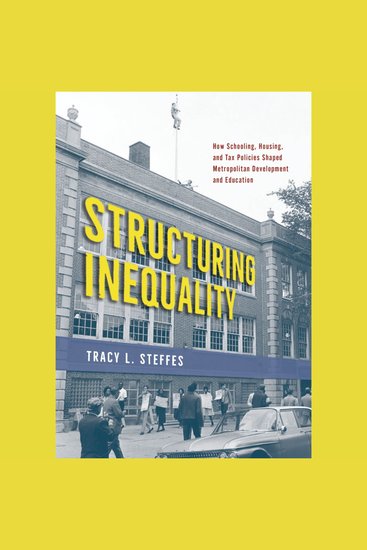
  • Suspended Education - School Punishment and the Legacy of Racial Injustice - cover

    Suspended Education - School...

    Aaron Kupchik

    • 0
    • 0
    • 0
    Every year, millions of public school students are suspended. This overused punishment removes students from the classroom, but it does not improve their behavior. Instead, suspension disrupts their education, harming the students, their families, and their schools. Black students suffer most within this broken system, experiencing a far greater risk of school punishment and the significant harms that accompany it. Many activists and scholars have considered how school punishment increases racial inequity, but few have thought to ask why. Why do we punish students the way we do, and why have we allowed this harmful practice to impact the lives of our nation's children? 


    In Supended Education, Aaron Kupchik shows that suspensions were not intended as a behavior management tool. Instead, they were designed to remove unwanted students from the classroom. Through statistical analysis and in-depth case studies of schools in Massachusetts and Delaware, Kupchik reveals how suspension rates skyrocketed after the 1954 Brown v. Board of Education decision, serving as an unofficial means of removing Black children from newly desegregated schools. His groundbreaking research traces the legacy of these segregationist movements, demonstrating that school districts with more desegregation-related legal battles from the 1950s onward suspend more Black students today.
    Voir livre
  • In the Presence of Nibbāna - cover

    In the Presence of Nibbāna

    Ajahn Brahmavaṃso

    • 0
    • 0
    • 0
    This is an audiobook of Bodhi Leaves No. 149 "In the Presence of Nibbāna" by Ajahn Brahmavamso, found in the Pariyatti Edition of Collected Bodhi Leaves Vol. V as well as at BPS as a free eBook download.
     
    This Bodhi Leaf is an essay on the path, and the qualities, that lead to Nibbana.  Ajahn Brahmavamso is a senior western monk of the Forest Tradition who lives and teaches in Australia.
    Voir livre