Begleiten Sie uns auf eine literarische Weltreise!
Buch zum Bücherregal hinzufügen
Grey
Einen neuen Kommentar schreiben Default profile 50px
Grey
Jetzt das ganze Buch im Abo oder die ersten Seiten gratis lesen!
All characters reduced
The History Calendar - cover

The History Calendar

Amelia Khatri

Übersetzer A AI

Verlag: Publifye

  • 0
  • 0
  • 0

Beschreibung

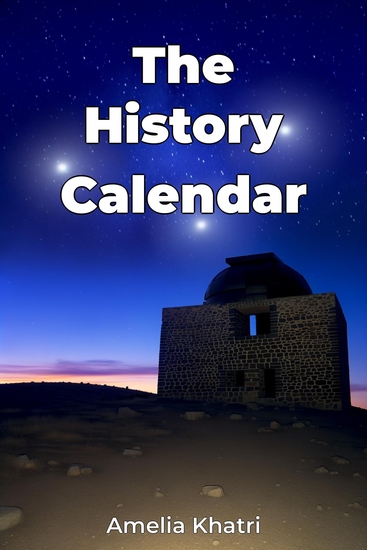
"The History Calendar" unveils the captivating story of how calendars have shaped human civilization. From early lunar observations driving agricultural practices to complex global timekeeping, the book explores how time measurement has influenced societies worldwide. Intriguingly, calendars aren't just neutral tools; they actively mold our perception of reality, impacting religious practices and social structures. Discover the evolution of calendars across cultures, from Mesopotamia's lunar systems to the sophisticated Maya calendar, and understand their astronomical underpinnings.

 
The book examines the origins of calendars in response to societal needs, the development of sophisticated timekeeping methods, and the standardization of global time. It begins with the basics of timekeeping and early lunar calendars, progresses through diverse cultural systems, and culminates in the Gregorian calendar. The latter portion tackles synchronizing calendars globally, the impact of technology, and debates on calendar reform, offering readers a deep dive into the philosophical implications of time measurement.

 
This unique perspective emphasizes calendars as cultural artifacts reflecting beliefs about time and the universe.
Verfügbar seit: 12.02.2025.
Drucklänge: 59 Seiten.

Weitere Bücher, die Sie mögen werden

  • Scimitar into Stanley - One Soldier's Falklands War - cover

    Scimitar into Stanley - One...

    Roger Field

    • 0
    • 0
    • 0
    In May 1982, Captain Roger Field, The Blues and Royals, attached to HQ 5th Infantry Brigade, sailed on the Queen Elizabeth 2 as part of the second wave to liberate the Falkland Islands. Surprised by what he saw at Brigade HQ, he started writing a diary. 
    His journey took him to Fitzroy as the Argentinean aircraft struck the landing ships Sir Galahad and Sir Tristram. A chance meeting led him to fighting alongside the Commanding Officer of 2 Para at the Battle of Wireless Ridge. When the commander of one of the four attached armoured cars of The Blues and Royals was knocked out part way through the battle, Roger took command of that Scimitar. Next day his Scimitar was at the very tip of the spear as 2 Para and The Blues and Royals led the victorious charge into Port Stanley. 
    ‘Revisionist’ in places and always refreshingly candid, this account is unique as it describes the War from the viewpoint of a staff officer, infanteer and armoured vehicle commander. A gripping listen.
    Zum Buch
  • A Rare Recording of Corrie ten Boom Vol 1 - cover

    A Rare Recording of Corrie ten...

    Corrie ten Boom

    • 0
    • 0
    • 0
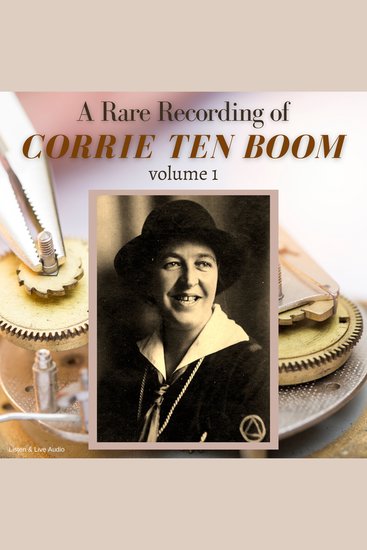
    Cornelia Arnolda Johanna "Corrie" ten Boom (April 15, 1892 - April 15, 1983) was a Dutch watchmaker who worked with her father Casper and other family members to help, reportedly, 800 Jews escape the Nazi Holocaust during World War II by hiding them in their home. Eventually, the family was caught, and ten Boom was arrested and sent to Ravensbrück concentration camp, but released after ten months due to a clerical error. Later in life, ten Boom wrote, "The Hiding Place," a biography that recounts the story of her family's efforts and how she was able to find hope while imprisoned at the concentration camp. It was later made in to a movie.
    Zum Buch
  • The Judgment of Gender - How Women Are Centered and Silenced in Pop Culture - cover

    The Judgment of Gender - How...

    Allison Butler

    • 0
    • 0
    • 0
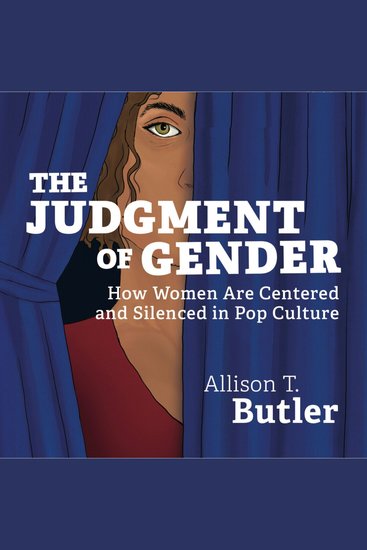
    The Judgment of Gender addresses the ways in which women are centered, while simultaneously silenced, in popular culture and, all too often, maligned for simply being women. The text focuses on key areas and times where women are highlighted as "problematic," including a generational legacy of harming women, women who speak and act out, women who occupy a space not traditionally "theirs," women who are physically harmed for being women, and women who harm other women. Grounded in critical media literacy, the text addresses, but does not wallow in, dark and difficult topics. Rather, the text asks questions of pop culture, inviting readers to look differently, and ideally with more nuance, at how stories of celebrity and those thrust into celebrity are framed. Women and stories discussed include Anita Hill, Christine Blasey Ford, and the legacy of speaking out against sexual assault; Sinéad O'Connor, Britney Spears, and the dangers of acting out; Kathleen Hanna, Anita Sarkeesian, Brianna Wu, Zoë Quinn, and the risks of occupying space not traditionally associated with women; missing and murdered Indigenous women and girls (MMIWG) and the threat of violence against women for the audacity of being women; and Monica Lewinsky, Linda Tripp, Maureen Dowd, and the harm that women perpetuate on other women. The text closes with suggestions for how to use basic concepts from critical media literacy in our roles as audiences and creators of mediated communication, operating as a lens through which one can deconstruct and talk back to the media's treatment of women. 
    Zum Buch
  • Minorities - The Ongoing Fight for Equality in a Diverse World (3 in 1) - cover

    Minorities - The Ongoing Fight...

    Marcus Klein

    • 0
    • 0
    • 0
    This book contains three titles, which are the following: 
    Child Soldiers - The use of child soldiers in armed conflicts represents one of the most tragic and pervasive human rights violations of our time. Children, often as young as eight or nine, are forcibly recruited or manipulated into participating in violent wars, often by rebel groups or government forces. These young individuals, deprived of their innocence and forced to endure unimaginable hardships, are exploited in ways that not only strip them of their childhoods but also leave lasting scars on their bodies, minds, and spirits. 
    Racism - Racism has been a persistent and destructive force throughout human history, shaping societies, cultures, and institutions in ways that continue to reverberate today. It manifests in myriad forms—through prejudice, discrimination, systemic inequities, and violence—targeting individuals and groups based on their race or ethnicity. While strides have been made in confronting this global scourge, the fight for equality and human dignity remains far from over. This enduring struggle is deeply rooted in historical injustices and perpetuated by contemporary systems of power and privilege.  
    Sexism - Sexism, a deeply entrenched social issue, has been pervasive throughout human history, shaping the experiences of individuals and communities across the globe. At its core, sexism refers to the belief that one gender is superior to another, typically manifesting in the unequal treatment and opportunities given to individuals based on their gender. While this issue affects all genders, it is most commonly seen in the discrimination against women and girls, who have been historically marginalized and denied the same rights and opportunities as their male counterparts.
    Zum Buch
  • White Pine - The Natural and Human History of a Foundational American Tree - cover

    White Pine - The Natural and...

    John Pastor

    • 0
    • 0
    • 0
    America was built on white pine. From the 1600s through the Civil War and beyond, it was used to build the nation's ships and houses, barns, and bridges. Yet this popularity came at a cost: by the end of the nineteenth century, clear cutting had decimated much of America's white pine forests. In White Pine, ecologist and writer John Pastor takes listeners on walk through history, connecting the white pine forests that remain today to a legacy of destruction and renewal. 


    Since the clear-cutting era, naturalists, foresters, and scientists have taken up the quest to restore the great white pine forests. White Pine follows this centuries-long endeavor, illuminating how the efforts shaped Americans' understanding of key scientific ideas, from forest succession to the importance of fire. Pastor shows us why restoring the vitality of these forests has not been simple: a host of other creatures depend on white pine and white pine depends on them. In weaving together cultural and natural history, White Pine celebrates the way humans are connected to the forest—and to the larger natural world. 


    Today, white pine forests have begun to recover, but face the growing threat of climate change. White Pine shows us that hope for healthy forests lies in understanding the lessons of history, so that iconic species survives.
    Zum Buch
  • Laws - cover

    Laws

    Plato

    • 0
    • 0
    • 0
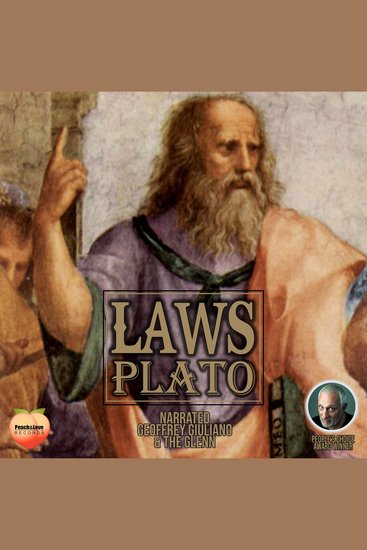
    Laws is Plato's last and longest dialogue. It is generally agreed that Plato wrote this dialogue as an older man, having failed in his effort in Syracuse on the island of Sicily to guide a tyrant's rule, instead having been thrown in prison 
     
    The Classical Greek philosopher Plato was instrumental in the development of Western philosophy and science. Plato was born to an aristocratic family and was well-educated. He founded the Academy, one of the first institutions of higher learning, around 385 BC. Plato was highly influenced by his teacher, Socrates. Socrates was condemned to death after being accused of corrupting his young followers. After Socrates' death, Plato recorded several dialogues detailing what he remembered from Socrates' teachings and interactions with others. Almost everything known about Socrates comes from Plato's dialogues. Plato's writings have been revised and interpreted by a variety of publishers.
    Zum Buch