Begleiten Sie uns auf eine literarische Weltreise!
Buch zum Bücherregal hinzufügen
Grey
Einen neuen Kommentar schreiben Default profile 50px
Grey
Jetzt das ganze Buch im Abo oder die ersten Seiten gratis lesen!
All characters reduced
The Forgotten Battles - cover

The Forgotten Battles

Amelia Khatri

Übersetzer A AI

Verlag: Publifye

  • 0
  • 0
  • 0

Beschreibung

The Forgotten Battles examines overlooked yet pivotal military history events from World War I and World War II. It argues that focusing solely on well-known battles like the Somme or Stalingrad creates an incomplete understanding of 20th-century conflicts. The book highlights underreported battles, revealing their strategic importance in resource allocation and troop movements, ultimately influencing the Allied and Axis war efforts.

 
A key insight involves understanding how seemingly isolated battles significantly impacted the entire conflict, demonstrating the interconnectedness of different war theaters. The book presents a narrative non-fiction account, drawing on primary sources such as soldiers' letters and military records. Beginning with the establishment of criteria for selecting these "forgotten battles," it delves into case studies from both World Wars. Examples include Eastern Front engagements beyond Tannenberg in WWI and the China-Burma-India Theater in WWII.

 
By exploring the human element and providing social context, the book offers fresh perspectives valuable to history enthusiasts and students of military history.
Verfügbar seit: 17.02.2025.
Drucklänge: 62 Seiten.

Weitere Bücher, die Sie mögen werden

  • Has Populism Won? - The War on Liberal Democracy - cover

    Has Populism Won? - The War on...

    Daniel Drache, Marc D. Froese

    • 0
    • 0
    • 0
    Has populism won? Two experts show us how and why this disturbing global political trend has taken root and what it will take to turn the tide
    		 
    From Trump’s America to Putin’s Russia, and from Poland to the Philippines, rapid change and rising inequality have fueled a retreat into tribalist nationalism fed by a fear of being left behind. Populist leaders tap into this fear, with empty promises of looking out for the little guy and promising a return to national greatness. This is happening in countries across the globe and the political spectrum, arising in the right and the left alike. So why are we so susceptible to this pernicious political style at this moment? How did we get here? Will we get back to more even-handed governments? And more importantly, how has the global insurgency captured high offices across the globe, winning election after election? And more importantly, if Putin is defeated in his unprovoked war on Ukraine, will vociferous publics turn against the insurgency? Liberal democracy is at a turning point, as system smashers aren’t about to go quietly into the night, and there are few viable alternatives in the wings.
    		 
    Political scientists Drache and Froese have turned original research into a compelling analysis of the rise of populism and reveal what it will take to douse the flames. This is an essential read for anyone concerned about the encroachments on freedom and the rule of law around the world.
    Zum Buch
  • The Anxiety Audit - 7 Sneaky Ways Anxiety Takes Hold and How to Escape Them - cover

    The Anxiety Audit - 7 Sneaky...

    LICSW Lynn Lyons

    • 0
    • 0
    • 0
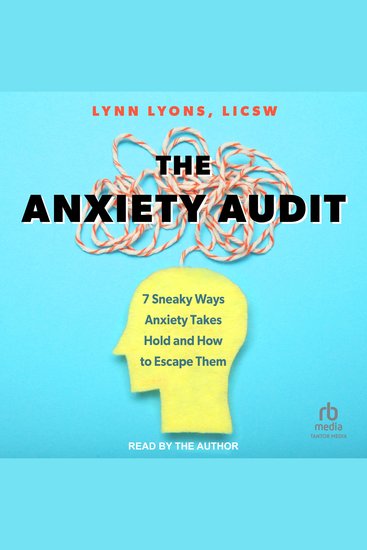
    Ask people to describe anxiety and they'll start with the familiar symptoms: racing heart, sweaty palms, difficulty breathing. Anxiety, they might add, is "freaking out," a panic attack, or a frightening loss of control. But anxiety isn't always what we think it is, especially now. Anxiety has become the new normal, constant and simmering, disguising itself in patterns and responses we don't even recognize as anxiety. These patterns include: 


    ● Ruminating and worrying (and mistaking it for problem solving) 


    ● Going global, or seeing the world through an overwhelming, all-or-nothing lens 


    ● Isolating and disconnecting, all too common in our "new normal" 


    ● Creating chaos and "busy-ness" 


    The Anxiety Audit is a guide for us all: with no overly scientific or diagnostic language—just real talk and time-tested tactics from a respected therapist—it is a relatable and practical guide to untangling yourself from the grips of worry and fear. 


    Using stories, real-world examples, and helpful dialogues to retrain the way you think and react, trusted anxiety expert Lynn Lyons helps you recognize the sneaky ways these anxious patterns and cycles of worry take hold in your life.
    Zum Buch
  • The Era of Liberation - 1862-1894 - cover

    The Era of Liberation - 1862-1894

    Louis Kossuth, Abraham Lincoln,...

    • 0
    • 0
    • 0
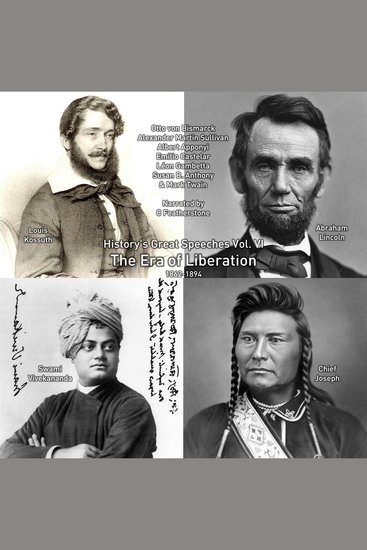
    The late 19th Century was a time of liberation. After the collapse of empires, people of all creeds demanded their equality.We begin with two speeches that represent the old order, by Bismarck. Between the two speeches he went from being Prussia’s last Minister President to being the Germany’s first Chancellor. A statesman in the oldest mold, he argues for nationalist dominance against forces temporal and religious.The counter is given by Sullivan, who excoriates the British government for the Zulu war, asking why the country supported wars of aggression in foreign lands.From there, we move to the liberation of nations and peoples. Louis Kossuth embodied Hungary’s struggle against imperial oppression, Castelar argues for a Spanish republic, and Gambetta for the education of the peasantry in France. Across Europe, a tide rose demanding the government serve the people rather than use them.In America, Lincoln defined the struggle between the Union and Confederacy as the start of universal emancipation and freedom for all men. In contrast, Chief Joseph’s speech drips with pathos, as he lays down his spear forever, desperate to find what is left of his massacred and desolate peoples in the wilderness. After the Civil War ends, Susan Anthony’s speech demands that women should have the vote, as guaranteed in the constitution for all citizens.A series of speeches by Swami Vivekananda follow, given at the first World’s Parliament of Religions. These speeches brought Buddhism and Hinduism into the Anglosphere, and began a trend of searching for spiritual liberation alongside the more material demands of the time.We finish on a lighter tone, as Mark Twain bemoans the decay of the art of lying. In an age of such seriousness, the tall tale fell out of fashion, and the simple joy of telling a fisherman’s tale was lost.
    Zum Buch
  • Banish Your Inner Critic - Silence the Voice of Self-Doubt to Unleash Your Creativity and Do Your Best Work - cover

    Banish Your Inner Critic -...

    Denise Jacobs

    • 0
    • 0
    • 0
    Silence the Voice of Self Doubt“Banish Your Inner Critic provides knowledge, insight, tools and practice for getting unstuck and expressing full creative potential." ―Rebecca Stockley, Co-Founder of BATS Improv in San Francisco CA
     
    Are you ready to boost your personal productivity—minus the fear and loathing? Are you ready to Banish Your Inner Critic and unleash the creative ideas and personal productivity within you? Help is on the way!
     
    Blocked creative ideas. Everybody has one, an inner critic that tells you that others have more talent, you’re just faking it, and that you’ll never have those great creative ideas that seem just out of reach. This inner critic is a subconscious deterrent that stands between the seeds of great creative ideas and the fruits of achievement. It afflicts us with a mental block as deadlines approach, makes us so afraid of being judged that we hold ourselves back and don’t share our expertise, forces us to question our ability to learn ideas and technologies quickly; and makes us doubt, discount, and kill our ideas before they see the light of day.
     
    Find a world of creative ideas. Denise Jacobs is a speaker, author and creativity evangelist who speaks at web conferences and consults with tech companies worldwide. As the Founder and Chief Creativity Evangelist of "The Creative Dose", she teaches techniques to make the creative process more fluid, how to make work environments more conducive to personal productivity, and practices for sparking innovation. Now, in Banish Your Inner Critic, Denise Jacobs shows you how to defeat barriers that are holding you back and achieve success through a positive mental attitude.
     
    Banish Your Inner Critic and:
     
    Identify and quiet the voice of self-doubtMaster three powerful practices to transform how you relate to yourself and your creativityGenerate more creative ideas than ever beforeIf you’re a fan of books such as The Artist’s Way or The War of Art, you should read Banish Your Inner Critic.
    Zum Buch
  • Degrees of Risk - Navigating Insecurity and Inequality in Public Higher Education - cover

    Degrees of Risk - Navigating...

    Blake R. Silver

    • 0
    • 0
    • 0
    An ethnographic analysis of how insecurity is at the heart of contemporary higher education. 
     
    Institutions of higher education are often described as “ivory towers,” places of privilege where students exist in a “campus bubble,” insulated from the trials of the outside world. These metaphors reveal a widespread belief that college provides young people with stability and keeps insecurity at bay. But for many students, that’s simply not the case. 
     
    Degrees of Risk reveals how insecurity permeates every facet of college life for students at public universities. Sociologist Blake Silver dissects how these institutions play a direct role in perpetuating uncertainty, instability, individualism, and anxiety about the future. Silver examined interviews with more than one hundred students who described the risks that surrounded every decision: which major to choose, whether to take online classes, and how to find funding. He expertly identified the ways the college experience played out differently for students from different backgrounds. For students from financially secure families with knowledge of how college works, all the choices and flexibility of college felt like an adventure or a wealth of opportunities. But for many others, especially low-income, first-generation students, their personal and family circumstances meant that that flexibility felt like murkiness and precarity. In addition, he discovered that students managed insecurity in very different ways, intensifying inequality at the intersections of socioeconomic status, race, gender, and other sociodemographic dimensions. Drawing from these firsthand accounts, Degrees of Risk presents a model for a better university, one that fosters success and confidence for a diverse range of students.
    Zum Buch
  • A Concise History of Florida - cover

    A Concise History of Florida

    James C. Clark

    • 0
    • 0
    • 0
    A quick overview of the Sunshine State's fascinating past. 


    In 1513, Spanish explorer Juan Ponce de León first set foot on Florida's east coast. The land he discovered was a geographic anomaly so distinctive that one day, centuries later, astronaut Neil Armstrong would say that Florida was the first shape on earth he recognized on his return from a visit to the moon. 


    This unique state has witnessed such momentous events as the 1959 arrival of the first Cuban exiles under Fidel Castro and the 1981 launch of the Columbia—the first space shuttle. Join historian James C. Clark as he chronicles the surprising history of the Sunshine State in this concise and captivating book.
    Zum Buch