Begleiten Sie uns auf eine literarische Weltreise!
Buch zum Bücherregal hinzufügen
Grey
Einen neuen Kommentar schreiben Default profile 50px
Grey
Jetzt das ganze Buch im Abo oder die ersten Seiten gratis lesen!
All characters reduced
The Clock Mechanism - cover

The Clock Mechanism

Amelia Khatri

Übersetzer A AI

Verlag: Publifye

  • 0
  • 0
  • 0

Beschreibung

"The Clock Mechanism" explores the captivating evolution of timekeeping, illustrating how our quest for precision has profoundly shaped society and science. From ancient sundials to cutting-edge atomic clocks, the book traces the development of these instruments and their impact on our understanding of the universe. Intriguingly, the need for accurate navigation at sea was a major impetus for clock innovation. The book examines the history of mechanical and digital clocks, the science underpinning accurate timekeeping, and the critical role of global time standards like UTC in modern life. It begins with early timekeeping methods, moves through the physics of pendulum motion and atomic properties, and culminates in the practical applications of precise time in fields like GPS and telecommunications. The accuracy of timekeeping has become essential to countless aspects of civilization.
Verfügbar seit: 12.02.2025.
Drucklänge: 59 Seiten.

Weitere Bücher, die Sie mögen werden

  • The Soul of Man - cover

    The Soul of Man

    Oscar Wilde

    • 0
    • 0
    • 0
    “(T)he past is what man should not have been. The present is what man ought not to be. The future is what artists are.” 
     
    Published originally as “The Soul of Man Under Socialism,” this is not so much a work of sober political analysis; rather it can be summed up as a rhapsodic manifesto on behalf of the Individual. Socialism having deployed technology to liberate the whole of humanity from soul-destroying labour, the State obligingly withers away to allow the free development of a joyful, anarchic hedonism... 
     
    “Is this Utopian? A map of the world that does not include Utopia is not worth even glancing at, for it leaves out the one country at which Humanity is always landing.” 
     
    Far from abandoning the epigram in favour of the slogan, Wilde wittily assails several of his favourite targets: the misguided purveyors of philanthropy; life-denying ascetics of various kinds; the army of the half-educated who constitute themselves the enemies of Art - and those venal popular journalists who cater to them... 
     
    “Behind the barricade there may be much that is noble and heroic. But what is there behind the leading-article but prejudice, stupidity, cant, and twaddle?” (Introduction by Martin Geeson)
    Zum Buch
  • Radical Cartography - How Changing Our Maps Can Change Our World - cover

    Radical Cartography - How...

    William Rankin

    • 0
    • 0
    • 0
    A thought-provoking exploration of how maps shape our understanding of the world 
    Cartographer and historian William Rankin argues that it's time to reimagine what a map can be and how it can be used. Maps are not neutral visualizations of facts. They are innately political, defining how the world is divided, what becomes visible and what stays hidden, and whose voices are heard. What matters isn't just the topics or the data, but how maps make arguments about how the world works. And the consequences are enormous. A map's visual argument can change how cities are designed and how rivers flow, how wars are fought and how land claims are settled, how children learn about race and how colonialism becomes a habit of mind. Maps don't just show us information—they help construct our world.Brimming with vibrant maps, including many "radical" maps created by Rankin himself and by other cutting-edge mapmakers, Radical Cartography exposes the consequences of how maps represent boundaries, layers, people, projections, color, scale, and time. Challenging the map as a tool of the status quo, Rankin empowers listeners to embrace three unexpected values for the future of cartography: uncertainty, multiplicity, and subjectivity. Changing the tools—changing the maps—can change the questions we ask, the answers we accept, and the world we build.
    Zum Buch
  • Maa Anand Sheela on Chances - cover

    Maa Anand Sheela on Chances

    Rekha Balakrishna

    • 0
    • 0
    • 0
    I have been given more than a million chances in life, says controversy's favorite child Ma Anand Sheela
    Zum Buch
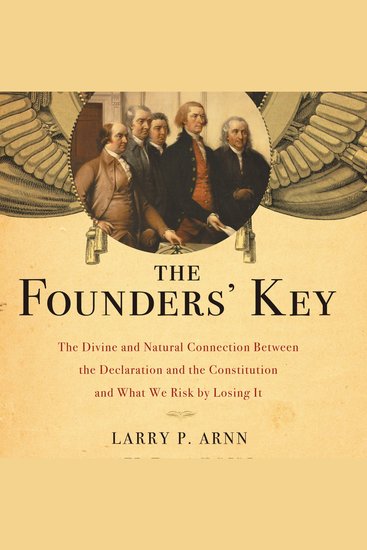
  • The Founders' Key - The Divine and Natural Connection Between the Declaration and the Constitution and What We Risk by Losing It - cover

    The Founders' Key - The Divine...

    Dr. Larry Arnn

    • 0
    • 0
    • 0
    Today the integrity and unity of the Declaration of Independence and the Constitution are under attack by the Progressive political movement. And yet, writes Larry P. Arnn: 
    “The words of the Declaration of Independence ring across the ages. The arrangements of the Constitution have a way of organizing our actions so as to produce certain desirable results, and they have done this more reliably than any governing instrument in the history of man. Connect these arrangements to the beauty of the Declaration and one has something inspiring and commanding.” 
    From Chapter 2, The Founders’ Key 
    Dr. Arnn, president of Hillsdale College, reveals this integral unity of the Declaration and the Constitution. Together, they form the pillars upon which the liberties and rights of the American people stand. United, they have guided history’s first self-governing nation, forming our government under certain universal and eternal principles. Unfortunately, the effort to redefine government to reflect “the changing and growing social order” has gone very far toward success. Politicians such as Franklin Roosevelt found ways to condemn and discard the Constitution and to redefine the Declaration to justify government without limit. As a result, both documents have been weakened, their influence diminished, and their meaning obscured—paving the way for the modern administrative state, unaccountable to the will of the people. 
    The Founders’ Key is a powerful call to rediscover the connection between these two mighty documents, and thereby restore our political faith and revive our free institutions.
    Zum Buch
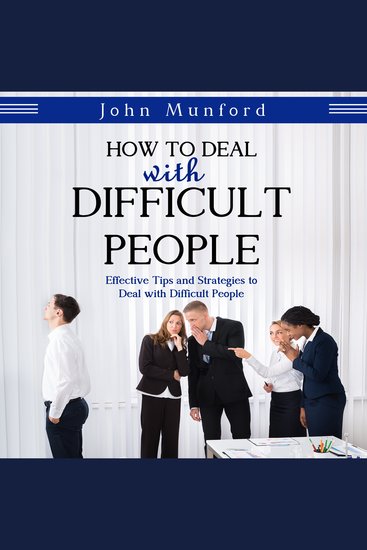
  • How to Deal with Difficult People - Effective Tips and Strategies to Deal with Difficult People - cover

    How to Deal with Difficult...

    John Munford

    • 0
    • 0
    • 0
    “My life would be so much better if they weren’t in it.” If you find yourself thinking this a lot, chances are you’re dealing with a particularly difficult person who has made it their life’s mission to bother you. While you’d think that getting rid of that one person will solve all your problems, you’ll most likely encounter someone else just like them sometime in the future.  
    Difficult people are everywhere, and there’s no escaping them. Thinking that you can get rid of people you dislike is just wishful thinking. After all, can you really get rid of your boss or your in-laws? 
    Instead of avoiding them or cutting them out of your life, changing your approach to dealing with difficult people is the correct way to go about this problem. However, this book doesn’t guarantee that you’ll never have a problem with a difficult person again. On the contrary, life's problems, arguments, and disputes are quite inevitable. You’re bound to come across people who disagree with you and have no room for personal growth. At this point, instead of getting frustrated, you should opt for healthy ways to deal with such people, which is what this book is all about. 
    Zum Buch
  • Trafficking Data - How China is Winning the Battle for Digital Sovereignty - cover

    Trafficking Data - How China is...

    Aynne Kokas

    • 0
    • 0
    • 0
    From TikTok and Fortnite to Grindr and Facebook, Aynne Kokas delivers an urgent look into the technology firms that gather our data, and how the Chinese government is capitalizing on this data flow for political gain. 


    In Trafficking Data, Aynne Kokas looks at how technology firms in the two largest economies in the world, the United States and China, have exploited government policy (and the lack thereof) to gather information on citizens, putting US national security at risk. Kokas argues that US government leadership failures, Silicon Valley's disruption fetish, and Wall Street's addiction to growth have fueled China's technological goldrush. In turn, American complacency yields an unprecedented opportunity for Chinese firms to gather data in the United States and quietly send it back to China, and by extension, to the Chinese government. Drawing on years of fieldwork in the US and China and a large trove of corporate and policy documents, Trafficking Data explains how China is fast becoming the global leader in internet governance and policy, and thus of the data that defines our public and private lives.
    Zum Buch