Rejoignez-nous pour un voyage dans le monde des livres!
Ajouter ce livre à l'électronique
Grey
Ecrivez un nouveau commentaire Default profile 50px
Grey
Abonnez-vous pour lire le livre complet ou lisez les premières pages gratuitement!
All characters reduced
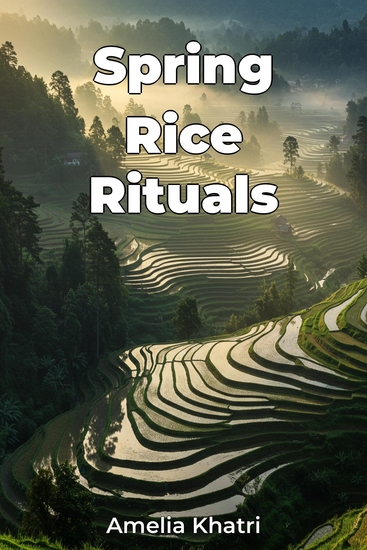
Spring Rice Rituals - cover

Spring Rice Rituals

Amelia Khatri

Traducteur A AI

Maison d'édition: Publifye

  • 0
  • 0
  • 0

Synopsis

Spring Rice Rituals explores the deep connection between ancient agricultural practices and the cultural identities of Asian societies, focusing on ceremonies surrounding rice planting seasons. These rituals, far from being mere customs, reveal profound beliefs about fertility, nature, and the human-environment relationship. The book highlights how deeply ingrained these practices are, showcasing their role in ensuring agricultural success, strengthening community bonds, and passing down traditional knowledge across generations.

 
The book traces the historical context of rice cultivation in Asia, examining how agricultural techniques evolved alongside these rituals. It also delves into the social structures and power dynamics reflected in the ceremonies, analyzing the roles of various community members.

 
The book is structured in three parts, beginning with an introduction to diverse rice planting ceremonies across Asia, followed by an in-depth analysis of key elements like symbolic meanings and performance practices. Finally, it synthesizes the findings, exploring the broader implications for understanding Asian cultures and their relationship with nature, especially in the context of sustainable agriculture and cultural preservation.
Disponible depuis: 17/02/2025.
Longueur d'impression: 64 pages.

D'autres livres qui pourraient vous intéresser

  • Our Final Warning - cover

    Our Final Warning

    Mark Lynas

    • 0
    • 0
    • 0
    This book must not be ignored. It really is our final warning. 
    Mark Lynas delivers a vital account of the future of our earth, and our civilisation, if current rates of global warming persist. And it’s only looking worse. 
    We are living in a climate emergency. But how much worse could it get? Will civilisation collapse? Are we already past the point of no return? What kind of future can our children expect? Rigorously cataloguing the very latest climate science, Mark Lynas explores the course we have set for Earth over the next century and beyond. Degree by terrifying degree, he charts the likely consequences of global heating and the ensuing climate catastrophe.   
    At one degree – the world we are already living in – vast wildfires scorch California and Australia, while monster hurricanes devastate coastal cities. At two degrees the Arctic ice cap melts away, and coral reefs disappear from the tropics. At three, the world begins to run out of food, threatening millions with starvation. At four, large areas of the globe are too hot for human habitation, erasing entire nations and turning billions into climate refugees. At five, the planet is warmer than for 55 million years, while at six degrees a mass extinction of unparalleled proportions sweeps the planet, even raising the threat of the end of all life on Earth.  
    These escalating consequences can still be avoided, but time is running out. We must largely stop burning fossil fuels within a decade if we are to save the coral reefs and the Arctic. If we fail, then we risk crossing tipping points that could push global climate chaos out of humanity’s control.  
    This book must not be ignored. It really is our final warning. 
    Mark Lynas, in his best work yet, delves into the political and environmental policy changes necessary for our protection against these natural disasters. His compelling narrative urges the public to acknowledge the dire need for conservation and change. 
    For fans of Michael E. Mann (Our Fragile Moment), Annie Jacobsen (First Platoon), Mike Berners-Lee (A Climate of Truth), Tim Marshall (Prisoners of Geography), and Bill Gates (Source Code).
    Voir livre
  • Daisy Makes The Leap - Lesbian Short Story - cover

    Daisy Makes The Leap - Lesbian...

    Monique Rose

    • 0
    • 0
    • 0
    Mimi gives a low, appreciative whistle and moves to join her. She climbs up onto the bed behind Daisy, bracing one hand on either side of Daisy’s ass. She uses her thumbs to pull the cheeks apart, looking at the treasures between.
    Voir livre
  • Emotional Intelligence for Beginners - Master Your Emotions Improve Social Skills and Build Stronger Relationships - cover

    Emotional Intelligence for...

    Michael R. Price

    • 0
    • 0
    • 0
    Emotional Intelligence for Beginners: Master Your Emotions, Improve Social Skills, and Build Stronger Relationships is a practical and accessible guide to understanding and improving one of the most important skills in modern life—emotional intelligence. 
    This audiobook helps listeners recognize their emotional patterns, manage reactions, and communicate more effectively in both personal and professional settings. Through clear explanations and real-life insights, it introduces core concepts such as self-awareness, self-regulation, empathy, and social skills in a way that is easy to apply immediately. 
    Designed for beginners, this book focuses on real transformation rather than theory. Whether you're looking to reduce stress, improve relationships, or become more confident in your interactions, this audiobook provides the tools to help you respond thoughtfully instead of reacting impulsively.
    Voir livre
  • Scientific Method and Critical Thinking - Master the Foundations of Science Through Analytical Reasoning and Evidence-Based Problem Solving - cover

    Scientific Method and Critical...

    Virversity Online Courses

    • 0
    • 0
    • 0
    Explore essential principles of scientific inquiry and develop strong critical thinking skills with this comprehensive course on the Scientific Method and Critical Thinking. Designed to enhance analytical abilities, it equips you to conduct reliable experiments, evaluate evidence effectively, and communicate results clearly.Master Scientific Methods and Enhance Critical Thinking Skills:- Formulate testable hypotheses from observations.- Design experiments controlling variables for accuracy.- Develop data collection and analysis skills for valid conclusions.- Identify logical fallacies and maintain objectivity.- Understand basic statistics, distinguishing correlation from causation.- Learn the importance of peer review and replication.- Improve scientific communication via writing and presentations.- Apply critical thinking in everyday decision-making.Starting with scientific inquiry foundations, you’ll learn how observation leads to reliable hypotheses. The course guides you in designing controlled experiments to minimize errors and ensure trustworthy findings, emphasizing accurate data collection and analysis.It also covers critical thinking essentials like spotting logical fallacies, evaluating evidence quality, and maintaining scientific integrity by recognizing bias. You’ll explore basic statistics and the crucial difference between correlation and causation.Beyond experiments, the course examines the scientific process, including peer review, replication, and clear result communication. Finally, these critical thinking skills extend to everyday situations, helping you reason effectively beyond science.By course completion, you’ll gain a solid grasp of the scientific method and advanced critical thinking, empowering you to solve problems systematically, evaluate information critically, and communicate confidently—enhancing both academic and real-world reasoning.
    Voir livre
  • 100 Facts About Famous Literary Hoaxes and Forgeries - English to Spanish - cover

    100 Facts About Famous Literary...

    Science-Based Language Learning Lab

    • 0
    • 0
    • 0
    Introduction to the 100 Somethings Language Learning Series 
     
    Welcome to a revolutionary approach to language learning! This series helps you master Spanish by intertwining it with compelling topics like Famous Literary Hoaxes and Forgeries. Each book centers on a theme (art, science, history) and presents 100 carefully chosen facts in both English and Spanish. 
     
    How It Works: 
     
    - Each fact is first introduced in Spanish, encouraging you to interpret it. 
     
    - The following page provides the fact in English and then repeats it in Spanish, aiding comprehension and memorization. 
     
    - The second half flips this order—English first, then Spanish, and English again—helping you practice translation in both directions for better mastery. 
     
    Benefits: 
     
    - Concise Learning: Focuses on one-sentence facts to ensure every word learned is impactful and directly related to your interests, making them easier to remember. 
     
    - Reinforcement: Alternating languages for each fact naturally strengthens vocabulary and grammar. 
     
    - Engagement: Learning vocabulary through topics you're passionate about keeps the process dynamic and relevant. 
     
    - Dual Knowledge: You enrich your understanding of a specific subject while learning a new language. 
     
    This series is tailored for learners who thrive on clear, targeted information, making it both educational and enjoyable. Whether you’re a beginner or expanding your linguistic skills, this series promises an effective and engaging educational journey. Embrace these 100 facts and let your passions drive your progress in mastering a new language!
    Voir livre
  • 1914: The History and Legacy of World War I’s First Year - cover

    1914: The History and Legacy of...

    Editors Charles River

    • 0
    • 0
    • 0
    Needless to say, the First World War came at an unfortunate time for those who would fight in it. After an initial period of relatively rapid maneuver during which the German forces pushing through Belgium and the French and British forces attempting to stymie them made an endless series of abortive flanking movements that extended the lines to the sea, a stalemate naturally tended to develop. The infamous trench lines soon snaked across the French and Belgian countryside, creating an essentially futile static slaughterhouse whose sinister memory remains to this day. 
    If trench warfare was an inevitability during the war, it is only because the events leading up to the First Battle of the Marne were quite different. The armies at the beginning of the war moved quickly through the land, but the First Battle of the Marne devolved into a bloody pitched battle that led to the construction of trenches after the Germans retreated, blocked in their pursuit of Paris. When the aftermath disintegrated into a war between trenches, some Germans thought they had the upper hand since they were occupying French territory, but with fewer soldiers than the combined Allied nations and fewer resources and supplies, it was possibly only a matter of time before they were ultimately defeated. The commander of the German armies, General Helmuth von Moltke, allegedly said to Kaiser Wilhelm II immediately after the First Battle of the Marne, "Your Majesty, we have lost the war." Winston Churchill himself would later reference that anecdote, writing, “Whether General von Moltke actually said to the Emperor, ‘Majesty, we have lost the war,’ we do not know. We know anyhow that with a prescience greater in political than in military affairs, he wrote to his wife on the night of the 9th, ‘Things have not gone well. The fighting east of Paris has not gone in our favour, and we shall have to pay for the damage we have done.’"
    Voir livre