Rejoignez-nous pour un voyage dans le monde des livres!
Ajouter ce livre à l'électronique
Grey
Ecrivez un nouveau commentaire Default profile 50px
Grey
Abonnez-vous pour lire le livre complet ou lisez les premières pages gratuitement!
All characters reduced
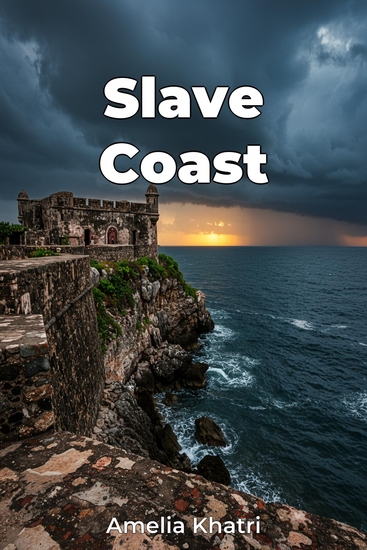
Slave Coast - cover

Slave Coast

Amelia Khatri

Traducteur A AI

Maison d'édition: Publifye

  • 0
  • 0
  • 0

Synopsis

Slave Coast explores the West African slave trade, a transformative process that shaped global demographics and economic systems. The book examines the mechanics of this brutal system, the societal ruptures it caused in West Africa, and the courageous resistance movements it provoked. From the 15th to the 19th centuries, the forced migration of millions had devastating impacts and long-lasting legacies. This history is crucial for comprehending the modern world, as the slave trade created enduring inequalities and shaped cultural identities. The book delves into the economic, social, and political forces that fueled the trade, challenging readers to confront its uncomfortable truths. For example, the rise of plantation economies in the Americas directly correlates to the intensification of the slave trade. By examining the trade from multiple perspectives – African, European, and enslaved – Slave Coast offers a more nuanced understanding of its complexities. It begins by exploring pre-existing systems of slavery within Africa and progresses to detailing the capture, transportation, and sale of enslaved Africans. The central chapters of Slave Coast focus on the devastating consequences for West African societies, including demographic collapse and economic disruption. The book also highlights the diverse forms of resistance employed by enslaved Africans, demonstrating their agency. Concluding sections examine the long-term effects of the transatlantic slave trade on both Africa and the African diaspora, tracing its impact on contemporary issues such as racial inequality and social justice.
Disponible depuis: 19/03/2025.
Longueur d'impression: 56 pages.


D'autres livres qui pourraient vous intéresser

  • Alien Conspiracy - cover

    Alien Conspiracy

    Raphael Terra

    • 0
    • 0
    • 0
    The aliens came a long time ago. They genetically engineered humanity and now they are controlling us. 
     
    Prepare to understand that everything you think and do is in fact controlled and manipulated for a massive agenda. A secret so great and so powerful that it staggers belief.
    Voir livre
  • No One to Miss Me: The brand new long-awaited book from THE MULTI-MILLION-COPY BESTSELLING AUTHOR Cathy Glass - cover

    No One to Miss Me: The brand new...

    Cathy Glass

    • 0
    • 0
    • 0
    ONE REMARKABLE WOMAN.  
    OVER 30 YEARS OF FOSTERING.  
    CARER TO MORE THAN 150 CHILDREN.Can Cathy help troubled Lily sort her life out and piece together the truth? 
    Late on boxing day, Cathy hears a strange noise outside her house, only to find Lily – a girl she fostered briefly years ago – shivering on her front step. 
    But Lily is no longer the vulnerable child Cathy once knew. Withdrawn and on edge, she has nowhere else to turn – and it soon becomes clear she is hiding something far more serious than she first admits. 
    Can Cathy reach her in time, or has Lily’s past already caught up with her? 
    Perfect for fans of Cathy Glass, especially readers of Hidden, Mummy Told Me Not to Tell and Helpless. 
    The latest title from the author of Sunday Times and New York Times bestseller Damaged.  
    For fans of Ann Cusack (Under Their Roof), Kat Ward (KERI 4), Linda Watson-Brown (Sins of the Father), Rachel Murphy (Loose Head), and Joe Cusack (Please Don't Leave Me).
    Voir livre
  • The Road to Serfdom - cover

    The Road to Serfdom

    Friedrich Hayek

    • 0
    • 0
    • 0
    A classic work in political philosophy, intellectual history and economics, The Road to Serfdom has inspired and infuriated politicians and scholars for half a century. Originally published in 1944, it was seen as heretical for its passionate warning against the dangers of state control over the means of production. For Hayek, the collectivist idea of empowering government with increasing economic control would lead not to a utopia but to the horrors of Nazi Germany and Fascist Italy.
    Voir livre
  • After Botham - Healing From My Brother's Murder by a Police Officer - cover

    After Botham - Healing From My...

    Allisa Charles-Findley, Jeremiah...

    • 0
    • 0
    • 0
    On September 6, 2018, White Dallas police officer Amber Guyger opened the door of Apartment 1478. Inside, Botham Jean lay on his couch, having hung up from his daily call with his sister, Allisa. She’d encouraged her brother to stay home for the night’s opening Dallas Cowboys game as sports bars would be too dangerous. Guyger instantly assumed the large black man watching the game was a burglar in her home. She shot him, then failed to render aid as he succumbed to the wound she’d inflicted. Officer Guyger forever altered the lives of the hundreds who knew and loved this kind-hearted young man who lead worship at his church and worked diligently at Price Waterhouse Cooper. Botham's murder shocked the nation. And it devastated his sister. After Botham is Allisa’s story of what happened to her brother and how she fought through the aftermath to find life.
    Voir livre
  • Stories from Kathasaritasagara series -3 - From Various sources - cover

    Stories from Kathasaritasagara...

    Anusha HS

    • 0
    • 0
    • 0
    The book Kathasaritsagara has been created by Soma Deva. It consists of 21,500 shlokas. 
    This book Kathasaritsagara has been divided into 18 lambakaas, and those 18 lambakaas are still more divided into 125 Tharanga's. 
    Some lambakaas are very big, while some are very small. 
    If there are 115 Shlokas in the 11th Lambaka, there are around 4925 Shlokas in 12th Lambaka. 
    During ancient times from the mouth of Lord Shiva, this story got birth. Those who listen to this story will experience all sorts of worldly pleasures. They will be blessed by Lord Shiva and at last reach jnana Loka by the blessings of lord shiva.
    Voir livre
  • Iranian Revolution and Iran Hostage Crisis The: The History of the Events that Broke American Relations with Iran - cover

    Iranian Revolution and Iran...

    Charles River Editors

    • 0
    • 0
    • 0
    On February 1, 1979, amid great fanfare, exiled cleric Ayatollah Ruhollah Khomeini landed in Tehran. The return of the leader of the revolution to his home country was one of the final markers of the Iranian Revolution, a national phenomenon that had global implications. 
    The Iranian Revolution of 1979 has been described as an epochal event, the peak of 20th century Islamic revivalism and revitalization, and the key incident that continues to impact politics across Iran, the Middle East, and the even the world as a whole. As a phenomenon that led to the creation of the first modern Islamic Republic in the world, the revolution marked the victory of Islam over secular politics, and Iran quickly became the aspiring model for Islamic fundamentalists and revivalists across the globe, regardless of nationality, culture, or religious sect. When Ayatollah Khomeini was declared ruler in December 1979 and the judicial system originally modeled on that of the West was swiftly replaced by one purely based on Islamic law, much of the world was in shock that such a religiously driven revolution could succeed so quickly, especially when it had such sweeping consequences beyond the realm of religion. 
    The Iran Hostage Crisis marked a change in American identity both as individuals and a nation. Those born in earlier decades had relatively little understanding of radical Islam, and those born later could not conceive of a world without it. Some would say that the crisis was ultimately a good thing, in that it ushered Ronald Reagan into the White House and thus led to the fall of Communism, while others would say that it was a harbinger of doom and a demonstration that even as one geopolitical foe declined, another was on the rise. Some say America was singled out because it was seen as too strong, others because it was seen as too weak.
    Voir livre