Join us on a literary world trip!
Add this book to bookshelf
Grey
Write a new comment Default profile 50px
Grey
Subscribe to read the full book or read the first pages for free!
All characters reduced
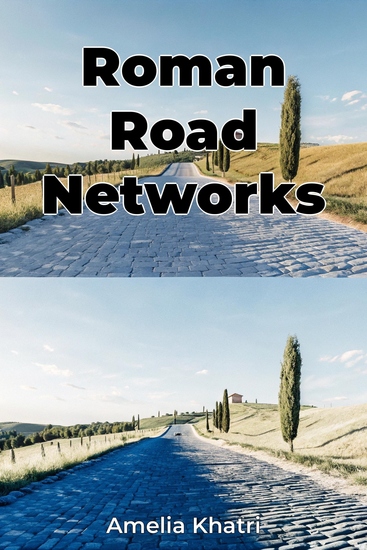
Roman Road Networks - cover

Roman Road Networks

Amelia Khatri

Translator A AI

Publisher: Publifye

  • 0
  • 0
  • 0

Summary

Roman Road Networks explores the remarkable engineering and organizational prowess behind the construction of Roman roads. These ancient highways were not merely paths, but vital infrastructure that facilitated military campaigns, trade, and the spread of Roman culture. The book investigates how the Romans, without modern machinery, built roads so durable that remnants still exist today. One intriguing aspect examined is the sophisticated surveying techniques employed, demonstrating their advanced understanding of geometry and topography. The book also highlights the complex logistical structures needed to manage such a vast public works program, revealing insights into Roman bureaucracy and resource allocation.

 
The book begins by establishing the foundations of Roman engineering and governance, then progresses through sections detailing construction methods, administrative structures, and the network's profound impact. Archaeological findings and contemporary Roman documents support the analysis.

 
Ultimately, the book argues that these road networks were strategically crucial for enabling and maintaining Roman dominance, and the decline of road maintenance contributed to the weakening of the Empire. This integrated approach, combining archaeological evidence with ancient texts, provides a comprehensive understanding of these vital arteries of the Roman world.
Available since: 02/13/2025.
Print length: 57 pages.

Other books that might interest you

  • Persuasive Communication - 2 Books in 1: Public Speaking Skills and Job Interview Preparation How to Develop Self-confidence and Increase Your Communication Skills for Success in Business and Life - cover

    Persuasive Communication - 2...

    Ted Barton

    • 0
    • 0
    • 0
    Do you get nervous when invited to give a speech? 
    Do you feel your fear or phobia hindering you at the thought of speaking publicly? 
    Do you wish to get your dream job and would you like to have a book that tells you exactly what to do? 
    Whatever the case may be, this book will clearly guide you to successfully go through the cycle of preparing and delivering an amazing speech, and is perfect to help anyone gain an advantage during the toughest part of the process, the dreaded job interview. 
    It doesn't matter what kind of job you are applying to or what kind of speech you have to give. What matters is that you follow the right steps: good preparation, positive attitude, dressing well, doing your research, brushing up on your communication skills, and many other important aspects that you have to master in order to increase your success rate. Fortunately for you, these steps can be learned without too much difficulty! 
    How you will benefit from this book:Develop confidence by knowing why you need to give a speechKnow what elements are involved in communicating with an audienceUse the power of your mind to deal with your fear of public speaking The most important mistake that job candidates make in the interview - and how to avoid it!The most frequent questions selected from thousands of interviewsThe exact process of the interview and how it worksAnd much much more... 
    Even if you have never experienced a job interview, even if you have tried hundreds of times and failed, even if you think you will never be able to get the job you love, this book will take you to the next level and you will find that getting a job couldn't be easier. 
    Scroll up, click on the "Buy Now" Button, and Get Your Copy Now! 
    Show book
  • Ojai 1973 - Public Meetings - In meditation life is a total movement - cover

    Ojai 1973 - Public Meetings - In...

    J. Krishnamurti

    • 0
    • 0
    • 0
    1.Relationship without image is love 
    Relationship means action and movement. 
    Without understanding the totality of human relationship we live in conflict, however intimate we may be. 
    When there is knowledge as image in relationship there is conflict. 
    2.The meaning of life pleasure and fear 
    "Is life a mere struggle within and without; laborious, painful, anxious, and then death? 
    What place has thought and what is the structure of thinking? 
    Pleasure is the continuance of an incident which is dead, past. Thought pursues that incident which becomes pleasure. 
    3.Order love and death 
    In our life there is very little order. 
    Most of us conform, which is the very essence of disorder. 
    We conform because we want to succeed inwardly or outwardly; success to us is the most important thing in life. 
    Order and virtue come with the understanding of disorder. 
    4.Religion and meditation 
    What part does religion play in one’s life? 
    How do you know that you or anyone has attained enlightenment or reached the highest form of religious thought? 
    How can a mind which is always in conflict within itself find that which has never been in conflict? 
    In inquiring into meditation, do not follow anybody. 
    Meditation is a daily life in which there is no control whatsoever. 
    When dealing with psychological facts, is the observer different from the thing observed? 
    A certain part of the brain can function efficiently only when it has total order, security. 
    The moment you are aware you are silent it is not silence. 
    Silence is the highest order. 
    In silence, parts of the brain which have not been occupied become totally active. 
     
    Questions from the audience followed the talk.
    Show book
  • The Ethiopian Great Famine of 2000 - A Modern Humanitarian Crisis - cover

    The Ethiopian Great Famine of...

    Sarah Willards

    • 0
    • 0
    • 0
    The Ethiopian Great Famine of 2000 was not an isolated event, but rather the culmination of a complex and interconnected set of factors rooted in the country's historical, environmental, and political landscape. To understand the origins of this crisis, it is essential to look back at Ethiopia’s long history of food insecurity and vulnerability to famine. While droughts have long been a natural part of Ethiopia’s climate cycles, the frequency and impact of famine have often been magnified by human elements, particularly governance and socio-economic structures. 
    In the years leading up to 2000, Ethiopia experienced several severe droughts, but the early signs of the looming crisis were evident by the late 1990s. Climatic shifts, including the failure of critical rainy seasons, devastated crop yields and dried up grazing lands, particularly in the country's eastern and southern regions. For a population heavily dependent on subsistence agriculture, these environmental changes meant immediate food shortages and a rapid decline in household resilience. What might have remained a regional hardship quickly evolved into a nationwide emergency due to the lack of sufficient preventative action. 
    Government response in the early stages was slow and limited by bureaucratic challenges and political distractions, including the aftermath of the Ethiopia-Eritrea war that ended in 2000. Resources were stretched thin, and infrastructure remained underdeveloped, particularly in rural areas where the famine was most severe. Early warning systems existed but were either underutilized or their signals ignored, contributing to the delayed mobilization of aid. The country’s centralization of power also complicated coordination with local authorities, which further hindered rapid intervention efforts.
    Show book
  • Beyond Division - The Resilient Lives of Thirty Diverse Israeli Women Leaders - cover

    Beyond Division - The Resilient...

    MD Bilha Chesner Fish

    • 0
    • 0
    • 0
    This unique collection of personal stories reveals the experiences, struggles, and successes of thirty diverse women leaders, post-pandemic. Beyond Division paints a vivid picture of Israel's challenges—past, present, and future—while depicting a love of country that unites all and inspires hope. 


    Among the thirty women featured: CEO of Diagnostic Robotics Kira Radinsky; artist and owner of Druze Holocaust Art Gallery, Bothaina Halabi; former Knesset Minister of Immigration and Absorption, Pnina Tamano-Shata; CEO of Arabic News and social media platform Bokra.net, Ghada Zoabi; board chair of Medinol and founder of the NJR School of the Heart Judith Richter; CEO of Israeli Flying Aid, Gal Lusky; particle physicist and social activist Shikma Schwartzman Bressler, and IDF Special Nachal Division and Kibbutz Kfar Aza member, Varda Goldstein. 


    The author, a native Israeli who immigrated to the US fifty years ago, weaves into the book memories of the Israel of her youth, of how the familiar landscapes and original ideals have been transformed, yet still endure, and concludes that a nation divided can still be held together by a single person's love of country and community.
    Show book
  • Bound by the Corporate Spy (Gay Chastity Training Erotica) - cover

    Bound by the Corporate Spy (Gay...

    Archer Vale

    • 0
    • 0
    • 0
    I work in a restricted area. I have access to precious, sensitive secrets… 
    My junior engineer is into “cognitive enhancement”. He says wearing a chastity cage can improve mental focus and job performance. 
    But…it’s having the opposite effect on me. 
    He sealed me into chastity. He bound me to his bed. He turned on his laptop and began playing hours of gay porn. 
    I’m not into that stuff, but it felt so good to watch. I couldn’t stop staring. 
    Something strange is happening to me. I’m developing cravings… 
    --- 
    CONTAINS EXPLICIT GAY SEXUAL CONTENT. 
    For exclusive stories, visit www.ArcherVale.com.
    Show book
  • The Art of Living - The Classical Manual on Virtue Happiness and Effectiveness - cover

    The Art of Living - The...

    Epictetus, Sharon Lebell

    • 0
    • 0
    • 0
    Epictetus, one of the greatest of the ancient thinkers, believed that the primary mission of philosophy is to help ordinary people meet the challenges of daily life and deal with losses, disappointments, and grief. His prescription for the good life: master desires, perform one's duties, and learn to think clearly about oneself and the larger community.
    
    In this accessible interpretation by Sharon Lebell, contemporary listeners will find useful advice from this ancient text. This recording also includes an interview with philosopher Jacob Needleman on the significance of Epictetus' work.
    Show book