Rejoignez-nous pour un voyage dans le monde des livres!
Ajouter ce livre à l'électronique
Grey
Ecrivez un nouveau commentaire Default profile 50px
Grey
Abonnez-vous pour lire le livre complet ou lisez les premières pages gratuitement!
All characters reduced
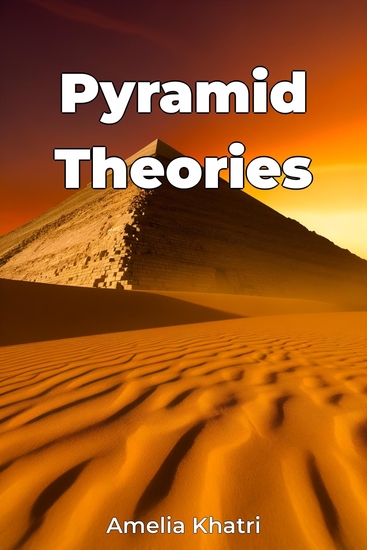
Pyramid Theories - cover

Pyramid Theories

Amelia Khatri

Maison d'édition: Publifye

  • 0
  • 0
  • 0

Synopsis

'Pyramid Theories' offers a comprehensive exploration of humanity's most iconic architectural achievements, delving deep into the intricate relationship between ancient engineering prowess and cultural significance.The book masterfully weaves together archaeological evidence, engineering analysis, and cultural studies to present a nuanced understanding of how pyramids served as more than mere monuments—they were sophisticated expressions of integrated knowledge systems spanning astronomy, geology, and social organization.Through a methodical three-part structure, the book first examines construction techniques through modern engineering analysis and archaeological evidence, revealing fascinating insights about ancient building methods and materials science. For instance, the detailed analysis of limestone construction at Giza demonstrates the remarkable precision of ancient Egyptian engineering, while thermal imaging studies and subatomic particle analysis provide groundbreaking perspectives on pyramid interiors.The text then progresses to explore the cultural and religious significance of pyramids across different societies, from Egypt to Mesoamerica. What sets this book apart is its balanced approach to combining traditional archaeological data with cutting-edge scientific analysis, making it valuable for both scholars and enthusiasts.While focusing primarily on Egyptian, Mesopotamian, and Mesoamerican examples, the book challenges oversimplified explanations of pyramid construction while maintaining academic rigor. Its accessible presentation of complex technical concepts, supported by recent international research and previously untranslated sources, provides readers with a thorough understanding of how these ancient wonders continue to influence our understanding of early civilizations.
Disponible depuis: 03/01/2025.
Longueur d'impression: 103 pages.

D'autres livres qui pourraient vous intéresser

  • The Art of Setting Stones - & Other Writings from the Japanese Garden - cover

    The Art of Setting Stones - &...

    Marc Peter Keane

    • 0
    • 0
    • 0
    Philosophical essays on the beauty and meaning of traditional Japanese gardens.
     
    In Japanese gardens, composition follows from placement of the first stone; all elements and plantings become interconnected. These eight essays on Kyoto gardens similarly begin with keen description and build into richly meditative excursions into art, Buddhism, nature, and science. 
     
    Landscape architect Marc Keane shows how Japanese gardens are both a microcosm of the natural universe and a clear expression of our humanity, mirroring how we think, worship, and organize our lives and communities. Filled with passages of alluring beauty, this is a truly transcendent book about "experiencing" Japanese design.
    Voir livre
  • Erotic Art - cover

    Erotic Art

    Hans-Jürgen Döpp

    • 0
    • 3
    • 0
    When asked about Picasso, towards the end of his life, what was the difference between art and eroticism, he replied meditatively and dreamily: “But there is no difference.” others feared eroticism, Picasso warned against the dangerous experiments of art: “Art is never chaste, it should be kept away from all innocent ignorant. People insufficiently prepared should never come into contact with him. Yes, art is dangerous. When he is chaste, he is no longer art. ”The notion of erotic art is surrounded by a halo of hypocritical, deceptive and dissimulating concepts: art or pornography, sex or eroticism, obscenity or originality, these attempts at distinction and determination mix too much for an objective clarification to be When can we talk about “erotic art”? Hans Jurgen.
    Voir livre
  • The Jewel in Mumbai - cover

    The Jewel in Mumbai

    Bikram Dandiya

    • 0
    • 0
    • 0
    The Global Vipassana Pagoda in Mumbai was built to mark the birth centenary year of Sayagyi U Ba Khin, the Burmese Dhamma teacher of S.N. Goenka. The monument is built in the Myanmar style of the Shwedagon pagoda, as a token of gratitude to that country where the essence of the Buddha’s teachings was maintained in its pristine purity, and from where it is now spreading throughout India, and via India to the rest of the world. Mr. S.N. Goenka became the vehicle to make this happen and was the inspiring guide for every important aspect of this building project. Tremendous volition and effort went into the building of this staggering monument, and it is interesting and educative to explore the journey. Mr. Bikram Dandiya has beautifully chronicled some of these experiences in this booklet, The Jewel in Mumbai, the story of the making of the crystal bud atop the Global Vipassana Pagoda.
    Voir livre
  • Songbook - The Lyrics and Music of Steven Heighton - cover

    Songbook - The Lyrics and Music...

    Steven Heighton

    • 0
    • 0
    • 0
    From the award-winning, multi-genre author and musician Steven Heighton, Songbook brings together Heighton’s lyrics and music for the first time in a single volume, including his final songs, which have never been heard or seen until now. When Steven Heighton died suddenly of cancer in 2022, he was in the middle of an intensely creative period of songwriting. He released his first album of original material, The Devil’s Share, in 2021 and was preparing to record his second album. Known first as a poet, Heighton had always held that “music and poetry are two words for the same thing.”
    		 
    As in his songwriting, in Songbook, Heighton moves fluidly between genres and subjects, from political songs like “The Butcher’s Bill,” about the carelessness of nations sending their youth to war, to reimagining the myth of Orpheus (“I'll hold my breath the whole way down / And find your soul in the undertown”), to blues tunes like “Last Living Woman Alive,” and a tribute to the late John Prine, the “Buddha of Song.” With chords accompanying the lyrics, readers and musicians have the ability to bring the songs to life with their own interpretations. The music in Songbook was the final work of Heighton’s life, and it is not only a gift to have his lyrics and chords but an invitation from Heighton himself, challenging his readers to answer the call and keep singing along.
    Voir livre
  • 22: How do autobiographies by women impact women? - cover

    22: How do autobiographies by...

    Storytel India

    • 0
    • 0
    • 0
    How do the autobiographies by women impact women?
    
    This podcast segment is focussed on women and their autobiographies and their memoirs. Especially those female narrative non-fiction stories that have had a significant impact.
    
    Author and historian Narayani Basu shares her views with our host Rukun Kaul.
    Voir livre
  • Sundaland: The History of the Asian Landmass that Started Sinking After the Ice Age - cover

    Sundaland: The History of the...

    Editors Charles River

    • 0
    • 0
    • 0
    By the time the Pleistocene Epoch ended around 12,000 years ago, Homo sapiens had become one of the most significant species on the planet. 	It was also near the end of that period of time that modern humans began to gradually populate what would become Europe, Asia, and the Americas, eventually becoming the inheritors of the Paleolithic era and the only human species to make it into the Neolithic era. The process was long and difficult, and the survival of the species only happened through a combination of human tenacity and a fair amount of luck. As much as humans evolved during the Pleistocene, the topography, geography, and environment changed even more. 
    The cold Pleistocene temperatures lowered water levels across the planet, exposing land that was not there before or after the period. At the same time, significant regions of the planet were very different during the Pleistocene, including Southeast Asia, particularly the modern islands of Bali, Borneo, Sumatra, and the Malay Peninsula, roughly equivalent to parts of Indonesia, Malaysia, Myanmar, and Thailand. This region, which modern scholars refer to as Sunda or Sundaland, was unique because all of it was connected by land, meaning today’s islands were once part of a contiguous subcontinent, and in terms of the people, flora, and fauna, it was very different than it is today. If a modern traveler could somehow transport back to the Pleistocene, Sundaland would look nothing like modern Southeast Asia and would resemble as much of a lost world as something out of a science fiction novel.  
    Although much is still unknown about Sundaland, researchers have uncovered plenty of evidence bringing this lost world to life. As anthropologists and archaeologists developed new models and discovered ancient material culture, they learned that Sundaland played a significant role in the development of Neolithic Southeast Asia in many ways. 
    Voir livre