Begleiten Sie uns auf eine literarische Weltreise!
Buch zum Bücherregal hinzufügen
Grey
Einen neuen Kommentar schreiben Default profile 50px
Grey
Jetzt das ganze Buch im Abo oder die ersten Seiten gratis lesen!
All characters reduced
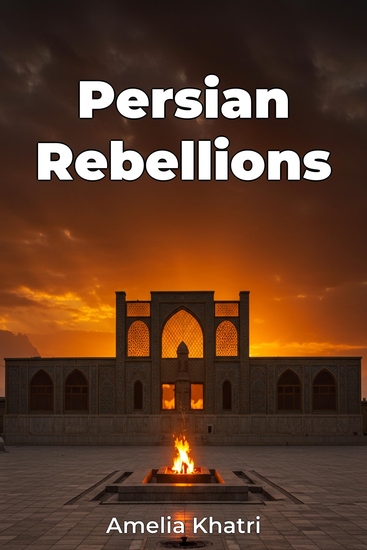
Persian Rebellions - cover

Persian Rebellions

Amelia Khatri

Übersetzer A AI

Verlag: Publifye

  • 0
  • 0
  • 0

Beschreibung

Persian Rebellions explores the tumultuous history of uprisings against Persian rulers, revealing how these revolts shaped the evolution of Persian empires. By examining the dynamics of imperial governance, cultural resistance, and societal transformation, the book provides a comprehensive analysis of rebellions from the Achaemenid dynasty to the Sasanian period. These rebellions, often fueled by ethnic tensions or religious persecution, weren't merely disruptive events but crucial catalysts for change.

 
The book argues that these internal conflicts forced rulers to address grievances and adapt their policies, sometimes fundamentally altering the structure of the empire. For example, understanding the motivations behind these uprisings offers insights into the human desire for autonomy and the challenges of maintaining control over diverse populations.

 
Beginning with an overview of rebellion in Persian history, the book progresses through specific revolts, analyzing their origins, leaders, and key events, ultimately assessing their lasting legacy. This book differentiates itself by presenting rebellions as integral components of the Persian historical narrative, influencing the trajectory of Persian civilization. Supported by primary accounts and archaeological evidence, Persian Rebellions offers a nuanced exploration of the social, cultural, and political forces driving these uprisings and provides valuable lessons applicable to contemporary issues of globalization and cultural preservation.
Verfügbar seit: 20.03.2025.
Drucklänge: 61 Seiten.


Weitere Bücher, die Sie mögen werden

  • Dogwhistles and Figleaves - How Manipulative Language Spreads Racism and Falsehood - cover

    Dogwhistles and Figleaves - How...

    Jennifer Mather Saul

    • 0
    • 0
    • 0
    It is widely accepted that political discourse in recent years has become more openly racist and more accepting of wildly implausible conspiracy theories. Dogwhistles and Figleaves explores ways in which such changes—both of which defied previously settled norms of political speech—have been brought about. Jennifer Saul shows that two linguistic devices, dogwhistles and figleaves, have played a crucial role. Some dogwhistles (such as "88", used by Nazis online to mean "Heil Hitler") serve to disguise messages that would otherwise be rejected as unacceptable, allowing them to be transmitted surreptitiously. Other dogwhistles (like the 1988 "Willie Horton" ad) work by influencing people in ways that they are not aware of, and which they would likely reject were they aware. Figleaves (such as "just asking questions") take messages that could easily be recognized as unacceptable, and provide just enough cover that people become more willing to accept them. Saul argues that these devices are important for the spread of racist discourse. She also shows how they contribute to the transmission of norm-violating discourse more generally, focusing on the case of wildly implausible conspiracist speech. This book is the first full-length exploration of dogwhistles and figleaves. It offers an illuminating and disturbing view of the workings of contemporary political discourse.
    Zum Buch
  • The Bone Picker - Native Stories Alternate Histories - cover

    The Bone Picker - Native Stories...

    Devon A. Mihesuah

    • 0
    • 0
    • 0
    Under the shadow of gray clouds, three children venture into the woods, where they spot the corpse of an old man on a scaffold. Suddenly a wild figure emerges, with long fingernails and tangled hair. It is the Hattak fullih nipi foni, the bone picker, who comes to tear off rotting flesh with his fingernails. Only the Choctaws who adhere to the old ways will speak of him. The frightening bone picker is just one of many entities, scary and mysterious, who lurk behind every page of this spine-tingling collection of Native fiction, written by award-winning Choctaw author Devon A. Mihesuah. 


    As a Choctaw citizen, with deep ties to Indian Territory and Oklahoma, Mihesuah grew up hearing the stories of her ancestors. In the tradition of Native storytelling, she spins tales that move back and forth fluidly across time. The ancient beings, we discover, followed the tribe from their original homelands in Mississippi and are now ever-present influences on tribal consciousness. 


    While some of the horrors told here are "real life" in nature, the art of fiction that Mihesuah employs reveals surprising outcomes or alternative histories. It turns out the things that scare us the most can lead to the answers we are seeking and even ensure our very survival.
    Zum Buch
  • Systemic - How Racism Is Making Us Sick - cover

    Systemic - How Racism Is Making...

    Layal Liverpool

    • 0
    • 0
    • 0
    Layal Liverpool spent years bouncing from doctor to doctor, each one failing to diagnose her dermatological complaint. Just when she'd grown used to the idea that she had an extremely rare and untreatable skin condition, one dermatologist, after a quick exam, told her that she had a classic (and common) case of eczema and explained that it often appears differently on darker skin. Her experience stuck with her, making her wonder whether other medical conditions might be going undiagnosed in darker-skinned people and whether racism could, in fact, make people sick. 


    The pandemic taught us that diseases like Covid disproportionately affect people of color. Here, Liverpool goes a step further to show that this disparity exists for all types of illness and that it is caused by racism. In Systemic, she shares her journey to show how racism, woven into our societies, as well as into the structures of medicine and science, is harmful to our health. Refuting the false belief that there are biological differences between races, she goes on to show that racism-related stress and trauma can however, lead to biological changes that make people of color more vulnerable to illness, debunking the myth of illness as the great equalizer. Liverpool reveals the fatal stereotypes that keep people of color undiagnosed, untreated, and unsafe, and tells us what we can do about it.
    Zum Buch
  • The Essentials of Prayer - Premium Ebook - cover

    The Essentials of Prayer -...

    Edward M. Bounds

    • 0
    • 0
    • 0
    *** Premium Ebook with beautiful layout ***The men of olden times who wrought well in prayer, who brought the largest things to pass, who moved God to do great things, were those who were entirely given over to God in their praying. God wants, and must have, all that there is in man in answering his prayers. He must have whole-hearted men through whom to work out His purposes and plans concerning men. God must have men in their entirety. No double-minded man need apply. No vacillating man can be used. No man with a divided allegiance to God, and the world and self, can do the praying that is needed.In one word, the entire man without reservation must love God. So it takes the same entire man to do the praying which God requires of men. All the powers of man must be engaged in it. God cannot tolerate a divided heart in the love He requires of men, neither can He bear with a divided man in praying.
    Zum Buch
  • Fort Pillow and the Crater: The History of the Most Notorious Battles Where the Confederates Massacred Black Soldiers - cover

    Fort Pillow and the Crater: The...

    Editors Charles River

    • 0
    • 0
    • 0
    As far as skirmishes go, Fort Pillow was a completely unremarkable fight. Before attacking, Forrest demanded the unconditional surrender of the Union garrison, a normal custom of his, and he warned the Union commanding officer that he would not be responsible for his soldiers’ actions if the warning went unheeded. What made Fort Pillow markedly different was that a sizable amount of the Union garrison defending the Fort was comprised of black soldiers, which particularly enraged Confederate soldiers whenever they encountered those they viewed as former slaves in the field. It is still unclear exactly how the fighting unfolded, but what is clear is that an unusually high percentage of Union soldiers were killed, and the Confederates were accused of massacring black soldiers after they had surrendered. Primary sources tell conflicting accounts of what happened at Battle of Fort Pillow, leaving scholars to piece together the battle and determine whether Confederate soldiers purposely shot Union soldiers after they had surrendered. 
    The mine that precipitated the Battle of the Crater during the Siege of Petersburg produced one of the most amazing scenes of the entire Civil War. The force of the explosion created a crater that was nearly 200 feet long, 100 feet wide, and 30 feet deep. Remnants of the crater can still be seen today. But through a mix of bad luck, fog of war, and incompetent leadership, the Union assault that followed the explosion was badly bungled. Instead of capturing Petersburg, the Battle of the Crater was a Union debacle that left more than 4,000 Union soldiers killed, wounded, or captured. The Confederates lost about 1,500, with nearly 300 of them being casualties of the initial explosion. The Battle of the Crater didn’t help the Confederates much in front of Petersburg, but it remains the most memorable and controversial battle of the entire siege.
    Zum Buch
  • How to Be Queer - An Ancient Guide to Sexuality (Ancient Wisdom for Modern Readers) - cover

    How to Be Queer - An Ancient...

    Sarah Nooter

    • 0
    • 0
    • 0
    The idea of sexual fluidity may seem new, but it is at least as old as the ancient Greeks, who wrote about queer experiences with remarkable frankness, wit, and insight. How to Be Queer is an infatuating collection of these writings about desire, love, and lust between men, between women, and between humans and gods, in lucid and lively new translations. 


    How to Be Queer starts with Homer's Iliad and moves through lyric poetry, tragedy, comedy, philosophy, and biography, drawing on a wide range of authors, including Sappho, Plato, Anacreon, Pindar, Theognis, Aristophanes, and Xenophon. It features both beautiful poetry and thought-provoking prose, emotional outpourings and humorous anecdotes. From Homer's story of the relationship between Achilles and Patroclus, one of the most intense between men in world literature, to Sappho's lyrics on the pleasures and pains of loving women, these writings show the many meanings of what the Greeks called eros. 


    Complete with brief introductions to the selections, How to Be Queer reveals what the Greeks knew long ago—that the erotic and queer are a source of life and a cause for celebration.
    Zum Buch