Rejoignez-nous pour un voyage dans le monde des livres!
Ajouter ce livre à l'électronique
Grey
Ecrivez un nouveau commentaire Default profile 50px
Grey
Abonnez-vous pour lire le livre complet ou lisez les premières pages gratuitement!
All characters reduced
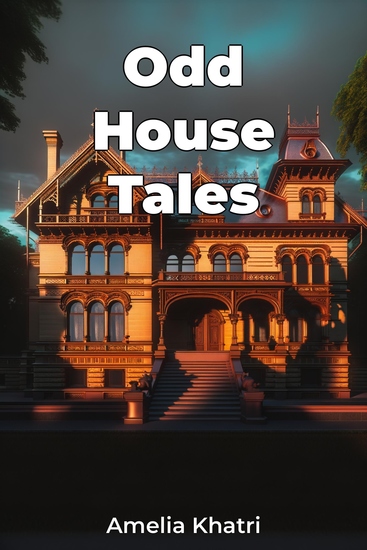
Odd House Tales - cover

Odd House Tales

Amelia Khatri

Maison d'édition: Publifye

  • 0
  • 0
  • 0

Synopsis

"Odd House Tales" presents a fascinating exploration of how human behavior and personal choices shape residential architecture across three centuries. Through detailed case studies of over 100 unique homes, the book unveils the intricate relationships between architecture, family life, and social history.From Victorian homes with hidden passages to mid-century residences modified for circus performers, each example demonstrates how domestic spaces evolve to accommodate the distinct needs and lifestyles of their inhabitants. The book's comprehensive research combines architectural documentation, oral histories, and municipal records to examine three key themes: physical modifications to homes, establishment of household customs, and the historical forces driving these changes.Structured in four main sections, it progresses from exploring hidden spaces and secret passages to analyzing family rules, architectural adaptations, and the preservation of unique features. Notable examples include a 1920s California bungalow with Prohibition-era tunnels and a contemporary home designed around mechanical music devices.Through its narrative non-fiction approach, the book offers valuable insights for architects, historians, and homeowners while maintaining scholarly rigor. It provides practical applications for renovation planning, preservation efforts, and understanding the complex relationship between residential spaces and human behavior. The inclusion of floor plans, archival photographs, and technical drawings helps readers visualize how these extraordinary homes challenge conventional residential design, making it an invaluable resource for anyone interested in the intersection of architecture and human experience.
Disponible depuis: 07/01/2025.
Longueur d'impression: 118 pages.
D'autres livres qui pourraient vous intéresser

  • Don’t Burn This Book: Book Summary & Analysis - cover

    Don’t Burn This Book: Book...

    Briefly Summaries

    • 0
    • 0
    • 0
    This is a concise summary and analysis of Don't Burn This Book, by Dave Rubin.
     
    It is not the original book and is not affiliated with or endorsed by Dave Rubin.
     
    Ideal those seeking a quick and insightful overview.
     
    Don't Burn This Book is a bold manifesto for free thinking in an age of political tribalism and cultural censorship. It challenges readers to question conventional wisdom, engage in honest dialogue, and reclaim the lost art of critical thought. This book explores the power of individual liberty, personal responsibility, and open debate, offering insights and strategies to navigate today’s polarized world. With a mix of humor, personal anecdotes, and provocative ideas, this work is a call to embrace diversity of thought and resist the pressure to conform.
    Voir livre
  • Stories from Kathasaritasagara series - 11 - From Various sources - cover

    Stories from Kathasaritasagara...

    Anusha HS

    • 0
    • 0
    • 0
    The book Kathasaritsagara has been created by Soma Deva. It consists of 21,500 shlokas. 
    This book Kathasaritsagara has been divided into 18 lambakaas, and those 18 lambakaas are still more divided into 125 Tharanga's. 
    Some lambakaas are very big, while some are very small. 
    If there are 115 Shlokas in the 11th Lambaka, there are around 4925 Shlokas in 12th Lambaka. 
    During ancient times from the mouth of Lord Shiva, this story got birth. Those who listen to this story will experience all sorts of worldly pleasures. They will be blessed by Lord Shiva and at last reach jnana Loka by the blessings of lord Shiva.
    Voir livre
  • Ludwig Wittgenstein - Language Logic and the Limits of Philosophy - cover

    Ludwig Wittgenstein - Language...

    Hector Davidson

    • 0
    • 0
    • 0
    Ludwig Wittgenstein, one of the most influential philosophers of the 20th century, profoundly shaped modern thought, particularly in the realms of language, logic, and the philosophy of mind. His philosophy spans two distinct periods, marked by an evolution in his views on the relationship between language, meaning, and reality. Wittgenstein’s work challenges the way we think about and use language, positing that philosophical problems often arise from misunderstandings of language and its limitations. 
    Wittgenstein’s early philosophy, as presented in his landmark work Tractatus Logico-Philosophicus, was grounded in the belief that language could mirror the structure of reality. According to his "picture theory of meaning," words and sentences are pictures that represent facts in the world. He argued that the limits of language are also the limits of the world, and anything that could not be meaningfully expressed through language was simply beyond the scope of philosophy. This view led him to conclude that many traditional philosophical problems were nonsensical, arising from a misuse of language. 
    However, Wittgenstein underwent a significant philosophical transformation after his work on the Tractatus, largely due to his dissatisfaction with the results of his early approach. By the time of his later work, particularly in Philosophical Investigations, Wittgenstein had rejected the picture theory of meaning and developed the concept of "language games." He argued that meaning is not inherent in words themselves but is derived from their use in various social contexts. Language, for Wittgenstein, is a tool embedded in human practices and activities. He claimed that understanding language requires understanding the ways it functions in specific contexts, challenging the idea of a fixed, underlying structure of meaning.
    Voir livre
  • Wait You Need It When?!? - The Essential Guide to Time Management Productivity and Powerful Habits That Get Things Done - cover

    Wait You Need It When?!? - The...

    Peter Economy

    • 0
    • 0
    • 0
    Reclaim your time! Set priorities, stop procrastinating, and get your stuff done!While some believe that you’re either born a great time manager or you’re not, that’s not really the case at all. Anyone can learn the powerful habits of being more effective and more productive—and getting things done.Wait, You Need It When?!? is the essential guide to learning how to better manage your time, become more productive, and create the daily habits that will make this personal transformation stick in the long run—not just for a day or two. In today’s work environment, we need these habits more than ever before. Regardless of where we work—an office or traditional business establishment, at home, or at the local Starbucks—we can all benefit from applying better time management habits. Learning the abilities of self-direction and how to stay on task are long-term building blocks for any successful career.Set yourself up for success Optimize your workplace Limit outside disruptions Know the eleven habits that get things doneBased on proven approaches, the latest research, and the advice of workplace experts, Wait, You Need It When?!? will provide you with detailed and unambiguous advice on how to hone your time management skills and learn new ones. 
    Voir livre
  • Pillar of Salt - A Daughter's Life in the Shadow of the Holocaust - cover

    Pillar of Salt - A Daughter's...

    Anna Salton Eisen, Aaron Eisen

    • 0
    • 0
    • 0
    As the daughter of Holocaust survivors, Anna Salton Eisen's memoir, Pillar of Salt: A Daughter's Life in the Shadow of the Holocaust, breaks down the barrier of silence that was intended as a protective shield for her parents and their children. From early childhood, Anna, as a second-hand witness to the Holocaust, felt overwhelmed by the unspoken but ever-present trauma of her parents' past. Her father, born as Lucjan Salzman, survivor of ten different concentration camps, is enveloped in impenetrable grief and his history encased in secrecy. 


    But Anna is determined to look backwards, breaking through her father's reticence to confront the unspoken terrors of the past. The entire Salton family embarks on a journey through Poland unlocking a history sealed in silence and buried by time. By the end of her odyssey, Anna acquires a new understanding of her legacy as a child of Holocaust survivors and how trauma is revisited upon subsequent generations. 


    By revisiting those places of trauma with her father as her guide, Anna Salton Eisen's tour of terrors provide her with a new understanding of how her identity has been shaped under the shadow of the Holocaust. Anna confides that by looking back like Lot's wife, and by taking in the whole story, "I could carry the pain of the Holocaust and find there is more to me than a pillar of salt."
    Voir livre
  • Dostoevsky in Love - An Intimate Life - cover

    Dostoevsky in Love - An Intimate...

    Alex Christofi

    • 0
    • 0
    • 0
    Dostoevsky's life was marked by brilliance and brutality. Sentenced to death as a young revolutionary, he survived mock execution and Siberian exile to live through a time of seismic change in Russia, eventually being accepted into the Tsar's inner circle. Somehow, amidst all this, he found time to write short stories, journalism, and novels such as Crime and Punishment, The Idiot, and The Brothers Karamazov, works now recognized as among the finest ever written. 


    In Dostoevsky in Love Alex Christofi weaves carefully chosen excerpts of the author's work with the historical context to form an illuminating and often surprising whole. The result is a novelistic life that immerses the listener in a grand vista of Dostoevsky's world. Along the way, Christofi relates the stories of the three women whose lives were so deeply intertwined with Dostoevsky's: the consumptive widow Maria; the impetuous Polina who had visions of assassinating the Tsar; and the faithful stenographer Anna. 


    Christofi reconstructs the memoir Dostoevsky might have written had life—and literary stardom—not intervened. He gives us a new portrait of the artist as never before seen: a shy but devoted lover, an empathetic friend of the people, a loyal brother and friend, and a writer able to penetrate to the very depths of the human soul.
    Voir livre