Rejoignez-nous pour un voyage dans le monde des livres!
Ajouter ce livre à l'électronique
Grey
Ecrivez un nouveau commentaire Default profile 50px
Grey
Abonnez-vous pour lire le livre complet ou lisez les premières pages gratuitement!
All characters reduced
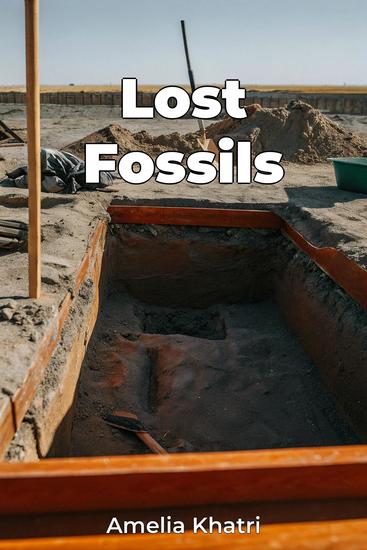
Lost Fossils - cover

Lost Fossils

Amelia Khatri

Traducteur A AI

Maison d'édition: Publifye

  • 0
  • 0
  • 0

Synopsis

Lost Fossils explores a hidden side of paleontology: the disappearance of crucial fossils due to theft, misplacement, or concealment. This book argues that these losses distort our understanding of evolutionary history and the Earth's past. It sheds light on how human factors, such as scientific ambition and historical events, have impacted the fossil record. Imagine, for instance, how the disappearance of a key early hominid fossil could alter our interpretation of human evolution.

 
The book progresses by first defining what constitutes a "lost fossil" and the reasons for their disappearance. Then, it investigates specific cases, like the alleged theft of dinosaur specimens from Mongolia. Finally, it explores the wider implications of these losses on our knowledge of evolution, biogeography, and paleoclimatology.

 
This approach highlights the precarious nature of fossil preservation and the need for better documentation. By connecting Earth sciences, geography, and history, Lost Fossils offers a unique perspective on the human element in paleontological discoveries.
Disponible depuis: 15/02/2025.
Longueur d'impression: 73 pages.

D'autres livres qui pourraient vous intéresser

  • Great Britain and World War II: The History and Legacy of the British in the War - cover

    Great Britain and World War II:...

    Charles River Editors

    • 0
    • 0
    • 0
    "My good friends," the mustached, bony man with thick eyebrows and large, strong teeth somewhat reminiscent of those of a horse, shouted to the crowds from the second-floor window of his house at 10 Downing Street, "this is the second time in our history, that there has come back to Downing Street from Germany peace with honor. I believe it is peace for our time." The man addressing the crowd, British Prime Minister Neville Chamberlain, had just returned from the heart of Nazi Germany following negotiations with Adolf Hitler, and the crowd gathered outside the English leader's house on September 30, 1938 greeted these ringing words with grateful cheers.  
    Of course, the Munich Agreement is widely reviled today and is held up as the epitome of appeasement, but historians still debate its effects on the Second World War, as well as Neville Chamberlain's character and motivations. Some believe the attempted appeasement of Nazi Germany hastened, or even caused, the mayhem occupying the next seven years. Others believe that the pact merely failed to alter war's inevitable arrival in either direction. Historians and authors alternately interpret Chamberlain as a bumbling, arrogant fool, a strong-willed statesman who simply miscalculated the nature of Hitler and Nazi Germany. Another possible interpretation, with considerable documentary support, asserts Chamberlain wished to enlist Germany's aid against the state most Europeans perceived as the true threat of the era, the Soviet Union.  
    	Europe’s attempts to appease him, most notably at Munich in 1938, failed, as Nazi Germany swallowed up Austria and Czechoslovakia by 1939. Italy was on the march as well, invading Albania in April of 1939. The straw that broke the camel's back, however, was Germany's invasion of Poland on September 1 of that year. Two days later, France and Great Britain declared war on Germany, and World War II had begun in earnest. 
    Voir livre
  • Pollution is Colonialism - cover

    Pollution is Colonialism

    Max Liboiron

    • 0
    • 0
    • 0
    In Pollution Is Colonialism Max Liboiron presents a framework for understanding scientific research methods as practices that can align with or against colonialism. They point out that even when researchers are working toward benevolent goals, environmental science and activism are often premised on a colonial worldview and access to land. Focusing on plastic pollution, the book models an anticolonial scientific practice aligned with Indigenous, particularly Métis, concepts of land, ethics, and relations. Liboiron draws on their work in the Civic Laboratory for Environmental Action Research (CLEAR)—an anticolonial science laboratory in Newfoundland, Canada—to illuminate how pollution is not a symptom of capitalism but a violent enactment of colonial land relations that claim access to Indigenous land. Liboiron's creative, lively, and passionate text refuses theories of pollution that make Indigenous land available for settler and colonial goals. In this way, their methodology demonstrates that anticolonial science is not only possible but is currently being practiced in ways that enact more ethical modes of being in the world.
    Voir livre
  • Testimonies from the Edge: Book summary & analysis - cover

    Testimonies from the Edge: Book...

    Margot Langley

    • 0
    • 0
    • 0
    This content is an independent and unofficial summary created for informational and educational purposes only. It is not affiliated with, authorized, approved, licensed, or endorsed by the original author or publisher. All rights to the original work belong to its respective copyright holders. This summary is not intended to substitute the original book, but to offer a concise overview and interpretation of its main ideas.
     
    
    Testimonies from the Edge is a gripping and emotionally charged collection of real voices caught in moments of profound transformation. Through raw confessions, quiet resilience, and unfiltered reflections, this audiobook captures individuals standing at the threshold—of identity, of belief, of survival. Each story peels back the layers of fear, strength, and truth, offering a rare look into lives lived at the margins and decisions made when there’s nowhere left to turn but forward. Unflinching, intimate, and deeply human, Testimonies from the Edge invites listeners to witness the power of vulnerability and the courage it takes to speak from the brink. Perfect for fans of personal narratives, social commentary, and stories that echo long after they’re told.
    Voir livre
  • The Law - cover

    The Law

    Bastiat Frederic

    • 0
    • 0
    • 0
    An analysis that grounds the law in the personality, liberty, and property of the individual from “the most brilliant economic journalist who ever lived” (Joseph Schumpeter, twentieth-century political economist).  The law is the organization of the natural right of lawful defense; it is the substitution of collective for individual forces, for the purpose of acting in the sphere in which they have a right to act, of doing what they have a right to do, to secure persons, liberties, and properties, and to maintain each in its right, so as to cause justice to reign over all.   It is with these words that the nineteenth-century French economist and statesman Frédéric Bastiat describes his theory of the individual rights of man in a classic refutation of the communist ideas that were sweeping across France at the time. In these pages, Bastiat affirms that the non-intervention of the State in private affairs gives rise to our wants and their satisfactions developing in their natural order. Problems arise when the law leaves its proper sphere and is employed in annihilating that justice which it should have established. He describes the threat of socialism as “philanthropic tyranny,” the enemy to his revered principles of justice, peace, order, stability, harmony, and logic. In clear, concise prose, Bastiat reveals the dangers of government overreach, a philosophy that still inspires libertarian ideology today.
    Voir livre
  • Choices We Make The: Philosophy in Everyday Decisions - cover

    Choices We Make The: Philosophy...

    Henry J. Howes

    • 0
    • 0
    • 0
    Description: "The Choices We Make: Philosophy in Everyday Decisions" 
    This topic delves into the profound yet practical ways philosophy shapes the decisions we make daily. It explores how moral reasoning, ethical frameworks, and critical thinking can guide choices about relationships, careers, finances, and personal values. By examining real-world dilemmas, the subject sheds light on the interplay between logic, emotion, and societal expectations in decision-making. It encourages readers to reflect on their own beliefs and habits, offering insights into how adopting philosophical perspectives can lead to more intentional, meaningful, and fulfilling lives.
    Voir livre
  • Political Animals - The secret life of the political pets of Westminster and Washington - cover

    Political Animals - The secret...

    Peter Cardwell

    • 0
    • 0
    • 0
    Peter Cardwell is a broadcaster, author, academic and international political commentator. He served as a special adviser in the UK government for three and a half years, working across four departments. Peter has worked on three continents for the BBC, Sky News and ITV and has written for publications including The Times, the Sunday Independent and Your Cat magazine. He is currently a presenter on Talk and, occasionally, Times Radio.
    
    After being educated in Northern Ireland, Peter studied at St Hugh's College, Oxford, before winning a Fulbright scholarship to the Columbia School of Journalism, New York.
    He lives in London with his rescue cat Jack.
    Voir livre