Begleiten Sie uns auf eine literarische Weltreise!
Buch zum Bücherregal hinzufügen
Grey
Einen neuen Kommentar schreiben Default profile 50px
Grey
Jetzt das ganze Buch im Abo oder die ersten Seiten gratis lesen!
All characters reduced
Iron Age - cover

Iron Age

Amelia Khatri

Übersetzer A AI

Verlag: Publifye

  • 0
  • 0
  • 0

Beschreibung

Iron Age explores the profound impact of ironworking on African societies, revealing how this technological innovation spurred transformations in agriculture, warfare, and social structures. Prior to iron, communities relied on stone, wood, and bone tools, limiting their capacity for growth. The adoption of ironworking led to more than just new tools; it acted as a catalyst for societal restructuring and economic expansion. The book argues that African societies demonstrated agency in adapting ironworking to their specific needs, challenging Eurocentric views of technological development. Drawing on archaeological findings, linguistic analysis, and oral traditions, the book examines the dissemination of ironworking across Africa and its lasting legacy. Chapters progress from the origins and spread of iron technology to its impact on agriculture, warfare, and trade, with case studies highlighting regional variations. Iron Age offers significant value by providing a comprehensive, accessible account of this transformative period. It synthesizes diverse sources to present a nuanced understanding of the African Iron Age, shedding light on the complex interplay between technological advancement and societal evolution.
Verfügbar seit: 19.03.2025.
Drucklänge: 58 Seiten.


Weitere Bücher, die Sie mögen werden

  • HUMAN RELATIONS - Building Meaningful Connections in a Digital Age (2023 Guide for Beginners) - cover

    HUMAN RELATIONS - Building...

    Kyla Santiago

    • 0
    • 0
    • 0
    In this book, author explores the importance of human relations in our digital age, where social media and other forms of technology have created new ways of communication, but also contributed to a sense of disconnection and isolation. The author shares insights and practical strategies to help readers build meaningful connections in both personal and professional settings. 
    Some of the key topics covered in the book include:The power of empathy and active listening in building relationshipsOvercoming social anxiety and shyness to connect with othersEffective communication techniques for resolving conflicts and misunderstandingsThe role of trust and vulnerability in creating deep, lasting connectionsThe impact of culture and diversity on human relationsStrategies for building and maintaining strong teams and collaborations 
    And Much More!... 
    "The Art of Human Relations" is a must-read for anyone looking to improve their communication skills and build more meaningful relationships in their personal and professional lives. 
      
    So, click the “Buy Now” button right now!!!
    Zum Buch
  • All My Love - Poems and Prayers - cover

    All My Love - Poems and Prayers

    Caleb J. Paxton

    • 0
    • 0
    • 0
    A collection of poems and prayers about faith and doubt, a poetic journey of reconstruction.
    Zum Buch
  • AEF: With General Pershing and the American Forces - cover

    AEF: With General Pershing and...

    Heywood Broun

    • 0
    • 0
    • 0
    In 1917, the American Expeditionary Forces (AEF) arrived in Europe to fight alongside the French and British allied forces.  American journalist Heywood Broun followed the AEF and reported on their experiences.  He published these sketches in book form in 1918.  This project is part of the ongoing commemoration by Librivox volunteers of the centenary of World War I.  (Summary by MaryAnn)
    Zum Buch
  • Lust - Pleasure Performance Power - cover

    Lust - Pleasure Performance Power

    Erika Lust

    • 0
    • 0
    • 0
    A bold look at the unexpected ways porn shapes our lives, with a feminist defense, drawn from Erika Lust’s decades in adult filmmaking, that argues for a more ethical porn that can transform sexual politicsFor more than two decades, Erika Lust has been pushing back against shame and stereotypes, building a new kind of adult cinema—one that is feminist, ethical, and deeply human. In Lust: Pleasure, Performance, Power, she tells the story of how a shy “good girl” from Sweden came to create one of the most talked-about studios in the world. She takes us behind the scenes of her films, where every detail matters: the casting, the consent talks, the way a set can feel safe, playful, and alive. We meet performers who are treated as collaborators, not objects, and glimpse the passion and chaos of making art about sex. Lust makes the provocative argument that porn is not the root of society’s problems but a mirror of them. Instead of scapegoating it and missing the chance to address those problems, Erika offers pragmatic solutions for how we can develop and improve the industry. She rejects censorship and moral-panic legislation, which history shows only makes things worse, and instead points to the power of telling more complex, nuanced stories of sex and gender. While sharing openly about her experience as a director, Erika argues that pleasure is not shameful or frivolous but a basic right, and that questions of sexuality and representation are inseparable from our broader culture and politics. Raw, passionate, and inspiring, Lust is a manifesto for anyone who has ever felt ashamed of desire, as well as a reminder that telling the truth about sex can change the world.
    Zum Buch
  • Ashanti Empire - Kingdom of the Golden Stool - cover

    Ashanti Empire - Kingdom of the...

    Rolf Hedger

    • 0
    • 0
    • 0
    This audiobook is narrated by an AI Voice.  
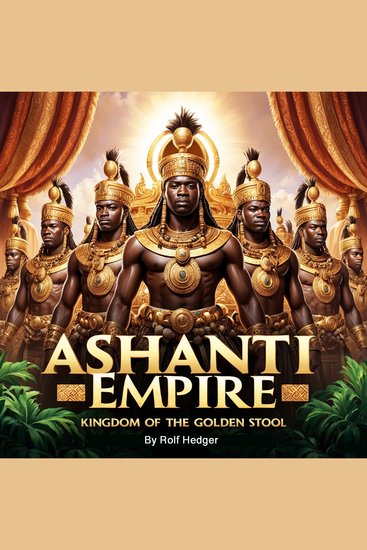
    The Ashanti Empire, flourishing from the 17th to the 19th century in what is now Ghana, stands as a testament to the resilience and sophistication of African states. This powerful kingdom was established through a unique blend of indigenous cultural traditions and political innovations, creating a centralized authority that not only governed a vast territory but also unified diverse ethnic groups under a single national identity. At the heart of this unity was the revered Golden Stool, a symbol of divine providence and the collective spirit of the Ashanti people. 
    Emerging from a landscape rich in natural resources and strategic trade routes, the Ashanti Empire developed robust economic foundations. Gold, kola nuts, and other valuable commodities flowed through well-established networks, facilitating both internal prosperity and external exchanges with neighboring regions and distant trading partners. This economic strength enabled the empire to invest in military expansion and administrative structures that further consolidated its power. 
    The political organization of the Ashanti Empire was characterized by a sophisticated hierarchy led by the Asantehene, whose authority was both political and spiritual. This dual role was crucial in maintaining social order and ensuring loyalty among the various clans and communities within the empire. The administration was further supported by councils of elders and local chiefs, who played significant roles in the governance process by mediating disputes and enforcing the laws that held the society together.
    Zum Buch
  • Ownership - The Evangelical Legacy of Slavery in Edwards Wesley and Whitefield - cover

    Ownership - The Evangelical...

    Michael Sean McGever, Sean McGever

    • 0
    • 0
    • 0
    ECPA Top Shelf Book Cover Award
    The Gospel Coalition Book Awards Award of Distinction–History and Biography
    Men of their time?
    Jonathan Edwards, John Wesley, and George Whitefield were the three most prominent early evangelicals—and all three were deeply compromised on the issue of slavery. Edwards and Whitefield both kept slaves themselves, and Wesley failed to speak out against slavery until near the end of his life.
    In Ownership, Sean McGever tells the true story of these men's relationships to slavery: a story that has too often been passed over or buried in scholarly literature. Laying out the dominant attitudes among Christians toward slavery at the time, McGever sets these "men of their times" in their own context, inviting us to learn how these shapers of American evangelicalism contributed to the tragic history of racism in America. He also explores how Christians finally began to recognize that slavery, which they'd excused for most of Christian history, is actually wrong. It's a story that white evangelicals must wrestle with today.
    Ownership is more than a book of history. It's an invitation to examine our own legacies and to understand—and take ownership of—both our heritage and our own part in the story.
    Zum Buch