Begleiten Sie uns auf eine literarische Weltreise!
Buch zum Bücherregal hinzufügen
Grey
Einen neuen Kommentar schreiben Default profile 50px
Grey
Jetzt das ganze Buch im Abo oder die ersten Seiten gratis lesen!
All characters reduced
Indigenous Salt Routes - cover

Indigenous Salt Routes

Amelia Khatri

Übersetzer A AI

Verlag: Publifye

  • 0
  • 0
  • 0

Beschreibung

Indigenous Salt Routes reveals the untold stories of how indigenous communities worldwide managed salt, a commodity as valuable as gold. The book uncovers intricate networks of salt production, trade, and cultural practices, challenging conventional views of global economic history. It emphasizes that control over salt was a significant driver of social and political structures in many indigenous societies, highlighting their economic sophistication often overlooked in Eurocentric narratives.

 
Did you know some communities extracted salt from seawater, salt springs, and mineral deposits, showcasing remarkable resourcefulness? This book takes an interdisciplinary approach, using archaeological findings, ethnohistorical accounts, and linguistic analysis to reconstruct these forgotten histories.

 
Organized into three sections, the book progresses by first introducing diverse salt extraction methods, then examining trade routes, and finally delving into the cultural and spiritual significance of salt. It explores the logistical challenges and political agreements that facilitated salt movement, and reveals rituals, beliefs and social structures tied to salt production. The book concludes by discussing the legacy of these routes and their relevance to contemporary issues of indigenous rights and resource management.
Verfügbar seit: 29.03.2025.
Drucklänge: 61 Seiten.
Weitere Bücher, die Sie mögen werden

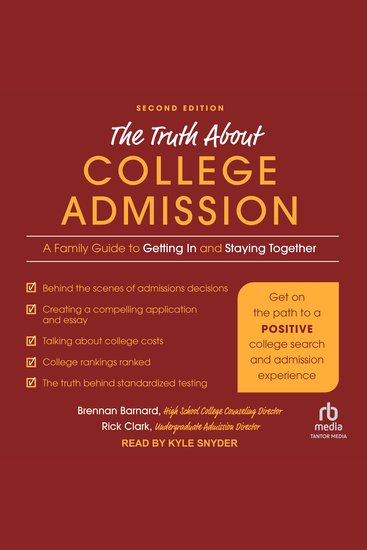
  • The Truth about College Admission - A Family Guide to Getting In and Staying Together 2nd Edition - cover

    The Truth about College...

    Brennan Barnard, Rick Clark

    • 0
    • 0
    • 0
    Is your family just starting to think about visiting colleges? Maybe you are in the throes of the college search, feeling stressed out and overwhelmed. Miss a deadline? How do you pay for it, and what is a "FAFSA" anyway? 


    The Truth about College Admission is the easy-to-follow, comprehensive, go-to guide for families. Brennan Barnard and Rick Clark provide critical advice, thoughtful strategies, direction, and invaluable reassurance during the long and often bewildering college admission journey. This book covers every step: searching for colleges, creating a list of prospective schools, weighing financial considerations, crafting an application, learning what schools are looking for academically and outside the classroom, and understanding how colleges decide whom to accept. Helpful sections show your family how to have open and balanced conversations to keep everyone on the same page, feel less stressed, and enjoying the adventure together. 


    This completely revised second edition includes new information on affordability and aid that addresses important financial considerations. It also explores changes in standardized testing and the impact of the COVID-19 pandemic. The Truth about College Admission is the practical and inspiring guidebook your family needs, an essential companion on the path toward acceptance to college.
    Zum Buch
  • Rethinking the Police - An Officer's Confession and the Pathway to Reform - cover

    Rethinking the Police - An...

    Daniel Reinhardt

    • 0
    • 0
    • 0
    A former officer grapples with the reality of our broken police culture 


    Our society has long been stuck in cultural and ideological battles about police brutality and the police force's broken relationship with our communities. Rethinking the Police promises to start a more hopeful conversation. 


    Daniel Reinhardt spent twenty-four years as a police officer near Cleveland, Ohio. He was long unaware of the ways the culture of the police department was shaping him, but gradually, through his own experiences as a police officer and through the mentorship of Black Christians in his life, his eyes were opened to a difficult truth: police brutality against racial minorities was endemic to the culture of the system itself. 


    In Rethinking the Police, Reinhardt lays out a history of policing in the United States, showing how it developed a culture of dehumanization, systemic racism, and brutality. But Reinhardt doesn't stop there: he offers a new model of policing based not in dominance and control but in a culture of servant leadership, with concrete suggestions for procedural justice and community policing.
    Zum Buch
  • Languages of the Ancient Near East The: The History of the Languages and Scripts Developed across the Region in Antiquity - cover

    Languages of the Ancient Near...

    Editors Charles River

    • 0
    • 0
    • 0
    Perhaps not surprisingly given how advanced they were in comparison to contemporaries, the Egyptians invented one of the first writing systems ever, and for centuries, people thought these ancient texts held some sort of secret, be it aliens, advanced technology lost to the world, or mystical cures for all of the world’s ills. Even the ancient Egyptians saw their writing systems as full of mystery and hidden knowledge - according to Egyptian mythology, writing was invented by the ibis-headed god Thoth, the most intellectual of the gods.  
    	Along with Egypt, the cultural and geographic region known as Mesopotamia was home to some of the world’s earliest civilizations and also the first known form of writing, cuneiform. Many different ethnic groups vied for power in ancient Mesopotamia over the course of antiquity, spanning about 3,000 years, and many of them spoke different languages. Despite these differences, the people in Mesopotamia shared many cultural attributes, including similar religious practices, a common art and architecture style, and a shared use of the cuneiform script. The languages spoken by the peoples of Mesopotamia were as diverse as the many ethnic groups, but as those groups asserted their military, economic, and cultural power over the other groups, two languages became dominant in the region: Sumerian and Akkadian.  
    	The greatest irony of the lack of primary source information about the Phoenicians is that their language and writing happened to be the most influential in antiquity, a byproduct of their voyages and colonization, which spread their language across the Mediterranean. It was the forerunner to the Greek alphabet, from which the Latin alphabet was directly derived, and thus most of the written languages of the modern West. 
    Zum Buch
  • The People Who Own the World - Behind the Scenes of Global Power and Influence - cover

    The People Who Own the World -...

    John Harpoon

    • 0
    • 0
    • 0
    Power has always been a driving force behind the world's greatest shifts, shaping nations, economies, and cultures. While political leaders and public figures often take the spotlight, true power often lies in the hands of those who operate behind the scenes. These individuals, families, and organizations wield influence not through democratic processes, but through wealth, strategic connections, and the ability to manipulate societal frameworks. Understanding this hidden power structure is crucial to grasping how the world truly functions. 
      
    Wealth has long been a powerful tool for control, enabling elites to shape policies, industries, and even social norms. Financial empires built by powerful banking families, corporate giants, and investment firms have grown to dominate global economies. Their influence extends far beyond Wall Street or corporate boardrooms — it reaches into political systems, media narratives, and cultural trends. Those with the greatest financial resources have the capacity to mold the world to their advantage, often with little public awareness. 
      
    Secret societies, elite networks, and exclusive organizations further strengthen these power structures. Groups like the Bilderberg Group, the Trilateral Commission, and other closed-door forums provide platforms for powerful individuals to collaborate and strategize. While their intentions may vary, these groups foster an environment where a select few can guide global agendas without public scrutiny. This covert decision-making shapes economic trends, diplomatic relations, and social movements in ways that are difficult to trace.
    Zum Buch
  • Notes on Feminism - Being a woman in a Church led by men - cover

    Notes on Feminism - Being a...

    Lauren Windle

    • 0
    • 0
    • 0
    Is it possible to be a Christian and a feminist? 
    The hot topic of feminism has been well documented and debated in mainstream media and yet, as Christians we come to the conversation from a slightly different vantage point. For starters, we have the benefit of a personal relationship with our creator plus the ultimate handbook in the Bible to work out what is right and just when it comes to equality. So why do many Christians feel the Bible presents a barrier rather than a boost when it comes to championing equality between the sexes? 
    Lauren Windle draws upon her years as a journalist to weave together a wide range of voices on a subject that society has been wrestling with but, in the Church, few are brave enough to probe too deeply for fear of what they might find. This book isn't here to tell you what to think. The views it presents are intended to inform, not form, your opinion on key topics, including: defining feminism, the lessons we teach boys, female preachers, a woman's place in the household, beauty standards and #ChurchToo. 
    Notes On Feminism features contributions from several high-profile women: 
    - Writer and model Katie Piper on true beauty  
    - Olympian Abigail Irozuru on women's bodies  
    - Comedian Cassandra Maria on why people think women aren't funny  
    - Author Tiffany Bluhm on why people don't believe women  
    - Journalist Delphine Chui on why she isn't a feminist.  
    If feminist stirrings feel like a barrier to your faith, let Notes on Feminism help you unpick the confusion and ongoing debate, while keeping God at the centre.
    Zum Buch
  • Plato's Euthyphro - cover

    Plato's Euthyphro

    Plato

    • 0
    • 0
    • 0
    In Euthyphro, Socrates is on his way to the court where he must defend himself against serious charges brought by religious and political authorities. On the way, he meets Euthyphro, an expert on religious matters, who has come to prosecute his own father.
     
    Socrates questions Euthyphro’s claim that religion serves as the basis for ethics. Euthyphro is not able to provide satisfactory answers Socrates’ questions, but their dialogue leaves us with the challenge of making a reasonable connection between ethics and religion.
    Zum Buch