Join us on a literary world trip!
Add this book to bookshelf
Grey
Write a new comment Default profile 50px
Grey
Subscribe to read the full book or read the first pages for free!
All characters reduced
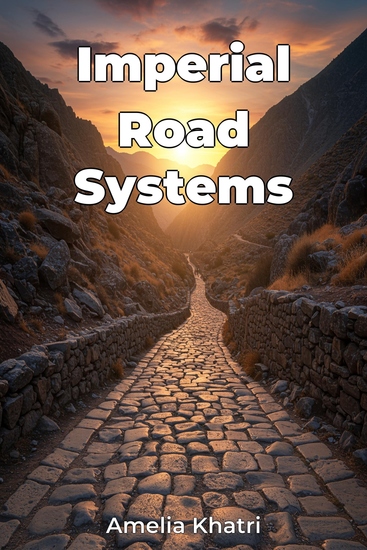
Imperial Road Systems - cover

Imperial Road Systems

Amelia Khatri

Translator A AI

Publisher: Publifye

  • 0
  • 0
  • 0

Summary

Imperial Road Systems explores the vital role of ancient road networks in shaping empires, focusing on how these systems were more than just pathways. They were instruments of control, communication, and economic integration. The book reveals that these sophisticated systems were fundamental to projecting military power and efficiently managing resources.

 
For instance, the Roman road system allowed for rapid troop deployment and tax collection across vast territories. The book examines engineering feats and the impact of roads on political landscapes and socio-economic structures, demonstrating how these networks facilitated the spread of imperial ideologies and solidified authority.

 
Beginning with a historical context, the book progresses through case studies of the Roman road system, the Persian Royal Road, and the Inca road system (Qhapaq Ñan). This comparative approach highlights common principles and variations, offering a deeper understanding of the relationship between infrastructure and imperial power.

 
Concluding with an analysis of the long-term impact, the book assesses contributions to economic growth and cultural exchange. By drawing parallels between ancient road systems and modern infrastructure challenges, the book offers lessons for sustainable development and global connectivity, making it a valuable resource for history enthusiasts and students of classical civilization.
Available since: 05/03/2025.
Print length: 61 pages.

Other books that might interest you

  • Poetics - cover

    Poetics

    Aristotle

    • 0
    • 0
    • 0
    Aristotle's Poetics (Greek: Περὶ ποιητικῆς; Latin: De Poetica) is the earliest surviving work of dramatic theory and first extant philosophical treatise to focus on literary theory. In it, Aristotle offers an account of what he calls "poetry" (a term that derives from a classical Greek term, ποιητής, that means "poet; author; maker" and in this context includes verse drama – comedy, tragedy, and the satyr play – as well as lyric poetry and epic poetry). They are similar in the fact that they are all imitations but different in the three ways that Aristotle describes: Differences in music rhythm, harmony, meter and melody. Difference of goodness in the characters.Difference in how the narrative is presented: telling a story or acting it out. In examining its "first principles", Aristotle finds two: 1) imitation and 2) genres and other concepts by which that of truth is applied/revealed in the poesis. His analysis of tragedy constitutes the core of the discussion. Although Aristotle's Poetics is universally acknowledged in the Western critical tradition, "almost every detail about his seminal work has aroused divergent opinions". The work was lost to the Western world for a long time. It was available in the Middle Ages and early Renaissance only through a Latin translation of an Arabic version written by Averroes.Aristotle's work on aesthetics consists of the Poetics, Politics and Rhetoric. The Poetics is specifically concerned with drama. At some point, Aristotle's original work was divided in two, each "book" written on a separate roll of papyrus.
    Show book
  • The Inca Civilization - The Conquest of the Incas and Machu Picchu the Forgotten City - cover

    The Inca Civilization - The...

    Days of History

    • 0
    • 0
    • 0
    Take a journey through time to uncover one of history's greatest civilizations!  
    Our book dives deep into the ancient Inca culture, revealing their rich history and incredible accomplishments. 
    Learn all about their Land of the Four Quarters, their Conquests, and Machu Picchu - The Forgotten City.  
    Get this book today and Discover why these ancient people have left such an enduring legacy.
    Show book
  • A Set of Six - cover

    A Set of Six

    Joseph Conrad

    • 0
    • 0
    • 0
    Each of the stories in this collection is spun from a simple, if typically wry and bleak, idea. In "Gaspar Ruiz", a South American general who has fought in a war of independence tells his guests a long tale about a notorious strong man that explains the origin of his current domestic arrangements. "The Informer" leads the reader into the depths of a political conspiracy, dealing very slyly indeed with questions of truth and pretence. In "The Brute", we are asked whether we can believe there could be such a thing as a positively malevolent ship, while "An Anarchist" introduces us to an unfortunate man who has had a vision of society itself as malevolent and has not been able to rest in peace ever since. "The Duel", the most obviously likeable tale in this collection, recounts the history of an unfortunate feud between two officers of Napoleon's army that caused them to fight a series of duels over many years. "Il Conde" rounds out the collection, giving a new twist to the saying "See Naples and die".
    Show book
  • The History of Urbanization - From Ancient Cities to Modern Metropolises - cover

    The History of Urbanization -...

    Lyric Vale

    • 0
    • 0
    • 0
    Urbanization refers to the process through which cities and towns grow as a result of the migration of people from rural areas and the expansion of urban areas. It is a phenomenon that has shaped human history for thousands of years, influencing every aspect of society from economics to culture and beyond. As populations increase, the desire for better living conditions, access to employment, and social interaction has led individuals to seek opportunities in urban centers. Over time, these cities evolve to accommodate larger populations, evolving into complex hubs of commerce, culture, and technology. 
    The roots of urbanization trace back to the early agricultural revolution, which enabled humans to produce food more efficiently and settle in one place. This change allowed small villages to grow into the first cities, creating more permanent centers of human life. As civilizations advanced, cities became focal points for trade, governance, religion, and culture. Each of these elements played a crucial role in promoting further urban development, as settlements began to specialize in various industries, services, and functions that drew people from surrounding rural regions. 
    Historically, urbanization was most prominent in ancient civilizations such as Mesopotamia, Egypt, and later, Greece and Rome. These early cities, though primitive by modern standards, laid the foundations for the urban environments we know today. Greek and Roman cities were carefully planned, with infrastructures like roads, aqueducts, and public spaces that contributed to their growth and sustainability. In more recent centuries, urbanization expanded rapidly during the Industrial Revolution, driven by advances in technology, industry, and transportation. Factories, railroads, and new employment opportunities in cities attracted millions of people, transforming landscapes and social structures in profound ways.
    Show book
  • Through the Valley - My Captivity in Vietnam - cover

    Through the Valley - My...

    William Reeder Jr.

    • 0
    • 0
    • 0
    Through the Valley is the captivating memoir of the last US Army soldier taken prisoner during the Vietnam War. 


    In 1971 William Reeder was a senior captain on his second tour in Vietnam. He had flown armed, fixed-wing OV-1 Mohawks on secret missions deep into enemy territory in Laos, Cambodia, and North Vietnam, on his first tour. He returned as a helicopter pilot eager to experience a whole new perspective as a Cobra gunship pilot. Believing that Nixon's Vietnamization would soon end the war, Reeder was anxious to see combat action. To him, it appeared that the Americans had prevailed, beaten the Viet Cong, and were passing everything over to the South Vietnamese Army so that Americans could leave. 


    Less than a year later, while providing support to forces at the besieged base of Ben Het, Reeder's chopper went down in a flaming corkscrew. Though Reeder survived the crash, he was captured after evading the enemy for three days. He was held for weeks in jungle cages before enduring a grueling forced march on the Ho Chi Minh Trail, costing the lives of seven of his group of twenty-seven POWs. Imprisoned in the notorious prisons of Hanoi, Reeder's tenacity in the face of unimaginable hardship is not only a captivating story, but serves as an inspiration to all.
    Show book
  • Chinese philosophy The classic collection - The Analects Tao Te Ching Musings of a Chinese Mystic The Sayings of Mencius The Art of War - cover

    Chinese philosophy The classic...

    Lao Tzu, Sun Tzu, Confucius,...

    • 0
    • 0
    • 0
    "Chinese Philosophy: The Classic Collection" is a comprehensive anthology that explores the rich philosophical traditions of ancient China. This book features key texts such as "The Analects," which contains the teachings of Confucius, and "Tao Te Ching," a foundational text of Taoism. It also includes "Musings of a Chinese Mystic," offering insights from the enigmatic sage Chuang Tzu, as well as "The Sayings of Mencius," presenting the ethical and political philosophy of Mencius. Lastly, "The Art of War" provides strategic wisdom from the renowned military strategist Sun Tzu. Together, these texts offer readers a profound understanding of Chinese philosophy, covering topics such as ethics, governance, spirituality, and warfare, making it an essential resource for anyone interested in Eastern philosophy and culture.Contents:Lao Tzu. Tao Te ChingSun Tzu. The Art of WarConfucius. AnalectsChuang Tzu. Musings of a Chinese MysticThe Sayings of Mencius. Book 1
    Show book