Join us on a literary world trip!
Add this book to bookshelf
Grey
Write a new comment Default profile 50px
Grey
Subscribe to read the full book or read the first pages for free!
All characters reduced
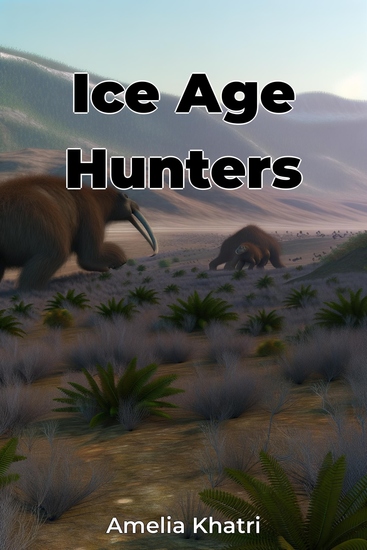
Ice Age Hunters - cover

Ice Age Hunters

Amelia Khatri

Translator A AI

Publisher: Publifye

  • 0
  • 0
  • 0

Summary

"Ice Age Hunters" explores the world of formidable predators that dominated the Pleistocene epoch, offering insights into their lives and eventual extinction. The book examines iconic creatures like the saber-toothed cat, dire wolf, and short-faced bear, detailing their anatomical adaptations and hunting strategies.One intriguing aspect is the role of climate change in shaping their existence; for instance, shifts in temperature and prey availability significantly impacted predator-prey dynamics. Furthermore, the book highlights the ecological pressures that contributed to megafauna extinctions, offering valuable lessons for modern conservation efforts. The book reconstructs Ice Age ecosystems by integrating fossil evidence, paleontological research, and geological data. It progresses by first introducing the major predator species, then focusing on the environments they inhabited, and finally tackling the extinction event. This approach allows readers to understand how climate, habitat, and competition influenced these predators.One key finding is the analysis of tooth marks on bones, which helps reconstruct predator behavior and prey selection. By connecting paleontology, ecology, and climate science, "Ice Age Hunters" provides a comprehensive and accessible view of prehistoric life.
Available since: 02/12/2025.
Print length: 61 pages.


Other books that might interest you

  • Gaia Wakes - Earth's Emergent Consciousness in an Age of Environmental Devastation - cover

    Gaia Wakes - Earth's Emergent...

    Topher McDougal

    • 0
    • 0
    • 0
    Gaia Wakes presents a compelling new framework for understanding the past, present, and future of our planet. Starting from a strong foundation in economics and drawing on a vast range of multidisciplinary scholarship, Topher McDougal explores the possibility of a fifth transition towards an upgraded Earth: the development of a technologically enabled planetary brain capable of coordinating ecological functions and peering far into the future and universe. 
    Gaia Wakes endows the emergence of a planetary brain with both a plausible economic mechanism and a historical context in which that mechanism has operated over the course of 3.8 billion years of life on Earth. It argues that the global environmental devastation we are beginning to experience and rapid recent advancements in artificial intelligence may jointly be part of a naturally recurring cycle of “upgrades” that has driven the increasing complexity of life on Earth. 
    Ambitious and provocative, the author combines economics with a breathtaking range of subjects including futurism, technology, philosophy, ecology and planetary and environmental sciences to offer new insights into questions that have long challenged us about the relationship between humankind and the world in which we live. Gaia Wakes stands out as a bold and original perspective on the future of our planet.
    Show book
  • Heliology - The Sun and Its Power Understanding the Source of Life - cover

    Heliology - The Sun and Its...

    Mike Crawford

    • 0
    • 0
    • 0
    The Sun is the central force that sustains life on Earth, providing the energy necessary for the survival of all living organisms. Without its warmth and light, the planet would be an inhospitable, frozen wasteland, incapable of supporting even the simplest forms of life. The Sun’s role extends beyond merely illuminating the sky—it drives the climate, controls weather patterns, and enables the growth of plants that form the foundation of the food chain. Every breath of oxygen produced by photosynthetic organisms owes its existence to the Sun’s energy. It is the ultimate source of life, shaping the conditions that allow ecosystems to flourish. 
    Beyond its biological influence, the Sun dictates the very rhythm of human existence. It has shaped cultures, religions, and civilizations throughout history, serving as a symbol of power, divinity, and continuity. Ancient societies, from the Egyptians and Mayans to the Greeks and Chinese, revered the Sun as a deity or a fundamental force of the cosmos. It guided the development of calendars, agricultural cycles, and even architectural designs that aligned with solar movements. The Sun’s predictable cycles of day and night, along with its seasonal variations, have dictated human activities for millennia, influencing everything from farming practices to the establishment of timekeeping systems. 
    Scientifically, the Sun is a fascinating object of study, revealing insights into the nature of energy production, stellar evolution, and cosmic interactions. As a massive nuclear reactor, it continuously fuses hydrogen into helium, releasing immense amounts of energy in the process. This nuclear fusion not only sustains the Sun’s luminosity but also provides valuable knowledge for researchers seeking to harness similar energy on Earth.
    Show book
  • The Evolution of Medicine – From Ancient Herbs to Modern Cures - How Human Ingenuity Transformed Healing from Primitive Remedies to Scientific Breakthroughs - cover

    The Evolution of Medicine – From...

    Brody Watkins

    • 0
    • 0
    • 0
    From the earliest herbal remedies to the development of life-saving vaccines, the evolution of medicine is one of humanity’s greatest achievements. But how did we go from ancient healing rituals to the high-tech medical world of today? 
    This audiobook takes you on a journey through the history of medicine, uncovering the breakthroughs, struggles, and remarkable discoveries that shaped modern healthcare. Discover: 
    ✅ How ancient civilizations used plants, minerals, and rituals for healing 
    ✅ The revolutionary discoveries of germ theory, anesthesia, and antibiotics 
    ✅ The role of vaccines in eradicating deadly diseases 
    ✅ How modern technology is transforming medicine, from AI to genetic engineering 
    The Evolution of Medicine – From Ancient Herbs to Modern Cures is a must-listen for *history lovers, science enthusiasts, and anyone fascinated by the power of medicine to change lives.
    Show book
  • Mastering GraphQL - A Comprehensive Guide to Building APIs with GraphQL - cover

    Mastering GraphQL - A...

    Et Tu Code

    • 0
    • 0
    • 0
    Are you looking to build a scalable and efficient API using GraphQL?  
    Look no further! This comprehensive guide covers everything you need to know to master GraphQL, from its history and popular applications to its schema, queries, mutations, resolvers, directives, pagination, authentication, authorization, error handling, best practices, testing, tooling, and more.  
    Whether you're a seasoned developer or just starting out, this book has got you covered. 
    1. Introduction to GraphQL 
    2. History of GraphQL 
    3. Popular Applications of GraphQL 
    4. GraphQL Schema and Types 
    5. Queries and Mutations 
    6. GraphQL Resolvers 
    7. GraphQL Directives 
    8. Pagination and Batch Loading 
    9. Authentication and Authorization 
    10. Error Handling in GraphQL 
    11. Subscriptions in GraphQL 
    12. GraphQL Best Practices 
    13. Testing GraphQL APIs 
    14. Tooling and Development Workflow 
    15. Integrating GraphQL with Frontend Frameworks 
    16. GraphQL in Production 
    17. GraphQL and Microservices 
    18. Challenges and Problems with GraphQL 
    19. Benefits of GraphQL over REST API 
    20. Disadvantages of GraphQL compared to REST API 
    21. Interview Questions on GraphQL in JavaScript
    Show book
  • The Fabric of Cosmos - Unraveling the Mystery of Dark Matter - cover

    The Fabric of Cosmos -...

    Dirk Fallon

    • 0
    • 0
    • 0
    The story of dark matter begins not in the distant reaches of the universe, but in the questions that humans have asked for centuries. What is the universe made of? Why do galaxies behave the way they do? As our tools for observing the cosmos improved, so did our understanding—but with every answer came more mystery. In the early 20th century, astronomers began to notice strange things. Galaxies were spinning in ways that defied the laws of physics, at least as we understood them. The stars on the outer edges of galaxies were moving far too fast to be held together by the gravity from visible matter alone. There had to be something else out there, something invisible, something we couldn’t detect with telescopes. This was one of the first big hints that something massive and unseen—what we now call dark matter—was shaping the universe. 
    Modern cosmology was born when scientists started to view the universe not just as a collection of stars and planets, but as a dynamic, evolving structure governed by deep physical laws. Einstein’s theory of general relativity reshaped our understanding of space, time, and gravity. Suddenly, the universe was a place where space could bend, expand, and even accelerate. These ideas led to the Big Bang theory and the realization that the cosmos had a beginning and has been changing ever since. But as astronomers began mapping out galaxies and measuring their movements, inconsistencies popped up. The math didn’t add up unless we assumed that most of the mass in the universe was missing from our view. That mass didn’t emit light, didn’t reflect it, and didn’t absorb it. It was dark, but it was there.
    Show book
  • Research and Diagnostics - Unlocking Medical Mysteries (3 in 1) - cover

    Research and Diagnostics -...

    Ava Westwood

    • 0
    • 0
    • 0
    In the labyrinth of human health, where each patient presents a unique puzzle, the tools of discovery become our most valuable allies. "Research and Diagnostics: Unlocking Medical Mysteries" stands as an essential compendium for those who seek to illuminate the shadowed corridors of disease and dysfunction through scientific inquiry and technological innovation. This groundbreaking text integrates the critical disciplines of laboratory science, research methodology, and imaging technology into a unified approach for solving medicine's most challenging enigmas. 
    From the microscopic realm of cellular investigation to the sophisticated landscapes revealed through advanced imaging, this comprehensive 3-in-1 guide empowers healthcare professionals, researchers, and students to transform raw data into meaningful insights. Whether unraveling the genetic code through laboratory analysis, designing robust research protocols to advance medical knowledge, or peering into the human body with cutting-edge visualization techniques, this book provides the foundation for excellence in diagnostic medicine—because behind every successful treatment lies the power of precise, thorough, and thoughtful investigation.
    Show book