
Begleiten Sie uns auf eine literarische Weltreise!
Buch zum Bücherregal hinzufügen
Grey
Einen neuen Kommentar schreiben Default profile 50px
Grey
Jetzt das ganze Buch im Abo oder die ersten Seiten gratis lesen!
All characters reduced
History of Astronomy - cover

History of Astronomy

Amelia Khatri

Übersetzer A AI

Verlag: Publifye

  • 0
  • 0
  • 0

Beschreibung

History of Astronomy explores humanity's quest to understand the cosmos, tracing our knowledge from ancient star charts to modern space telescopes. It highlights pivotal moments and figures, revealing how cultural, technological, and scientific advancements have shaped our perception of the universe. The book emphasizes that our understanding of the cosmos is not static but evolves through human curiosity and ingenuity.

 
It's intriguing to note how ancient civilizations used astronomy for calendars and navigation, and how the Copernican Revolution shifted our worldview from geocentric to heliocentric. The book journeys through astronomical history, starting with ancient civilizations like the Babylonians, Egyptians, and Greeks, examining their cosmological models.

 
It then focuses on the Copernican Revolution and figures like Copernicus, Galileo, Kepler, and Newton, exploring the scientific and social implications of their ideas. Finally, it delves into modern astrophysics, the development of telescopes, and the era of space exploration, revealing discoveries like galaxies and black holes. The approach is accessible, avoiding technical jargon and focusing on the human stories behind scientific discoveries.
Verfügbar seit: 12.02.2025.
Drucklänge: 65 Seiten.
Weitere Bücher, die Sie mögen werden

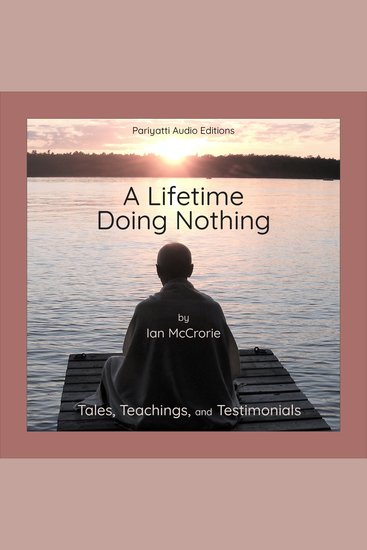
  • A Lifetime Doing Nothing - Tales Teachings and Testimonials - cover

    A Lifetime Doing Nothing - Tales...

    Ian McCrorie

    • 0
    • 0
    • 0
    This book is a compilation of teachings told in short stories about the author's attempts to undo the done. He offers this little book as a more ardent, and hopefully lucid, attempt to explain the paramount importance of doing nothing as a way to undo oneself. 
     
    ----------------------------- 
     
    "In my experience, all our problems do indeed stem from this hyperactive and delusional thinking we have acquired over time. 
     
    There is a way to eradicate the light-speed, blind reactions and the habitual confusion. The way is very simple. It boils down to just two words: do nothing. That s it. Do nothing. Sit quietly in a room alone and do nothing. Watch the monkey mind and do not try to fix it or eliminate it or drown it out or engage it. 
     
    This is doing non-doing. Observe the mind, on autopilot as usual, screaming editorial comments from the sidelines like some frenzied play-by-play announcer and do nothing about it. Don't turn the monologue into a dialogue. Do nothing. 'Nothing to see here, folks. Let s keep it moving.'" 
     
    —Ian McCrorie
    Zum Buch
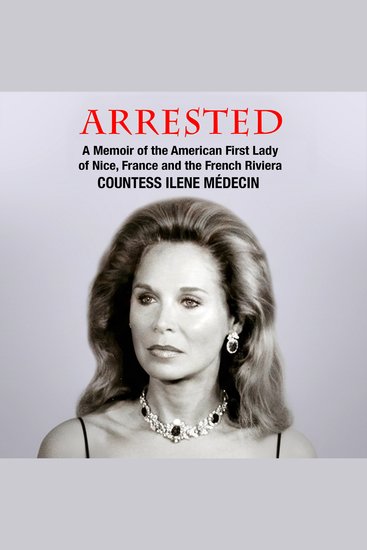
  • Arrested - A Memoir of the American First Lady of Nice France and the French Riviera - cover

    Arrested - A Memoir of the...

    Countess Ilene Medecin

    • 0
    • 0
    • 0
    Growing up in Beverly Hills with two famous uncles - a cosmetics magnate and a well-connected mobster - eventually led Ilene Médecin to a romantic and glamorous life as the American First Lady of Nice and the French Riviera. "Arrested" follows Ilene through her marriage to Jacques Médecin, a Medici Count fondly known as "King Jacquou," who was the last scion of a century old political dynasty. Her unique experience is from the perspective of an American woman living in France, married to a powerful French politician ruling the Côte d'Azur as they shared their social circle with Princess Grace Kelly and Prince Rainier. Life was extraordinary among royals, celebrities, and politicians. From the enchanted pages of a storybook Camelot, being at the pinnacle of a fantasy existence, only to fall from grace to the depths of a French prison cell. While there were trysts and scandals, nothing prepared Ilene for the demise of a prominent political family and her eventual arrest for her husband's alleged wrongdoings. As for Jacques, sadly, taking up residence in Uruguay was a puzzling end to a stellar political career. 
    Neither political exile nor arrest had ever been on Ilene's bucket list, but she found herself checking them both off. Her late husband, Jacques Médecin, had been Mayor of Nice, President of Alpes-Maritimes (presiding over the Côte d'Azur), French Minister of Tourism, Member of Parliament, and a Medici Count. Rest assured, "King Jacquou" was no ordinary politician as he ruled the expanse of the French Riviera. Curiously, he also gained notoriety being the official reference for proper Salad Niçoise as the published author of a widely acclaimed cookbook, "Cuisine Niçoise, Recipes From A Mediterranean Kitchen."
    Zum Buch
  • Humphrey Bogart: A short biography - 5 Minutes: Short on time – long on info! - cover

    Humphrey Bogart: A short...

    5 Minutes, 5 Minute Biographies,...

    • 0
    • 0
    • 0
    Humphrey Bogart, screen legend: Life and work in a short biography! Everything you need to know, brief and concise. Infotainment, education and entertainment at its best!
    Zum Buch
  • People Pleasing: How to Say No Stop Caring What Others Think and Set Healthy Boundaries So You Can Finally Reclaim Your Time and Energy - cover

    People Pleasing: How to Say No...

    Andy Gardner

    • 0
    • 0
    • 0
    Stop people-pleasing and master the art of setting boundaries. 
    Do you ever feel as though you are trapped in a never-ending cycle of people-pleasing?  
    Do you always say “Yes” to others, even when it means neglecting your time and energy?  
    Do you worry too much about what others think about you, which ultimately affects your mental health? 
    If this sounds familiar, you’re not alone. 
    The pain of people-pleasing is very common. It’s a pain of never being able to say no, constantly worrying about what others think of you, and feeling like you can never do enough. Though breaking free from this cycle can seem impossible, what if there was a solution? 
    This audiobook aims to help you break this cycle and master how you can set helpful boundaries for yourself. It offers practical strategies for saying “no” in an authentic and empowering way. It also gives insight into why you may have developed people-pleasing tendencies in the first place. 
    Instead of constantly sacrificing your needs for others, you can prioritize your well-being and devote your time and energy to the things that matter most to you. One of the most significant benefits of putting what you learn into practice is the sense of freedom that comes with setting healthy boundaries.  
    In this audiobook, you will:Learn what people-pleasing is and how to determine if you are oneLearn the psychology behind people-pleasingDiscover the personality types prone to people-pleasingMaster the art of saying no with purposeLearn practical tips to help you overcome people-pleasingDiscover how to navigate people-pleasing in relationships or friendshipsMaster strategies for self-careMaster understanding self-awareness 
    Click on the “add to cart” button now to finally break free from the people-pleasing cycle.
    Zum Buch
  • Robert E Lee’s Greatest Victories - cover

    Robert E Lee’s Greatest Victories

    Editors Charles River

    • 0
    • 0
    • 0
    After Lee succeeded the wounded Johnston, he pushed McClellan’s Army of the Potomac away from Richmond and back up the Peninsula in late June, only to then swing his army north to face a second Union army, John Pope’s Army of Virginia. Needing to strike out before the Army of the Potomac successfully sailed back to Washington and linked up with Pope’s army, Lee daringly split his army to threaten Pope’s supply lines, forcing Pope to fall back to Manassas to protect his flank and maintain his lines of communication. At the same time, it left half of Lee’s army (under Stonewall Jackson) potentially exposed against the larger Union army until the other wing (under James Longstreet) linked back up. Thus, in late August 1862, the Army of Northern Virginia and the Army of Virginia found themselves fighting over nearly the exact same land the South and North fought over in the First Battle of Bull Run 13 months earlier.  
    Of all the Civil War battles fought, and of all the victories achieved by Robert E. Lee at the command of the Confederate Army of Northern Virginia, the Battle of Chancellorsville is considered the most tactically complex and ultimately the most brilliant Confederate victory of the war. In early May 1863, the Army of the Potomac was at the height of its power as it bore down on Robert E. Lee’s Army of Northern Virginia near Fredericksburg, where the Confederates had defeated them the previous December. The Union behemoth had spent most of the winter season being reorganized and drilled by “Fighting Joe” Hooker, an aggressive commander who had fought hard at places like Antietam. With an army nearing 130,000 men, Hooker’s Army of the Potomac was twice the size of the Army of Northern Virginia. Lee’s heavily outnumbered army went on to win the most stunning victory of the war, but it cost them nearly 25% of their men and Stonewall Jackson.
    Zum Buch
  • The Art of War - cover

    The Art of War

    Sun Tzu

    • 0
    • 0
    • 0
    The Art of War (Chinese: 孫子兵法; lit. 'Sun Tzu's Military Method') is an ancient Chinese military treatise dating from the Late Spring and Autumn Period (roughly 5th century BC). The work, which is attributed to the ancient Chinese military strategist Sun Tzu ("Master Sun"), is composed of 13 chapters. Each one is devoted to a different set of skills (or "art") related to warfare and how it applies to military strategy and tactics. For almost 1,500 years it was the lead text in an anthology that was formalized as the Seven Military Classics by Emperor Shenzong of Song in 1080. The Art of War remains the most influential strategy text in East Asian warfare and has influenced both Far Eastern and Western military thinking, business tactics, legal strategy, lifestyles and beyond.
    The book contains a detailed explanation and analysis of the 5th-century BC Chinese military, from weapons and strategy to rank and discipline. Sun also stressed the importance of intelligence operatives and espionage to the war effort. Considered one of history's finest military tacticians and analysts, his teachings and strategies formed the basis of advanced military training for millennia to come.
    The book was translated into French and published in 1772 (re-published in 1782) by the French Jesuit Jean Joseph Marie Amiot. A partial translation into English was attempted by British officer Everard Ferguson Calthrop in 1905 under the title The Book of War. The first annotated English translation was completed and published by Lionel Giles in 1910. Military and political leaders such as the Chinese communist revolutionary Mao Zedong, Japanese daimyō Takeda Shingen, Vietnamese general Võ Nguyên Giáp, and American military general Norman Schwarzkopf Jr. are all cited as having drawn inspiration from the book.
    Zum Buch