¡Acompáñanos a viajar por el mundo de los libros!
Añadir este libro a la estantería
Grey
Escribe un nuevo comentario Default profile 50px
Grey
Suscríbete para leer el libro completo o lee las primeras páginas gratis.
All characters reduced
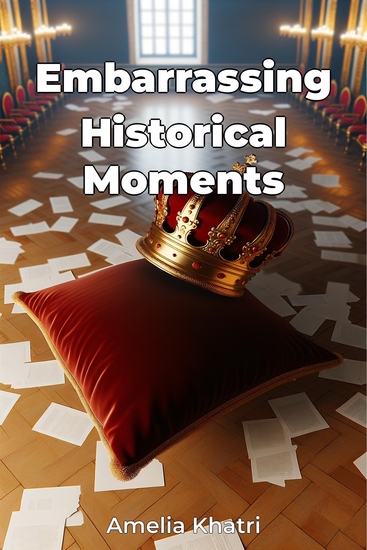
Embarrassing Historical Moments - cover

Embarrassing Historical Moments

Amelia Khatri

Traductor A AI

Editorial: Publifye

  • 0
  • 0
  • 0

Sinopsis

"Embarrassing Historical Moments" explores the awkward side of world history, showcasing political blunders, royal mishaps, and societal scandals that leaders and nations would prefer to forget. The book argues that these incidents, often brushed aside, reveal deeper truths about societies, acting as barometers of public sentiment and catalysts for change. For example, a seemingly minor diplomatic faux pas could expose underlying tensions between nations, or a cultural gaffe might highlight shifting social norms.

 
The approach of the book is thematic, with chapters dedicated to different types of embarrassing moments. It begins by establishing a framework for analyzing "historical embarrassment," then progresses through case studies of political missteps, royal scandals, and other awkward events, examining their immediate impact and lasting consequences. The goal is to understand the context surrounding these moments, analyze how they were perceived, and assess their influence on world history. By studying these human foibles, we gain a more nuanced understanding of the past and develop cultural sensitivity and critical thinking skills.
Disponible desde: 12/02/2025.
Longitud de impresión: 69 páginas.

Otros libros que te pueden interesar

  • The Secret Listener - An Ingenue in Mao's Court - cover

    The Secret Listener - An Ingenue...

    Yuan-Tsung Chen

    • 0
    • 0
    • 0
    The history of China in the twentieth century is comprised of a long series of shocks: the 1911 revolution, the civil war between the communists and the nationalists, the Japanese invasion, the revolution, the various catastrophic campaigns initiated by Chairman Mao between 1949 and 1976, its great opening to the world under Deng, and the Tiananmen Square Massacre. 


    Yuan-tsung Chen lived through most of it, and at certain points in close proximity to the seat of communist power. Born in Shanghai in 1929, she came to know Zhou En-Lai as a young girl while living in Chongqing, where Chiang Kai-Shek's government had relocated to, during the war against Japan. That connection to Zhou helped her save her husband's life in Cultural Revolution. After the communists took power, she obtained a job in one of the culture ministries. She frequently engaged with the upper echelon of the party and was a first-hand witness to some of the purges that the regime regularly initiated. Eventually, the commissar she worked under was denounced in 1957, and she barely escaped being purged herself. Later, during Cultural Revolution, she and her husband were purged and sent to live in a rough, poor area. They finally moved to Hong Kong, with Zhou's permission, in 1971. Chen gives a first-hand account of what life was like in the period before the revolution and in Mao's China.
    Ver libro
  • The Mindful Brain - The Neurobiology of Well-Being - cover

    The Mindful Brain - The...

    MD Daniel Siegel

    • 0
    • 0
    • 0
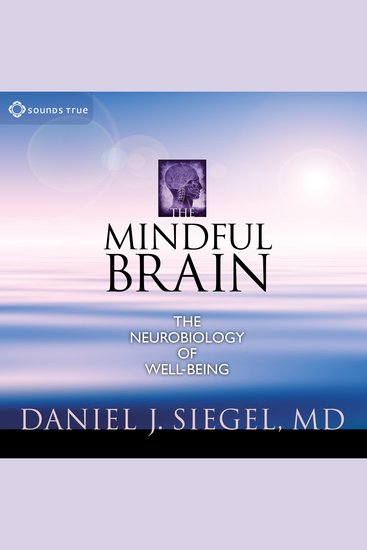
    Does mindfulness practice improve your physical, social, and mental well-being? To what extent can your mind shape your brain? What does the latest research have to say about meditation and other awareness practices?Now on The Mindful Brain, Dr. Daniel J. Siegel, a pioneer of the emerging field known as interpersonal neurobiology, answers these questions and more in this original adaptation to complement his breakthrough book.From paradigm-stretching new discoveries in brain science, to the ways that mindfulness practice can amplify health and meaning in your life, Dr. Siegel invites you to discover the many facets of the mindful brain, including:For meditators of all levels, mental health professionals, educators, or anyone wanting to know more about the power of human consciousness, this acclaimed psychiatrist offers an illuminating exploration of The Mindful Brain.Course objectives:Gain an understanding of the science behind Mindful Awareness• Receive direct, first-person experience of mindful awareness• Integrate the science of mindful awareness with that of mind, brain, and relationships• Understand ways in which mindful living can be directly applied to everyday lifeThe long-term effects of mind training on your physiology and mental health• Attunement and mindfulness: the measurable influence of individual consciousness• Curiosity, openness, acceptance, and love: the extraordinary effects of simultaneously experiencing these qualities• How mindfulness practices foster emotional balance, physical health, body-based empathy, and deep self-understanding
    Ver libro
  • With Her Own Hands - Women Weaving Their Stories - cover

    With Her Own Hands - Women...

    Nicole Nehrig

    • 0
    • 0
    • 0
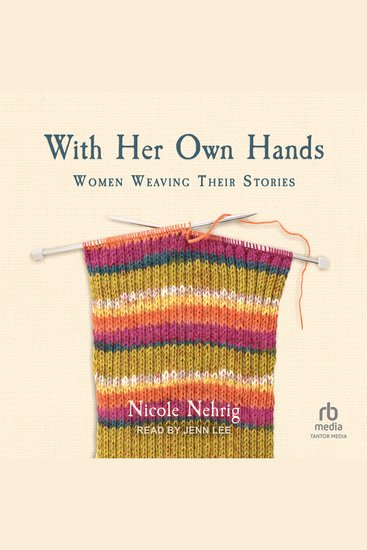
    Knitting, sewing, embroidery, quilting―throughout history, these and other forms of textile work have often been dismissed as merely "women's work" and attached to ideas of domesticity and obedience. Yet, as psychologist and avid knitter Nicole Nehrig explores in this captivating book, textile work has often been a way for women to exercise power. When their voices were silenced and other avenues were closed off to them, women used the tools they had―often a needle and thread―to seek freedom. 
     
    With Her Own Hands brings together remarkable stories of women who have used textiles as a means of liberation, from an eighteenth-century Quaker boarding school that used embroidered samplers to teach girls math and geography to the Quechua weavers working to preserve and revive Incan traditions today, and from the Miao women of southern China who, in the absence of a written language, pass down their histories in elaborate "story cloths" to a midcentury British women's postal art exchange. Textiles have been a way for women to explore their intellectual capacities, seek economic independence, create community, process traumas, and convey powerful messages of self-expression and political protest. 
     
    Heartfelt and deeply moving, With Her Own Hands is a celebration of women who have woven their own stories―and a testament to their resilience.
    Ver libro
  • Named - cover

    Named

    Camilla Balshaw

    • 0
    • 0
    • 0
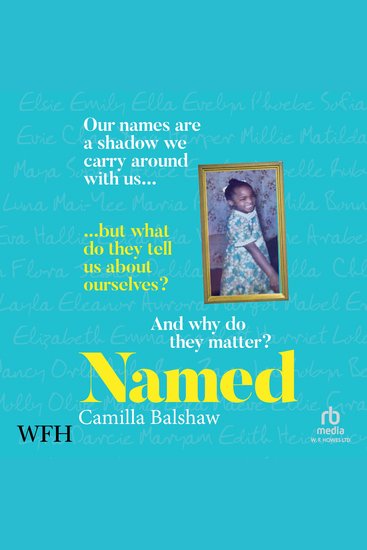
    Our names are a shadow we carry around with us. They are part of who we are. Our names are a marker of our self-identity and our sense of self. Our names have the power to shock. They have the power to heal, and they have the power to trigger conversations around race, class, social mobility and belonging. But what is a name? What do our names tell us about ourselves? And why do they matter? 
     
    Named is a fascinating exploration of names, global naming conventions and identity politics woven into a moving, personal narrative about the finding of family and self. At the intersection of memoir and social and cultural history it is a truly fascinating book about the seemingly ordinary and every day. 
     
    The author’s own narrative about her estrangement from her Nigerian father, the daily battles with her Jamaican mother and her journey towards identity is woven through the chapters making it an engaging and intimate investigation of what makes us who we are.
    Ver libro
  • The Xinjiang Procedure - cover

    The Xinjiang Procedure

    Ethan Gutmann

    • 0
    • 0
    • 0
    What is The Xinjiang Procedure? 
    Xinjiang refers to the northwest of China where the Uyghur people, Muslims with Turkic roots, have lived for thousands of years. The procedure refers to Chinese transplant surgeons surgically extracting Uyghur organs while their hearts are still beating, average age, 28 years old.  
     From 2015 on, the WHO and the Transplantation Society asserted this was fiction. China of a different time. Then came the medical testing of any Uyghur above the age of 12. Ten million blood and DNA tests. And the camps filled the desert 
     Ethan Gutmann told the story of Falun Gong organ harvesting with intelligence and heart in his acclaimed book The Slaughter. His searing reporting drew death threats-and helped bring down Taipei's mayor, Dr. Ko Wen-Je for complicity in Beijing's organ harvesting operations. 
     Gutmann's way forward was clear. Refugees were crossing the Kazakh border, fleeing China in a vivid display of human endurance. But Beijing had changed the rules. Throughout Central Asia, human rights investigators were now considered spies. The Chinese press explicitly identified Gutmann as a new "Cold Warrior." 
     Gutmann mustered a 4x4 with no GPS tracker, his foster daughter, skis, a paper map, and a compass. They drove from Germany to the Kazakh border where they were searched and biometrically photographed. Then, from the standpoint of electronic surveillance, the duo vanished into thin air.  
     Gutmann re-emerged in London with startling new evidence from the Xinjiang concentration camps. Beijing was murdering tens of thousands of young people for their organs every year. Foreign organ tourists were purchasing them to order. A young woman's organs were valued at $900,000. 
     This is the account of how Gutmann did it. He brings the story of Beijing's organ harvesting juggernaut, and its Western medical apologists, to conclusion - and points to an unconventional way forward. The Xinjiang Procedure sets a new standard in narrative non-fiction.
    Ver libro
  • 101 Why Do We Call It That - Origins of Everyday Words & Phrases Book - cover

    101 Why Do We Call It That -...

    Dean Stratton

    • 0
    • 0
    • 0
    This audiobook is narrated by an AI Voice.  
    Discover the hidden stories behind the words we use every day. 
    Why Do We Call It That? is a fascinating journey through language, uncovering the quirky, surprising, and often hilarious origins of the terms, phrases, and idioms we take for granted. Perfect for word lovers, trivia buffs, teachers, writers, or anyone who enjoys a good story about language. 
    What’s Inside: 
    Everyday Words Unpacked: Learn why we call it a “sandwich,” where “deadline” came from, and why a “computer bug” has nothing to do with insects. 
    Idioms & Expressions Explained: Dive into phrases like “break the ice,” “spill the beans,” and “under the weather.” 
    Cultural & Historical Insights: Explore how wars, inventions, myths, and mishaps shaped the words we speak today. 
    Engaging Examples & Anecdotes: Each entry comes alive with storytelling, humor, and unique perspectives that make learning memorable. 
    Why You’ll Love It: 
    Makes a thoughtful gift for teachers, writers, linguists, or curious friends. 
    Great conversation starter for dinner parties, classrooms, or book clubs. 
    Clear, well-researched, and fun—a book that informs as much as it entertains. 
    Whether you’re curious about why we “kick the bucket” or how “Google” became a verb, this book reveals the surprising histories that shaped our everyday speech.
    Ver libro