¡Acompáñanos a viajar por el mundo de los libros!
Añadir este libro a la estantería
Grey
Escribe un nuevo comentario Default profile 50px
Grey
Suscríbete para leer el libro completo o lee las primeras páginas gratis.
All characters reduced
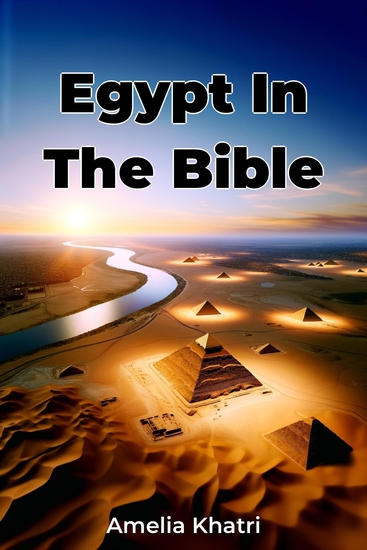
Egypt In The Bible - cover

Egypt In The Bible

Amelia Khatri

Editorial: Publifye

  • 0
  • 0
  • 0

Sinopsis

"Egypt In The Bible" offers a comprehensive exploration of ancient Egypt's profound influence on biblical narratives and Israelite culture. This insightful book delves into the intricate relationship between Egyptian history and religious texts, examining archaeological evidence and historical records to provide a nuanced understanding of Egypt's role in shaping biblical accounts.

 
The book is structured in four main sections, progressing from geographical and historical background to specific biblical episodes involving Egypt, cultural and religious exchanges, and the symbolic role of Egypt in prophecy. It highlights fascinating connections, such as the influence of Egyptian wisdom literature on biblical texts and the impact of Egyptian-Israelite interactions on language development and political ideologies in the ancient Near East.

 
The author's balanced approach to controversial topics, like the historical accuracy of the Exodus narrative, encourages readers to engage critically with the evidence presented. What sets this book apart is its interdisciplinary approach, combining methods from archaeology, history, and comparative religion to offer a holistic understanding of the subject.

 
By bridging the gap between biblical narratives and historical reality, "Egypt In The Bible" provides valuable insights for students, clergy, and anyone interested in deepening their understanding of biblical contexts and the development of monotheism in the ancient world.
Disponible desde: 14/10/2024.
Longitud de impresión: 135 páginas.

Otros libros que te pueden interesar

  • History of Iran - Events Turning Points Religion and Empirical Conquests - cover

    History of Iran - Events Turning...

    Kelly Mass

    • 0
    • 0
    • 0
    The history of Iran, once known as Persia in the Western world until the mid-twentieth century, is deeply intertwined with the history of a much broader region, referred to as Greater Iran. This expansive area stretches from Anatolia in the west to the borders of ancient India and the Syr Darya in the east, and from the Caucasus and Eurasian Steppe in the north to the Persian Gulf and the Gulf of Oman in the south. This vast territory has been home to a series of powerful civilizations and empires, each contributing to Iran's rich and complex history. 
    Iran's historical roots date back to around 7000 BC, with evidence of ancient settlements that make it one of the world's oldest continuous major civilizations. From the Early Bronze Age onward, the southwestern and western regions of the Iranian Plateau became integrated into the broader tapestry of the Ancient Near East. Early inhabitants such as the Elamites, followed by the Kassites, Mannaeans, and Gutians, played significant roles in shaping the region's cultural and political landscape. The Persians themselves are often regarded as the "first historical people" by the philosopher Georg Wilhelm Friedrich Hegel, reflecting their pivotal role in the development of world history. 
    In 625 BC, the Medes, a people native to the Iranian Plateau, succeeded in uniting Iran into a single nation and empire. This marked the beginning of the country's transformation into a major power. However, it was the Achaemenid Empire, founded by Cyrus the Great in 550 BC, that truly set Iran on the global stage. Under Cyrus, the Achaemenid Empire became the first true superpower in history, stretching across three continents—from the Balkans and North Africa to Central Asia.
    Ver libro
  • The Great Depression - America's Darkest Hour and it’s Influence on the United State’s Economic Cultural and Social Life - cover

    The Great Depression - America's...

    Will Forrest

    • 0
    • 0
    • 0
    Are you interested in learning about the most significant economic crisis in history? 
    The Great Depression: America's Darkest Hour and it’s influence on the United state’s economic, cultural, and social life is the perfect book for you! 
    This in-depth look at the Great Depression will give you a full understanding of the economic, cultural and social effects of the Great Depression that continue to shape our society even today. Through this book, you will gain an understanding of the reasons why the Great Depression occurred, the various efforts taken to address the crisis, and the lasting effects of the crisis on the United States economy. 
    You will also gain an understanding of how the Great Depression impacted the social and cultural life of the United States. This includes a look at the changes in lifestyle, the work of artists and writers, and the push for social reform. Finally, you will gain insight into the legacy of the Great Depression and how it continues to shape our economy, culture, and social life today. 
      
    This is the perfect book for anyone interested in learning more about the Great Depression and its far-reaching effects. Buy this book today and gain an in-depth understanding of the Great Depression and how it shaped our economic and cultural history.
    Ver libro
  • Argentina - Historical Roots and Economic Pathways - cover

    Argentina - Historical Roots and...

    Anya Solace

    • 0
    • 0
    • 0
    Argentina’s economic history is deeply intertwined with its political evolution and the social transformations that have shaped its national identity. From its early days as a Spanish colony to its modern-day status as one of the largest economies in Latin America, Argentina’s economic journey reflects both its potential and its vulnerabilities. The development of Argentina’s economy has been marked by periods of prosperity, such as during the late 19th and early 20th centuries, and periods of profound crisis, including the devastating economic collapse of 2001-2002. This chapter introduces the key historical milestones that have influenced the economic landscape of Argentina, providing a foundation for understanding the complex dynamics of its economic structure. 
    The story of Argentina’s economy begins with the indigenous societies that thrived on the land long before European colonization. Spanish colonization, starting in the 16th century, brought profound changes, introducing new economic systems and reshaping local trade practices. Agriculture became the dominant sector under colonial rule, with the Spanish focusing on extracting resources and establishing a trade-based economy that centered on Buenos Aires as a port for export. However, the colonial legacy of resource extraction and the absence of industrialization laid the groundwork for some of Argentina's long-standing economic challenges. 
    Upon gaining independence from Spain in 1816, Argentina faced the daunting task of creating a stable economic framework. The early post-independence years were marked by internal divisions and external conflicts, which stifled economic development. However, by the late 19th century, Argentina began to establish itself as a key global agricultural exporter. The development of railways and ports enabled the country to transport vast quantities of grain, beef, and other commodities to European markets, ushering in a period of unprecedented economic growth.
    Ver libro
  • Ethics in the Gray: Understanding Morality in a Complex World - cover

    Ethics in the Gray:...

    Henry J. Howes

    • 0
    • 0
    • 0
    The title, "Ethics in the Gray: Understanding Morality in a Complex World," reflects an exploration of the nuanced and multifaceted nature of ethics and morality. In a world where choices are seldom black or white, this concept delves into the challenging terrain of moral dilemmas, subjective values, and situational ethics. It aims to examine how individuals and societies navigate gray areas, where competing values and principles create complex decisions. 
    This topic emphasizes the importance of understanding diverse perspectives, recognizing biases, and fostering thoughtful, empathetic dialogue to make ethical decisions in uncertain or ambiguous scenarios. It is an invitation to engage with the deeper questions of right and wrong in a world shaped by cultural, social, and personal complexities.
    Ver libro
  • Recognize and Ward off Dark Psychology: How to Recognize Emotional Manipulation Expose a Personality Disorder and Lies and Skillfully Fend Off Manipulation Techniques - cover

    Recognize and Ward off Dark...

    Martina Richter

    • 0
    • 0
    • 0
    Do you feel manipulated and deceived? Do you trust people too easily and allow yourself to be blinded by them? Do you have the feeling that you always end up with the wrong people and end up being surprised by their cold-heartedness? Or have you caught a manipulator and want to understand their behavior? Then you have made the right decision by buying this guide.
    A dark side lurks in many people. They use psychological tricks to manipulate the people around them and play them off against each other. They use people cold-heartedly to achieve their own goals and rarely feel remorse or regret. Have you also had experiences with cold-hearted people and want to understand their behavior? This guide will give you answers to all your questions about dark psychology. You will learn all about the dark side of psychology. What constitutes it and how to recognize people with a dark side.
    Ver libro
  • Freedom of Speech - Navigating the Balance Between Expression and Responsibility - cover

    Freedom of Speech - Navigating...

    Marcus Klein

    • 0
    • 0
    • 0
    Freedom of speech is a cornerstone of democratic societies, integral to the exercise of individual autonomy and the pursuit of truth. At its core, it is the right to express ideas, opinions, and beliefs without fear of government reprisal or censorship. This principle is enshrined in numerous legal documents, most notably the First Amendment to the U.S. Constitution, which guarantees "the freedom of speech, or of the press," protecting the individual’s right to speak openly in the public sphere. 
      
    The origins of free speech can be traced back to philosophical and political thinkers of the Enlightenment era, who emphasized the importance of reason, individual rights, and personal liberty. Thinkers such as John Locke, Voltaire, and John Stuart Mill argued that the free exchange of ideas was essential for the flourishing of society, allowing for the progress of knowledge, the correction of errors, and the protection of political freedom. These ideas laid the groundwork for the modern understanding of free expression as a fundamental human right. 
      
    However, the right to free speech is not absolute. Throughout history, the boundaries of this freedom have been tested by a wide range of societal, political, and ethical concerns. From the regulation of speech in times of war or national security threats to the ongoing debates over hate speech, defamation, and misinformation, societies have struggled to find a balance between protecting free expression and safeguarding the common good. This tension continues to shape the debate surrounding free speech, particularly in the context of emerging technologies like social media, which have transformed the landscape of communication.
    Ver libro