Rejoignez-nous pour un voyage dans le monde des livres!
Ajouter ce livre à l'électronique
Grey
Ecrivez un nouveau commentaire Default profile 50px
Grey
Abonnez-vous pour lire le livre complet ou lisez les premières pages gratuitement!
All characters reduced
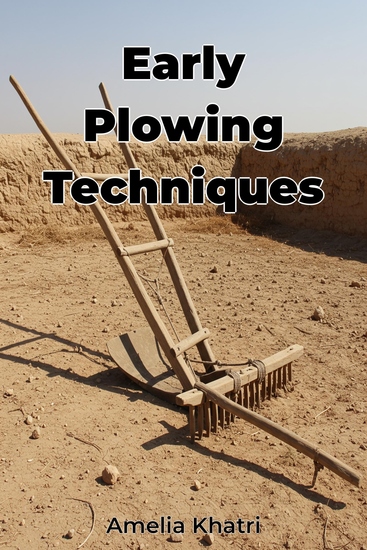
Early Plowing Techniques - cover

Early Plowing Techniques

Amelia Khatri

Traducteur A AI

Maison d'édition: Publifye

  • 0
  • 0
  • 0

Synopsis

Early Plowing Techniques explores how early agrarian societies used plowing methods and equipment, fundamentally changing civilization. It examines the transition from hunter-gatherer lifestyles to settled agriculture, illustrating how plowing influenced food production and societal structures. Consider that early plows, initially simple digging sticks, evolved into complex animal-drawn tools, reflecting significant advancements in agricultural technology. The book challenges the notion of plowing as a straightforward technological advancement, instead framing it as a multifaceted adaptation shaped by the environment, social structures, and cultural beliefs.

 
The book progresses systematically, first introducing early agriculture's basic concepts and challenges. It then delves into the development of early plows in Mesopotamia and Egypt, utilizing archaeological evidence and ancient texts. Furthermore, it investigates the spread of plowing to other regions, such as Europe and Asia, highlighting adaptations to various soil types and farming systems. The book uniquely integrates technological, social, and environmental perspectives to provide a nuanced account of early plowing practices, making it valuable for understanding the roots of modern civilization.
Disponible depuis: 21/02/2025.
Longueur d'impression: 56 pages.
D'autres livres qui pourraient vous intéresser

  • The Bodhisattva Concept - cover

    The Bodhisattva Concept

    A.G.S. Kariyawasam

    • 0
    • 0
    • 0
    This is a Pariyatti audiobook of Bodhi Leaves No. 157, "The Bodhisattva Concept" by A.G.S. Kariyawasam found in the Pariyatti Edition of Collected Bodhi Leaves Vol. V.
     
    Excerpt from The Bodhisattva Concept:
     
    In original Pali Buddhism, the term bodhisatta is used more or less exclusively to designate Gautama Buddha prior to his enlightenment.
     
    'The concept of bodhisattva, along with that of Buddha and of the cakravartin (world-ruler), was in vogue in India even before the appearance of Gautama Buddha. When Prince Siddhārtha, who later became Gautama Buddha, took conception in the womb of Queen Māyā, a seer predicted that Suddhodana’s future son would be either a world-ruler (cakravartin) or a Buddha. Once, answering a question by a brahmin, the Buddha himself admitted that he is neither a god nor a yakkha, but a Buddha, meaning thereby one of a succession of Buddhas (A II 38).
    Voir livre
  • No Place Like Murder - True Crime in the Midwest - cover

    No Place Like Murder - True...

    Janis Thornton

    • 0
    • 1
    • 0
    “This engrossing collection of historical Midwest murders reads like a thriller. True crime at its best. I couldn’t put it down.” —Susan Furlong, author of the Bone Gap Travellers novels 
     
    A modern retelling of 20 sensational true crimes, No Place Like Murder reveals the inside details behind nefarious acts that shocked the Midwest between 1869 and 1950. The stories chronicle the misdeeds, examining the perpetrators’ mindsets, motives, lives, apprehensions, and trials, as well as what became of them long after. 
     
    True crime author Janis Thornton profiles notorious murderers such as Frankie Miller, who was fed up when her fiancé stood her up for another woman. As fans of the song “Frankie and Johnny” already know, Frankie met her former lover at the door with a shotgun. 
     
    Thornton’s tales reveal the darker side of life in the Midwest, including the account of Isabelle Messmer, a plucky young woman who dreamed of escaping her quiet farm-town life. After she nearly took down two tough Pittsburgh policemen in 1933, she was dubbed “Gun Girl” and went on to make headlines from coast to coast. In 1942, however, after a murder conviction in Texas, she vowed to do her time and go straight. Full of intrigue and revelations, No Place Like Murder also features such folks as Chirka and Rasico, the first two Hoosier men to die in the electric chair after they brutally murdered their wives in 1913. The two didn’t meet until their fateful last night. 
     
    An enthralling and chilling collection, No Place Like Murder is sure to thrill true crime lovers. 
     
    “Thornton wittily describes heretofore unheralded true crime stories from Indiana’s small towns.” —Keven McQueen, author of Horror in the Heartland
    Voir livre
  • NCE Secrets: Transform Your Exam Success with Unbeatable Strategies - "Elevate your NCE exam success with impactful audio lessons that deliver winning strategies for your best performance!" - cover

    NCE Secrets: Transform Your Exam...

    Rowan Ashworth

    • 0
    • 0
    • 0
    NCE Secrets: Transform Your Exam Success with Unbeatable Strategies 
    Are you aiming to advance your career by mastering counseling skills and conquering the NCE Exam 2024-2025? 
    Looking for a thorough guide that encompasses everything you need to excel in your NCE Exam 2024-2025? 
    Your quest ends here! 
    This guide is your essential companion for enhancing your understanding, honing your skills, and participating in practical exercises. With this resource, you’re set up for success. 
    Updated for the NCE 2024-2025 Exam Structure. 
    Key features of this comprehensive guide: 
    - In-depth insights into the NCE Exam 2024-2025 Certification 
    - Clear explanations of mastering counseling skills 
    - Effective strategies for exam preparation and tackling various types of questions 
    Our guide stands out with its thorough coverage, which is vital for your exam triumph. Concepts are explored in detail rather than briefly touched upon. 
    Please keep in mind that this guide is an independent resource and not affiliated with any official NCE organization. 
    Crafted with a clear layout and straightforward language, our NCE Exam Guide 2024-2025 guarantees smooth transitions between topics. Bid farewell to overwhelming jargon and embrace clear, accurate, and technical content. 
    So, why hesitate? Click the BUY NOW button, secure your guide, and embark on your journey to success in the NCE Exam 2024-2025! 
    Transform your exam success with unbeatable strategies today!
    Voir livre
  • 89 Words followed by Prague A Disappearing Poem - cover

    89 Words followed by Prague A...

    Milan Kundera

    • 0
    • 0
    • 0
    Two newly translated works from one of the greatest literary writers and thinkers of the modern age, available together in English for the first time. 
    Translating a work from its original language can be complicated; it’s a complex art that can easily mar and twist the intent and meaning of a writer’s words. Precise translations were of particular importance to Milan Kundera, who did not live to see all his books published in his native Czech language. Words, for Kundera, were the object of constant scrutiny. 
    This fascinating volume includes two Kundera works from the 1980s, originally written for the now defunct French magazine Le Debat, which have never been available in in English. In “89 Words,” Kundera wryly recounts the many pitfalls in reading his own poorly translated works. When a friend of Kundera’s asked him about the words he considered the most—the ones he fretted over and loved—Kundera created a personal dictionary—his “89 Words.” This discerning essay, steeped in his signature barbed cheekiness, showcases his casually gutting philosophical reflections on what it means to be a writer in translation—the exile of life and art in another language. 
    In the second work, “Prague: A Disappearing Poem,” Kundera writes with a wistfulness and despair for his ever-more-distant home, offering an intimate look at the specificity of his native culture: the richness of a heritage born in a “small nation” but whose significance is universal. Here, like in A Kidnapped West, we find the double condemnation of “Soviet civilization,” which had suffocated and persecuted Czech culture, and of Western Europe, which refused to neither acknowledge Kundera’s culture or understand it. 
    Prefaced by lauded French historian Pierre Nora and translated from the French by award-winning Matt Reeck, these two texts return us to Kundera’s much-missed living presence. Subtle, alive, and full of wit and irony, 89 Words followed by Prague, A Disappearing Poem is an homage to a literary legend and a reminder of just how prescient his words and insights are today.
    Voir livre
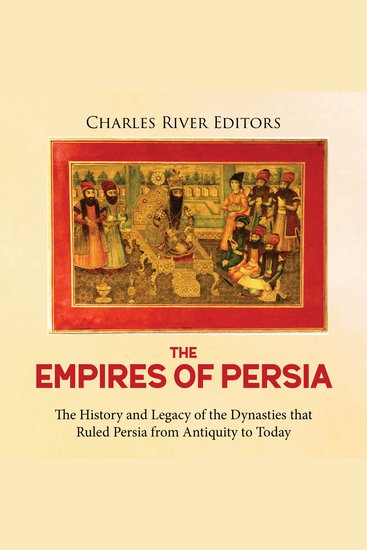
  • Empires of Persia The: The History and Legacy of the Dynasties that Ruled Persia from Antiquity to Today - cover

    Empires of Persia The: The...

    Editors Charles River

    • 0
    • 0
    • 0
    Lying in the middle of a plain in modern day Iran is a forgotten ancient city: Persepolis. Built two and a half thousand years ago, it was known in its day as the richest city under the sun. Persepolis was the capital of Achaemenid Persian Empire, the largest empire the world had ever seen, but after its destruction, it was largely forgotten for nearly 2,000 years, and the lives and achievements of those who built it were almost entirely erased from history. Alexander the Great’s troops razed the city to the ground in a drunken riot to celebrate the conquest of the capital, after which time and sand buried it for centuries. 
    The Parthian people created an empire that lasted almost 500 years, from the mid-3rd century BCE until 224 CE, and it stretched from the Euphrates River in the west to Central Asia and the borders of Bactria in the east. In fact, the expansive empire challenged the Romans on numerous occasions for supremacy in the Near East. 
    During the first half of the 1st millennium CE, an empire arose in Persia that extended its power and influence to Mesopotamia in the east, Arabia in the south, the Caucasus Mountains in the north, and as far east as India. This empire, known alternatively as the Sasanian Empire or Sassanid Empire, was the last of three great dynasties in Persia—the Achaemenid and the Parthian being the first two dynasties—before the rise of Islam. 
    Amid the upheaval in the Islamic world following Muhammad’s death, the Umayyad Caliphate lasted for less than a century, but in that time it managed to become one of the most influential of the major caliphates established following him. 	The Umayyads would be replaced by the far more intelligent and crafty Abbasids, who managed to wield powerful tools like propaganda to undermine their opponents, but eventually, the Ottomans would consolidate control of the area for nearly 500 years.  
    Voir livre
  • The Hidden Systems That Quietly Rule Your Life - cover

    The Hidden Systems That Quietly...

    Owen Blackwood

    • 0
    • 0
    • 0
    This audiobook is narrated by an AI Voice.  
    Expose the invisible structures, algorithms, and institutional mechanisms that shape your choices, opportunities, and life trajectory without your awareness or consent. This revealing audiobook examines how credit scores, recommendation algorithms, insurance calculations, and bureaucratic classifications determine more about your life than personal decisions ever could. Learn how systems designed for efficiency create outcomes no one intended while remaining invisible to those affected by their judgments. The narrator reveals the inner workings of systems that decide what information you see, what opportunities you receive, what prices you pay, and how institutions treat you based on data you never knew was collected. Discover how systemic biases embedded in algorithmic decision-making perpetuate discrimination while appearing objective and neutral. Understand why individual effort cannot overcome systemic obstacles that most people do not even recognize as structural rather than personal failures. This audiobook draws from technology researchers, sociologists, and investigative journalists exposing how systems consolidate power while preventing accountability. Learn to identify systemic influences on your life and develop strategies for navigating systems designed without your interests in mind. Essential listening for anyone wanting to understand why life outcomes often seem disconnected from effort and merit, and what forces actually determine success in modern society.
    Voir livre