Begleiten Sie uns auf eine literarische Weltreise!
Buch zum Bücherregal hinzufügen
Grey
Einen neuen Kommentar schreiben Default profile 50px
Grey
Jetzt das ganze Buch im Abo oder die ersten Seiten gratis lesen!
All characters reduced
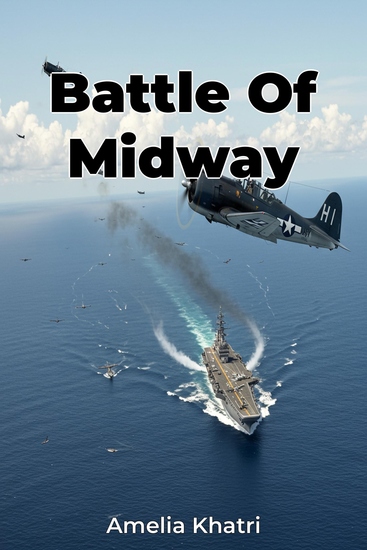
Battle Of Midway - cover

Battle Of Midway

Amelia Khatri

Übersetzer A AI

Verlag: Publifye

  • 0
  • 0
  • 0

Beschreibung

"Battle Of Midway" vividly recounts the pivotal clash in the Pacific during World War II, a turning point where the US Navy decisively halted Japanese expansion. This book analyzes how codebreaking, specifically the "Magic" operation, provided invaluable intelligence, revealing Japanese intentions. It further explores Admiral Yamamoto's strategic miscalculations and the remarkable resilience of the US Navy amidst initial setbacks. This account emphasizes that victory was not inevitable, but a result of fortunate circumstances and dedicated effort, altering the course of the Pacific War and setting the stage for Allied victory. The book progresses systematically, beginning with the historical context and key figures, then delving into the intelligence war and codebreaking breakthroughs. It analyzes the battle itself, including strategic decisions, tactical maneuvers, and acts of heroism, highlighting air battles and the sinking of Japanese carriers. Finally, it assesses the long-term consequences, demonstrating how the Battle of Midway irrevocably altered the war's trajectory. The book uniquely combines detailed tactical analysis with a broader strategic assessment, offering a fresh perspective on this crucial naval engagement.
Verfügbar seit: 17.02.2025.
Drucklänge: 72 Seiten.

Weitere Bücher, die Sie mögen werden

  • Moscow Rules - What Drives Russia to Confront the West - cover

    Moscow Rules - What Drives...

    Keir Giles

    • 0
    • 0
    • 0
    From Moscow, the world looks different. It is through understanding how Russia sees the world—and its place in it—that the West can best meet the Russian challenge. 


    Russia and the West are like neighbors who never seem able to understand each other. A major reason, this book argues, is that Western leaders tend to think that Russia should act as a "rational" Western nation—even though Russian leaders for centuries have thought and acted based on their country's different history and traditions. Russia, through Western eyes, is unpredictable and irrational, when in fact its leaders almost always act in their own predictable and rational ways. For Western leaders to try to engage with Russia without attempting to understand how Russians look at the world is a recipe for repeated disappointment and crises. 


    Keir Giles, a senior expert on Russia at Britain's prestigious Chatham House, describes how Russian leaders have used consistent doctrinal and strategic approaches to the rest of the world. These approaches may seem alien in the West, but understanding them is essential for successful engagement with Moscow. Giles argues that understanding how Moscow's leaders think—not just Putin but his predecessors and eventual successors—will help counterparts in the West develop a less crisis-prone and more productive relationship with Russia.
    Zum Buch
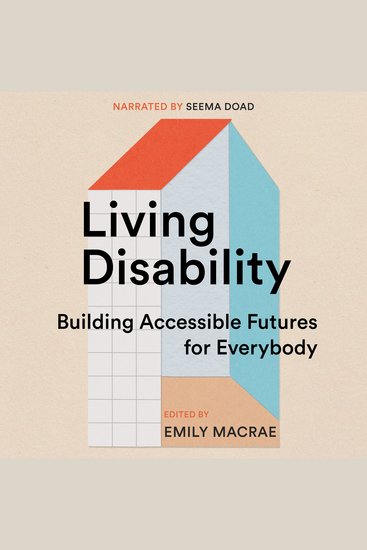
  • Living Disability - Building Accessible Futures for Everybody - cover

    Living Disability - Building...

    Emily Macrae

    • 0
    • 0
    • 0
    How can we build more accessible cities? Living Disability brings together vibrant perspectives on disability justice and urban systems.
    		 
    A musician and snow removal expert, a queer curator, a public pool aficionado, and a journalist turned city councillor — these are just some of the disabled writers exploring disability justice, analyzing urban systems, and proposing more equitable approaches to city building in this anthology. Essays and interviews push the conversation about accessibility beyond policy papers and compliance checklists to show how disabled people are already creating more inclusive spaces in cities of all sizes.
    		 
    Living Disability is universal in scope but intimate and local in focus, grounded in personal struggles and celebrations. Decisions about public transit, affordable housing, and park design all disproportionately impact disabled communities; by sharing stories and strategies, contributors consider the ways disabled thinkers and doers are embracing overlooked aspects of urban design and tackling the toughest problems facing cities. Each chapter provides context to welcome both disabled and non-disabled readers into conversations about the future of inclusion so that all readers can develop their own understanding of what accessible cities look and feel like. This book appeals to city builders of all stripes committed to learning from and working with underrepresented communities. It equips architects, designers, community leaders, innovators, and citizens with the key concepts they need to collaborate with rather than care for disabled neighbors.
    		 
    “Living Disability is at once hopeful and infuriating, solemn and joyous. The stories shared within these pages point to both the past and future simultaneously — illuminating the struggles and joys and history of disabled life, while putting access barriers on blast in a way that is more necessary than ever. The deep, rich work of this collection lies in its embrace of complexity, community, grief, and also its belief in the capacity of our world (read: us) to change. May these stories touch your heart, kindle the flame of your anger, and move you forward into fighting for the better world we all deserve.” — Amanda Leduc, author of Disfigured: On Fairy Tales, Disability, and Making Space
    Zum Buch
  • Equal to Mystery: In Search of Harold Sonny Ladoo - cover

    Equal to Mystery: In Search of...

    Christopher Laird

    • 0
    • 0
    • 0
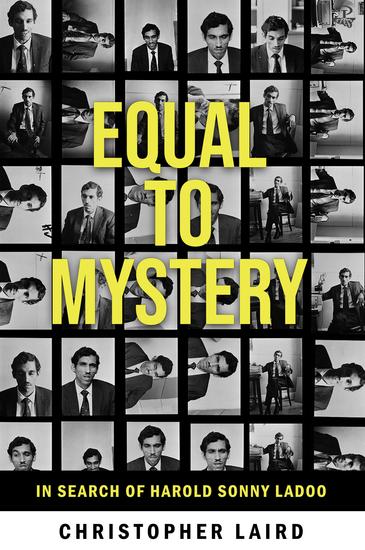
    When the Trinidadian novelist, Harold Sonny Ladoo was found dead soon after the publication of his classic novel, No Pain Like This Body, for Christopher Laird, it became an obsession to try to discover the writer behind the work and what had brought about his untimely end. Equal to Mystery – words written by Ladoo – is the record of that pursuit.
    
    When, as the editor of a Trinidadian literary journal in the radical years of the early 1970s, Christopher Laird was sent Harold Sonny Ladoo's novel, No Pain Like This Body (1973) to review, he knew he was looking at something revolutionary in Caribbean fiction. It is a novel that has recently been republished as a Penguin Modern Classic. But the next news Laird heard of Ladoo was that he had returned to Trinidad from Canada and had been found dead – very probably murdered – in the canefields outside his family's village of McBean. Laird follows in the path of Ladoo to Canada, where he went to make a name for himself as a writer, and tracks him as a student and young married man through conversations with his widow and other family members. He looks in detail at his relationships with two Canadian writers, Dennis Lee and Peter Such, who supported his work, and in Lee's case published him. Here there is an acute account of their meetings across the line of race, of the mix of generous contact and elusive flight in their relationship. Above all, with access to Ladoo's unpublished material -- short stories and fragments of the vast body of fiction he announced he was writing -- Laird offers acute analysis of what is there, honest bafflement about just what Ladoo was up to, with a tragic sense of the talent that was lost through his untimely death.
    Zum Buch
  • The Irish Potato Famine - The Immigration Genocide and Deaths of Ireland - cover

    The Irish Potato Famine - The...

    Kelly Mass

    • 0
    • 0
    • 0
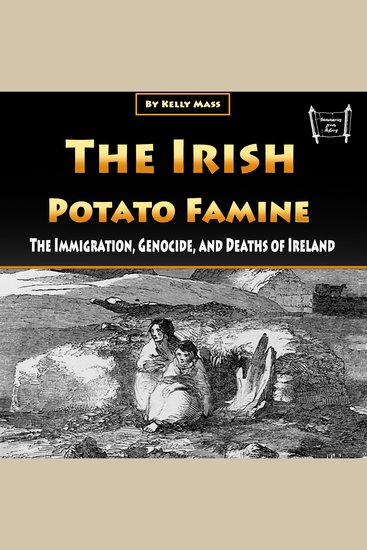
    From 1845 to 1852, the Great Hunger, also referred to as the Potato Famine, was a period of a lot of starvation and illness in Ireland. The period was known in Irish at the time as a Drochshaol, loosely translated as "the hard days," with the most badly affected districts in the west and south of Ireland, where the Irish language was popular (or actually "the bad life"). 
    The year 1847, at times called "Black '47," was the absolute worst year of the period. Around 1 million people died and over a million left the nation throughout the Great Famine, triggering the nation's population to come by 20% to 25%, with certain cities coming by as much as 67 percent between 1841 and 1851. And between the years 1845 and 1855, about 2.1 million people were leaving Ireland, primarily aboard package ships but also on steamboats and barks. This actually made it one of the biggest mass migrations from a single isle in all of history. 
    Let’s explore this tragic event in history, and let’s see what led up to this, what happened afterwards, and how historians look at it now.
    Zum Buch
  • Most Famous Walls of Antiquity The: The History of the Ancient World’s Greatest Defensive Fortifications - cover

    Most Famous Walls of Antiquity...

    Charles River Editors

    • 0
    • 0
    • 0
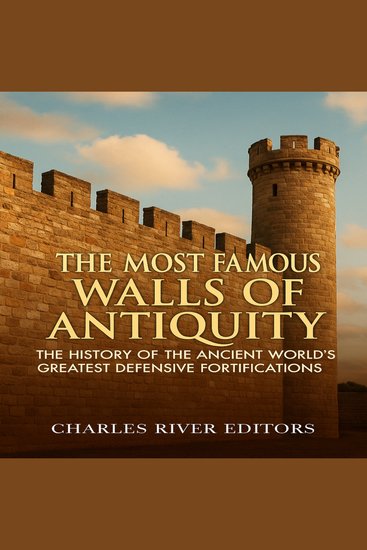
    Throughout history, walls have been constructed as part of nations’ and kingdoms’ defensive structures to keep barbarian hordes, marauding rebels, and recalcitrant tribes out of defined geographic areas. Defensive walls were usually constructed by fairly advanced and sophisticated peoples, such as the Romans and Chinese, with varying degrees of success. Of course, the most famous of all defensive walls in the world is the Great Wall of China, which is actually a series of walls and forts built over the span of several centuries. The Chinese built the Great Wall of China, and several others, primarily to keep invaders from the north, such as the Mongols, out of their land, or at least to slow them down as they fled north after raids. The Romans also built spectacular walls, most notably the Antonine Wall and Hadrian’s Wall. The purpose of those walls was to set the northern limit of the Roman Empire at approximately the modern border of England and Scotland, and, like the Great Wall of China, it was intended to keep out or slow down marauding barbarian tribes from the north.  
    The Great Wall of China is perhaps the wonder of the world that has most captured the human imagination, and as the quotes about it indicate, the wall has acquired special significance even outside of China. The places and ways in which it has taken hold vary greatly, but one thing is certain: the Great Wall of China is as amazing as it is mysterious, and it’s as mundane as it is magical. 
    The Romans were master builders, and much of what they built has stood the test of time. Throughout their vast empire they have left grand structures, from the Forum and Pantheon in Rome to the theatres and hippodromes of North Africa and the triumphal gates in Anatolia and France. Wherever they went, the Romans built imposing structures to show their power and ability, and one of their most impressive constructions was built on the northernmost fringe of the empire. 
    Zum Buch
  • John Rawls - Justice Fairness and the Veil of Ignorance - cover

    John Rawls - Justice Fairness...

    Hector Davidson

    • 0
    • 0
    • 0
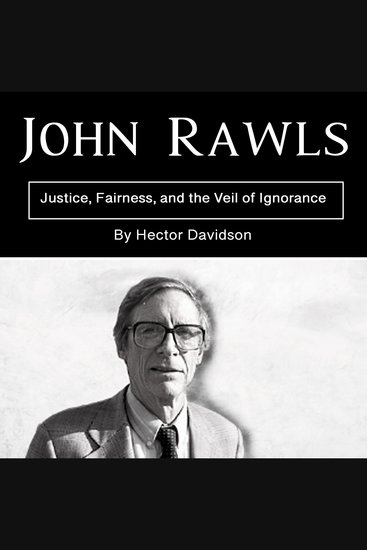
    John Rawls, one of the most influential philosophers of the 20th century, fundamentally reshaped the field of political philosophy with his groundbreaking work, A Theory of Justice (1971). His vision of "justice as fairness" offered a robust framework for understanding social cooperation and the principles that should govern a just society. By blending elements of social contract theory with contemporary concerns about inequality and human rights, Rawls addressed timeless questions about the nature of justice and the moral obligations of institutions.  
    Born on February 21, 1921, in Baltimore, Maryland, Rawls’ early life was marked by tragedy and intellectual rigor. He lost two brothers to illness at a young age, experiences that profoundly influenced his outlook on morality and the fragility of human life. Rawls attended Princeton University, where he earned his undergraduate degree in philosophy, and later completed his doctorate at Harvard University after serving in the U.S. Army during World War II. These formative years shaped his commitment to exploring ethical frameworks that could withstand the complexities of a modern, pluralistic world.  
    Rawls’ magnum opus, A Theory of Justice, introduced several key concepts that would come to define his philosophy. Central to his work was the idea of the "original position," a hypothetical scenario in which individuals design the principles of justice behind a "veil of ignorance." This veil prevents individuals from knowing their social status, wealth, abilities, or personal biases, compelling them to choose rules that are fair and impartial. The result is a system that prioritizes equal basic liberties for all, coupled with the difference principle, which allows social and economic inequalities only if they benefit the least advantaged members of society. 
    Zum Buch