Begleiten Sie uns auf eine literarische Weltreise!
Buch zum Bücherregal hinzufügen
Grey
Einen neuen Kommentar schreiben Default profile 50px
Grey
Jetzt das ganze Buch im Abo oder die ersten Seiten gratis lesen!
All characters reduced
Arctic Tech Failure - cover

Arctic Tech Failure

Amelia Khatri

Übersetzer A AI

Verlag: Publifye

  • 0
  • 0
  • 0

Beschreibung

Arctic Tech Failure examines the critical intersection of technology and human survival in extreme cold environments, focusing on the consequences when essential tools and systems break down. By blending historical analysis with scientific investigation, the book explores how polar explorers have adapted to the loss of vital technologies. A key insight is that over-reliance on technology can create vulnerabilities, demonstrating that while technology boosts exploration, fundamental survival skills remain crucial. The book delves into historical expeditions, highlighting instances where equipment failure led to life-threatening situations, and contrasts these with contemporary scientific understanding of human adaptation to technology-deprived environments. Readers will discover how the loss of communication or navigation tools drastically altered survival chances. It also addresses the physiological and psychological effects of technology loss, referencing scientific studies on cold exposure and stress. Beginning with the concept of "technological dependence," the book progresses through historical cases, analyzes the effects of technology loss, and offers practical recommendations for future endeavors. The book challenges the increasing dependence on sophisticated technology in polar regions and advocates for a balanced approach that prioritizes fundamental survival skills and a deep understanding of the environment, making it valuable for polar researchers, historians, and anyone interested in human resilience in extreme conditions.
Verfügbar seit: 17.02.2025.
Drucklänge: 74 Seiten.

Weitere Bücher, die Sie mögen werden

  • Graph Data Science with Python and Neo4j - Hands-on Projects on Python and Neo4j Integration for Data Visualization and Analysis Using Graph Data Science for Building Enterprise Strategies - cover

    Graph Data Science with Python...

    Timothy Eastridge

    • 0
    • 0
    • 0
    Practical approaches to leveraging graph data science to solve real-world challenges.
    Book Description
    Graph Data Science with Python and Neo4j is your ultimate guide to unleashing the potential of graph data science by blending Python's robust capabilities with Neo4j's innovative graph database technology. From fundamental concepts to advanced analytics and machine learning techniques, you'll learn how to leverage interconnected data to drive actionable insights. Beyond theory, this book focuses on practical application, providing you with the hands-on skills to tackle real-world challenges. You'll explore cutting-edge integrations with Large Language Models (LLMs) like ChatGPT to build advanced recommendation systems. With intuitive frameworks and interconnected data strategies, you'll elevate your analytical prowess. This book offers a straightforward approach to mastering graph data science. With detailed explanations, real-world examples, and a dedicated GitHub repository filled with code examples, this book is an indispensable resource for anyone seeking to enhance their data practices with graph technology. Join us on this transformative journey across various industries, and unlock new, actionable insights from your data. ?
    Table of Contents
    1. Introduction to Graph Data Science
    2. Getting Started with Python and Neo4j
    3. Import Data into the Neo4j Graph Database
    4. Cypher Query Language
    5. Visualizing Graph Networks
    6. Enriching Neo4j Data with ChatGPT
    7. Neo4j Vector Index and Retrieval-Augmented Generation (RAG)
    8. Graph Algorithms in Neo4j
    9. Recommendation Engines Using Embeddings
    10. Fraud Detection      
    CLOSING SUMMARY      The Future of Graph Data Science      
    Index
    Zum Buch
  • The Flowers of Good - The Science and the History of Marijuana Liberation - cover

    The Flowers of Good - The...

    Sidarta Ribeiro

    • 0
    • 0
    • 0
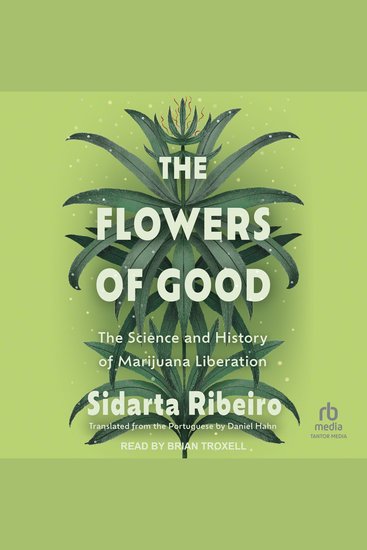
    Cannabis's recent history has been marked by politically motivated prohibition, despite centuries of cultivation. How did we get here and what can we do about it? In The Flowers of Good, neuroscientist Sidarta Ribeiro offers a brief history of the ancient herb and describes how collective human achievements domesticated this incredibly versatile plant and how racism and conservatism conspired to demonize it.Presented as an urgent debate that seeks to break down prejudices and engender dialogue, The Flowers of Good draws on history, culture, personal testimonies, memoir, and scientific rigor to combat misinformation about cannabis and reveal its potential. In accessible, engaging prose, Ribeiro explains the science behind marijuana's remarkable ability to treat everybody from children with epilepsy to seniors with dementia.With the medicinal use of marijuana is no longer questioned by science, the rest of culture is finally starting to catch up. The Flowers of Good explores this new chapter in humanity's history with marijuana, going beyond the scientific aspects of the substance to examine its use in connection with sport, work, study, sex, sleep, and religion—all aimed at improving quality of life.
    Zum Buch
  • Towards a Prairie Atonement - cover

    Towards a Prairie Atonement

    Trevor Herriot

    • 0
    • 0
    • 0
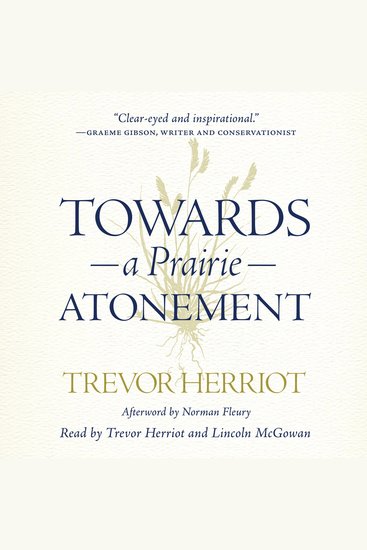
    In the wake of colonization, in a landscape of loss and dispossession, can we rediscover ways to share the land with other creatures and one another?
    		 
    When the government recently tried to abandon its responsibility to protect what little remains of the natural prairie, Trevor Herriot pushed back, only to discover an injustice haunting the lands he was trying to defend. In 1938, when the Métis of Ste. Madeleine returned from working away, they found their homes burnt to the ground and their animals shot. The land they held in common was no longer theirs, but was now controlled by the federal government.
    		 
    Facing his own responsibility as a descendent of settlers, he connects today's ecological disarray to the legacy of Metis dispossession and the loss of their community lands. With Indigenous and settler people alienated from one another and from the grassland itself, hope and courage are in short supply. This book offers both by proposing an atonement that could again bring people and prairie together.
    Zum Buch
  • Nature’s Ghosts: The world we lost and how to bring it back - cover

    Nature’s Ghosts: The world we...

    Sophie Yeo

    • 0
    • 0
    • 0
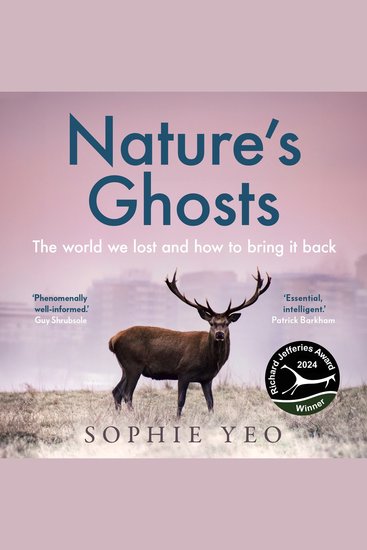
    Winner of the 2024 Richard Jefferies Award for nature writingShortlisted for the 2024 Wainwright Prize for Writing on ConservationA Times Science Book of the Year 
    ‘Sophie writes fantastically, chronicling the most important issues facing nature conservationists today.’ Chris Packham 
    For thousands of years, humans have been the architects of the natural world. Our activities have permanently altered the environment – for good and for bad. 
    In Nature’s Ghosts, award-winning journalist Sophie Yeo examines how the planet would have looked before humans scrubbed away its diversity: from landscapes carved out by megafauna to the primeval forests that emerged following the last Ice Age, and from the eagle-haunted skies of the Dark Ages to the flower-decked farms of more recent centuries. 
    Uncovering the stories of the people who have helped to shape the landscape, she seeks out their footprints even where it seems there are none to be found. And she explores the timeworn knowledge that can help to fix our broken relationship with the earth. 
    Along the way, Sophie encounters the environmental detectives – archaeological, cultural and ecological – reconstructing, in stunning detail, the landscapes we have lost. 
    Today, the natural world is more vulnerable than ever; the footprints of humanity heavier than they have ever been. But, as this urgent book argues, from the ghosts of the past, we may learn how to build a more wild and ancient future. 
    Sophie Yeo's Nature’s Ghosts is a non-fiction masterpiece that takes us on a journey through the science of ecology, exploring the habitats and ecosystems that have been altered by human activity. The book emphasises the need for protection of these resources, offering a glimpse into the past to help us understand how we can shape a better future. 
    For fans of Robert Macfarlane (Is a River Alive?), Robin Wall Kimmerer (The Democracy of Species), Isabella Tree (Wilding), Jennifer Ackerman (What an Owl Knows), and Derek Gow (Birds, Beasts and Bedlam). 
    HarperCollins 2024
    Zum Buch
  • Nature's Blessings - cover

    Nature's Blessings

    Kirsten Riddle

    • 1
    • 0
    • 0
    Be inspired by the wonderful world of nature through intentions, practical exercises and meditations for greater wellbeing and joy.
    
    We are always looking for ways to reconnect with nature. The benefits of spending time outdoors include engaging our senses and experiencing the landscape at a deeper level – but it's not so easy to rewild and run free when we have chores and responsibilities. That's where Nature's Blessings can help. Kirsten Riddle will help you shift your perspective, engage with the environment and learn more about the natural world. She looks at a range of aspects of nature, from trees to rivers, sunlight to storms, butterflies to otters, and highlights ideas and positive lessons associated with each one. Arranged by the four elements, there are overall themes throughout the book: Earth is about grounding and balance; Air is about inspiration and freedom; Fire is connected to confidence and passion; Water concerns healing and self-expression. Each entry includes a daily intention, associated folklore, practical exercises to try and a closing meditation. With tips and suggestions on how you can connect with nature and the intentions at different stages during your day, you will soon be able to welcome all the blessings of nature into your life.
    Zum Buch
  • Plato’s Revenge - The New Science of the Immaterial Genome - cover

    Plato’s Revenge - The New...

    David Klinghoffer

    • 0
    • 0
    • 0
    First there was the genetic revolution—the discovery that physical structures in the cell, including DNA and RNA, shape every organism. Now, says evolutionary biologist Richard Sternberg, we are overdue for another and more profound revolution. 
    Recent findings reveal that genetic and even epigenetic sources alone cannot account for the rich dynamism of life—not even close. Some other informational source is required. 
    The idea was anticipated 2,400 years ago in Plato’s Timaeus and periodically revisited in the ensuing centuries. Sidelined by scientific materialism, it is now reasserting itself on the strength of cutting-edge molecular biology, higher mathematics, and commonsense reasoning. 
    In Plato’s Revenge, science writer David Klinghoffer takes Sternberg’s profound explorations and weaves them into a lively and accessible account of a most remarkable realization: At every moment, we owe our lives to a genome that is more than matter and to an informational source that is immaterial, transcomputational, and beyond space and time.
    Zum Buch