Begleiten Sie uns auf eine literarische Weltreise!
Buch zum Bücherregal hinzufügen
Grey
Einen neuen Kommentar schreiben Default profile 50px
Grey
Jetzt das ganze Buch im Abo oder die ersten Seiten gratis lesen!
All characters reduced
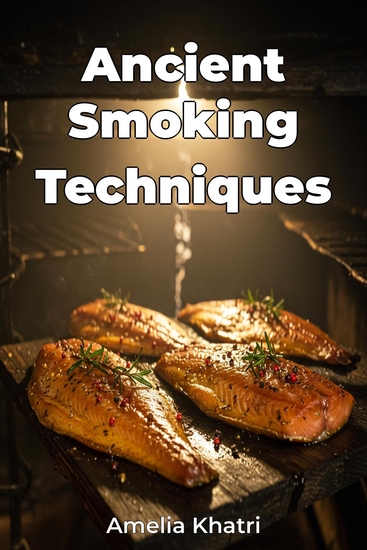
Ancient Smoking Techniques - cover

Ancient Smoking Techniques

Amelia Khatri

Übersetzer A AI

Verlag: Publifye

  • 0
  • 0
  • 0

Beschreibung

Ancient Smoking Techniques explores the long history of food smoking, revealing its evolution as both a means of food preservation and a culinary art form. The book highlights how ancient cultures ingeniously used smoking to preserve food surpluses, a practice that was critical for survival. Early techniques demonstrate a sophisticated understanding of wood selection, where different woods imparted unique flavor profiles, and of flavor infusions through herbs and spices. 

 
The book examines traditional smokehouses around the world, from North American pit smokers to European chimney systems, illustrating how various cultures adapted smoking methods to their environments and available resources. It also delves into the chemical composition of smoke and its interaction with food, emphasizing the science behind this ancient practice.

 
Progressing from the origins of smoking to the nuances of wood selection and flavor infusions, Ancient Smoking Techniques offers a comprehensive view of the historical roots of modern smoking methods. By blending historical analysis with practical knowledge, the book empowers readers to understand and appreciate the rich heritage of smoked foods.
Verfügbar seit: 18.02.2025.
Drucklänge: 79 Seiten.


Weitere Bücher, die Sie mögen werden

  • Mixed Problem Solving Methodology - The skill that changes your life - cover

    Mixed Problem Solving...

    Rocco Mela

    • 0
    • 0
    • 0
    This book is a resume of all the problem solving techniques known by me so far: ITIL, Lean Six Sigma, CompTIA, Agile, Scrum, Applied Problem Solving, SWOT etc etc. 
    I resumed the techniques in 10 core points: 
    1- Be Googley 
    2- Going to the Gemba 
    3- Set the Goal 
    4- Prevent the problem 
    5- Be Customer Focused 
    6- Define the Problem 
    7- Analyze the Problem 
    8- Test the Solution 
    9- Document the Process 
    10- Be Kaizen 
    The result is a mixed problem solving methodology ready to be used in every working environment. 
    Enjoy and use this guide starting from the next problem you have to solve. 
    To your success! 
    - Second Edition -
    Zum Buch
  • The Book of Fear - cover

    The Book of Fear

    Billy Pedro

    • 0
    • 0
    • 0
    As human, our thought processes, actions and reactions, outcomes and the psychological effects of our fear experiences influence our beliefs, lifestyles and other factors. These life changing experiences and factors determine our behaviour in communication and interaction with our environment, whether logial or illogical. As we grow, learn and develop our own environment, we choose to avoid, confront, ignore or learn to live with our fears. The most intriguing part of it is that we voluntarily believe that our fear is a major problem and a hindrance to us making our goals attainable. We become completely powerful when we are able to put our fear reactions in context, reflect on our reactions which are birthed from situations of perceived fear, and dissect the often unrecognised counter-reactions that make our situation affect our actions.
    Zum Buch
  • Suleiman The Magnificent - English Edition - cover

    Suleiman The Magnificent -...

    Santiago Machain

    • 0
    • 0
    • 0
    In the tumultuous 16th century, Suleiman the Magnificent transformed the Ottoman Empire into a power that contested Europe, Persia, and the Mediterranean for control of the known world. This book traces his ascent to the throne, his decisive campaigns, and his vision of statehood as Kanuni, the lawgiver who consolidated laws, justice, and administration. At the same time, it reveals the intimate face of power: the role of Hürrem Sultan, the harem as a political institution, and the fierce succession struggle. Amidst cultural splendor, conquests, and human dilemmas, the work reconstructs the man behind the myth and the legacy that defined an era.
    Zum Buch
  • Black Not Historically Black - Towards the Pan Black College & University - cover

    Black Not Historically Black -...

    Joseph L. Jones

    • 0
    • 0
    • 0
    Black, Not Historically Black by Joseph L. Jones is a compelling exploration of the historical and contemporary challenges faced by Historically Black Colleges and Universities (HBCUs).  
    Jones, a seasoned political scientist and former HBCU president, delves into the systemic issues of leadership, miseducation, culture, sustainability, respect, and social justice within these institutions. Drawing on his extensive experience and the writings of W.E.B. Du Bois, Jones advocates for a transformative vision he calls the Pan Black College and University (PBCU). 
    This vision emphasizes leadership that fosters justice, a curriculum centered on the Black experience, a healthy organizational culture, financial independence, and a commitment to social justice and Pan-Africanism. Through personal anecdotes, scholarly analysis, and a call to action, Jones challenges readers to rethink and reimagine the future of Black colleges as vital incubators for change in Black communities and beyond.
    Zum Buch
  • Extortion 17’s Why - An Analysis of Narratives by Alan Howell Parrot - cover

    Extortion 17’s Why - An Analysis...

    Align Kaizen, Alan Hallow...

    • 0
    • 0
    • 0
    On August 6, 2011, a tragic event unfolded when Extortion 17, a Chinook helicopter, was shot down, resulting in the loss of 30 American servicemen, including 17 Navy SEALs from the legendary SEAL Team 6. It marked the largest loss of life during the War on Terror, a war America was told started because of Osama bin Laden and 9/11. 
    In Alan Parrot's narratives, an oral history captured by Nick Noe, he puts tragic events, including 9/11, Benghazi, and Extortion 17, into perspective. Alan, an Arabist, spent much of his life with royalty in the Middle East and learned about such national tragedies through observation, conversations, and omission. He explains how diplomatic immunity played a role in 9/11 and details the weapons transfer that resulted in the tragedy in Benghazi.  
    Behind these heart-wrenching incidents lies a web of secrecy and deception. Startling revelations have come to light, thanks to the evidence shared with the grief-stricken Gold Star families during the debrief. Astonishingly, it appears that Extortion 17 was not a random act of war, but rather a meticulously orchestrated setup. The threads of this conspiracy can be traced back to the historic Osama bin Laden raid, a mere three months prior, and thus 9/11. 
    Within the pages of this gripping book, you will embark on an extraordinary journey of discovery. Delve into the enigmatic concept of diya, the key that unlocks the truth behind Extortion 17. Unveiling secrets known to only a privileged few, Extortion 17's Why illuminates the darkest corners of a clandestine world. 
    Prepare to be captivated by a tale that challenges your perception of reality and sheds light on the shadows. Are you ready to unravel the mysteries and uncover the untold story of Extortion 17?
    Zum Buch
  • The American Operations in WW2: Ardennes-Alsace - 16 December 1944–25 January 1945 - cover

    The American Operations in WW2:...

    U.S. Army Center of Military...

    • 0
    • 0
    • 0
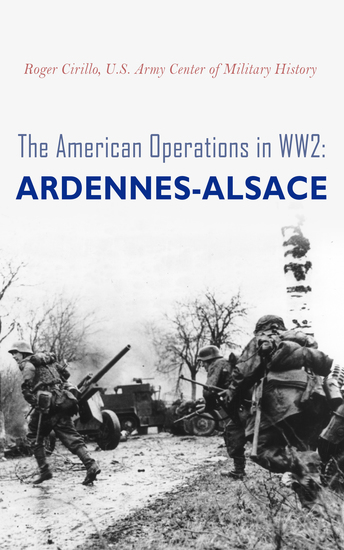
    World War II was the largest and most violent armed conflict in the history of mankind. Highly relevant today, World War II has much to teach us, not only about the profession of arms, but also about military preparedness, global strategy, and combined operations in the coalition war against fascism. This book follows military operations of the US Army in France from 16 December 1944 to 25 January 1945. 
    In his political testament Mein Kampf ("My Struggle") Adolf Hitler wrote, "Strength lies not in defense but in attack." Throughout World War II, attempts to gain or regain the initiative had characterized Hitler's influence on military operations. Thus, when the military situation in late 1944 looked darkest on the Western Front, an enemy offensive to redress the balance on the battlefield—and thereby cripple or delay the Allied advance—should have come as no surprise.
    Hitler's great gamble began during the nights of 13, 14, and 15 December, when the initial assault force of German armor, artillery, and infantry gradually staged forward to attack positions along the Belgian-German-Luxembourg border. This mustered force, with more than 200,000 men in thirteen infantry and seven panzer divisions and with nearly 1,000 tanks and almost 2,000 guns, deployed along a front of 60 miles—its operational armor holdings equaling that on the entire Eastern Front. Five more divisions moved forward in a second wave, while still others, equipped with at least 450 more tanks, followed in reserve.
    On the Allied side the threatened American sector appeared quiet. The 15 December daily situation report for the VIII Corps, which lay in the path of two of Hitler's armies, noted: "There is nothing to report." This illusion would soon be shattered.
    Zum Buch