Rejoignez-nous pour un voyage dans le monde des livres!
Ajouter ce livre à l'électronique
Grey
Ecrivez un nouveau commentaire Default profile 50px
Grey
Abonnez-vous pour lire le livre complet ou lisez les premières pages gratuitement!
All characters reduced
African Kingdoms Rise - cover

African Kingdoms Rise

Amelia Khatri

Traducteur A AI

Maison d'édition: Publifye

  • 0
  • 0
  • 0

Synopsis

African Kingdoms Rise unveils the often-overlooked history of Africa's powerful kingdoms, presenting them as central actors in global trade and cultural exchange. This book challenges Eurocentric perspectives by examining the sophisticated systems of governance, economic prowess, and artistic achievements of kingdoms like Ghana, Mali, and Songhai. These civilizations possessed the agency, ingenuity, and resources to develop complex societies that rivaled those in Europe and Asia, contributing significantly to world history.

 
The book is structured in three parts, beginning with an introduction to the geographical and cultural landscape of Africa. It then delves into specific kingdoms, exploring their political systems, economic structures, and artistic contributions. Finally, it examines the interconnectedness of these kingdoms and their interactions with other global powers, culminating with the decline of some kingdoms due to internal strife, environmental factors, and the impact of the transatlantic slave trade.

 
By drawing upon archaeological findings, oral traditions, and written accounts, the book provides a nuanced understanding of the past and emphasizes the importance of African kingdoms in a holistic view of world history.
Disponible depuis: 12/02/2025.
Longueur d'impression: 57 pages.

D'autres livres qui pourraient vous intéresser

  • Escaping Addiction - cover

    Escaping Addiction

    Patrick Bordeaux, George Koob

    • 0
    • 0
    • 0
    Addiction is a worldwide curse that seems to be growing in seriousness on a yearly basis. While to the general public addiction may seem almost inescapable, the truth is that there are solutions to overcoming the various addictions, though to date they seem more elusive than attainable. The goal of Escaping Addiction is to highlight the variety of causes of addiction alongside an array of useful tools anyone can use to break the cycle of addiction, whether it’s to alcohol, drugs, food, or video games. The seeds of addictive behavior are often planted in childhood then fed to grow over years of the input-and-reward cycle. Detaching the rewards from the addictive input is key to breaking the habits that keep us addicted. Presented here are a variety of treatments—from medications to therapeutic approaches—that can help. Offering a better understanding of the mechanisms of addiction, this book can help anyone struggling with addiction to unravel it in their own lives.
    Voir livre
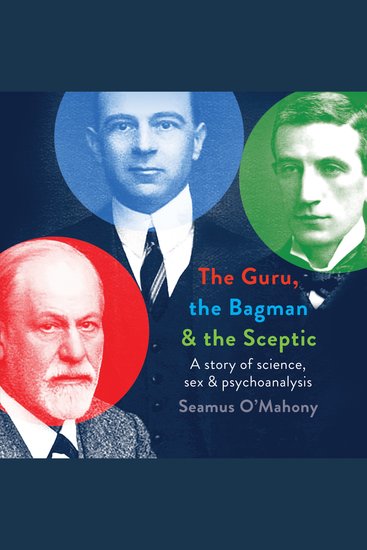
  • The Guru Bagman and the Sceptic - A story of science sex and psychoanalysis - cover

    The Guru Bagman and the Sceptic...

    Seamus O'Mahony

    • 0
    • 0
    • 0
    A brilliantly witty book about the intertwined lives of psychoanalyst Ernest Jones, surgeon Wilfred Trotter and the guru of psychoanalysis, Sigmund Freud. 
     
    Welsh-born psychoanalyst Ernest Jones was Sigmund Freud's closest associate and most fervent disciple. Clever, self-confident and intensely ambitious, Jones promoted psychoanalysis as a kind of secular religion. Meanwhile, his intimate friend Wilfred Trotter - a celebrated surgeon who saved the life of George V, and who took on Freud as a patient during his London exile - refused to yield to the seductions of the new Freudianism. A quintessentially English figure, Trotter was unimpressed by slick medical careerists, distrusted grand theories and lacked pomposity and self-regard. 
     
    From the first psychoanalytic congress in Salzburg in 1908 to the illness of King George in the late 1920s and the meeting of Freud and Trotter in 1939, Seamus O'Mahony tells the story of these three figures and their intertwined lives with his customary wit and erudition. Not only the story of the development of psychoanalysis, this is a book about the sexual obsessions of intellectual and bohemian circles in London, Cambridge and Vienna, of Bloomsbury, of doctors in pursuit of wealth and fame. It covers a pivotal thirty years in European history, and reveals how and why the writings of a failed neurologist from Vienna became so influential.
    Voir livre
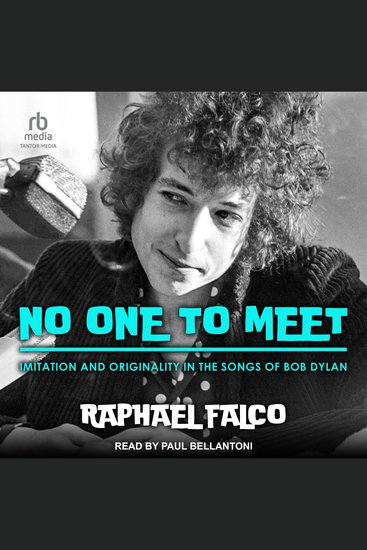
  • No One to Meet - Imitation and Originality in the Songs of Bob Dylan - cover

    No One to Meet - Imitation and...

    Raphael Falco

    • 0
    • 0
    • 0
    The literary establishment tends to regard Bob Dylan as an intriguing, if baffling, outsider. That changed overnight when Dylan was awarded the 2016 Nobel Prize in Literature, challenging us to think of him as an integral part of our national and international literary heritage. No One to Meet places Dylan the artist within a long tradition of literary production and offers an innovative way of understanding his unique, and often controversial, methods of composition. 


    In lucid prose, Raphael Falco demonstrates the similarity between what Renaissance writers called imitatio and the way Dylan borrows, digests, and transforms traditional songs. Although Dylan's lyrical postures might suggest a post-Romantic, "avant-garde" consciousness, No One to Meet shows that Dylan's creative process borrows from and expands the methods used by classical and Renaissance authors. 


    Drawing on numerous examples, including Dylan's previously unseen manuscript excerpts and archival materials, Falco illuminates how the ancient process of poetic imitation, handed down from Greco-Roman antiquity, allows us to make sense of Dylan's musical and lyrical technique. By placing Dylan firmly in the context of an age-old poetic practice, No One to Meet deepens our appreciation of Dylan's songs and allows us to celebrate him as what he truly is: a great writer.
    Voir livre
  • Hell With the Fire Out: A History of the Modoc War - cover

    Hell With the Fire Out: A...

    Arthur Quinn

    • 0
    • 0
    • 0
    Written by Arthur Quinn 
    Read by Ed Quinn (with an introduction written and read by Julia Whelan) 
    The final book from esteemed Berkeley historian Arthur Quinn, Hell With the Fire Out is both a complex chronicle of a forgotten chapter in American Indian history and a vivid detailing of human foible, folly, and failure. With a novelistic flair, Quinn outlines the sad inevitability of America's westward expansion in its post-Civil War era. Wrangling all the inherent contradictions — Quaker Peace Policy vs Grant and Sherman's War Department; inter- and inner-tribal conflicts; the opposing attitudes of the region's White settlers — Quinn gives us a battle story not merely between nations and governments, but within the hearts of the very individuals at its center. 
    This is the first time an audio version of this book has been available and it is read by none other than the author's son, actor Ed Quinn (Two Broke Girls, One Day at a Time, Tyler Perry's The Oval).
    Voir livre
  • Can the Brain Operate Without Recourse to the Past? - Malibu 1970 - Small Group Discussion 2 - cover

    Can the Brain Operate Without...

    Jiddu Krishnamurti

    • 0
    • 0
    • 0
    Can the brain operate without recourse to the past? - 22 February 1970  
    • Is there self-progress? 
    • Conflict 
    • Security 
    • Any form of division within oneself is a source of conflict. 
    • Can the brain be quiet?
    Voir livre
  • Body Am I - The New Science of Self-Consciousness - cover

    Body Am I - The New Science of...

    Moheb Costandi

    • 0
    • 0
    • 0
    The body is central to our sense of identity. Bodily awareness, says scientist-writer Moheb Costandi, is key to self-consciousness. In Body Am I, Costandi examines how the brain perceives the body, how that perception translates into our conscious experience of the body, and how that experience contributes to our sense of self. Along the way, he explores what can happen when the mechanisms of bodily awareness are disturbed, leading to such phenomena as phantom limbs, alien hands, and amputee fetishes. 


    Costandi explains that the brain generates maps and models of the body that guide how we perceive and use it, and that these maps and models are repeatedly modified and reconstructed. Drawing on recent bodily awareness research, the new science of self-consciousness, and historical milestones in neurology, he describes a range of psychiatric and neurological disorders that result when body and brain are out of sync, including not only the well-known phantom limb syndrome but also phantom breast and phantom penis syndromes; body integrity identity disorder, which compels a person to disown and then amputate a healthy arm or leg; and such eating disorders as anorexia. 


    Wide-ranging and meticulously researched, Body Am I offers new insight into self-consciousness by describing it in terms of bodily awareness.
    Voir livre