Begleiten Sie uns auf eine literarische Weltreise!
Buch zum Bücherregal hinzufügen
Grey
Einen neuen Kommentar schreiben Default profile 50px
Grey
Jetzt das ganze Buch im Abo oder die ersten Seiten gratis lesen!
All characters reduced
Notes on Water - cover

Notes on Water

Amanda Dalton

Verlag: The Poetry Business

  • 0
  • 0
  • 0

Beschreibung

Notes on Water is made up of two compelling and very moving poems, which speak to each other and to the heart of the reader. They are the work of a remarkable poet, writing in the darkest of times with urgency and grace.
Presented in tête-bêche style with black and white photographs. A version of the text was broadcast on BBC Radio 3 in March 2022.
Verfügbar seit: 25.04.2022.
Drucklänge: 26 Seiten.

Weitere Bücher, die Sie mögen werden

  • Asphyxia - The Story of a Life Scripted in Parentheses - cover

    Asphyxia - The Story of a Life...

    Thomas Tomazo Pagonis

    • 0
    • 0
    • 0
    This audiobook is narrated by an AI Voice.   
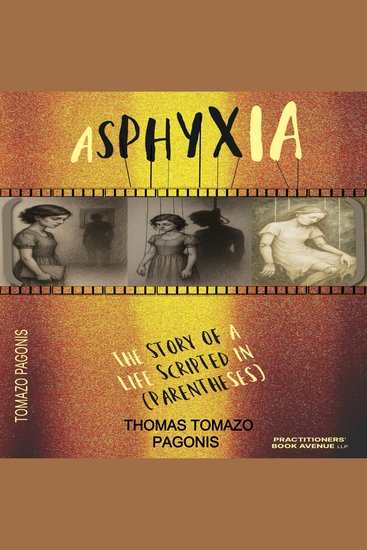
    Asphyxia is a hauntingly lyrical novel that unfolds like a cinematic screenplay in parenthetical time and conditional mood. Told through the voice of Nefeli—a young woman observing her life on a mental screen—this work blurs the boundaries between memory, myth, narration, and madness. Set in a literary universe where authors are tyrants, muses are merciless, and reality is often just a rumour, the story follows Nefeli’s metaphysical descent into guilt, obsession, and poetic hallucination. 
    Through the echo of voices—narrators, poets, and ghosts—the book explores the invisible lives of the mentally fragile, those who vanish quietly between diagnoses and metaphors. With a cast of characters both archetypal and painfully human, Asphyxia is not a love story, nor a murder mystery, though it flirts with both. It is a philosophical narrative about stories themselves: who writes them, who performs them, and who suffers them. 
    Written by Tomazo Pagonis and originally crafted in Greek, this audiobook has been translated into rich British English by Marilu Pagoni. It is recommended for lovers of experimental fiction, metafictional narrative, and those who sense their own lives unfolding in parentheses.
    Zum Buch
  • King Troll (The Fawn) - cover

    King Troll (The Fawn)

    Sonali Bhattacharyya

    • 0
    • 0
    • 0
    'I'll do anything for you. I can do anything for you.'
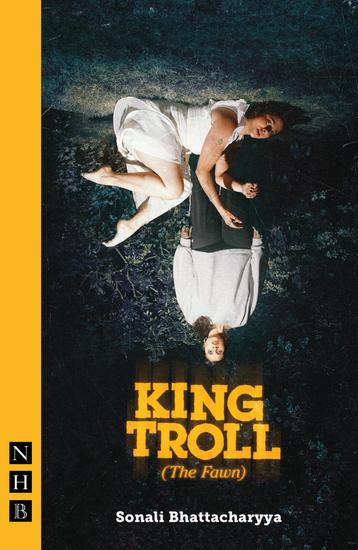
    Nikita and Riya are two South Asian sisters: insecure, stateless and desperate for somewhere to call 'home'.
    Nikita's work with young migrants requires her to keep her saviour complex in check as she negotiates the challenges and hypocrisy of the third sector. Meanwhile, Riya is offered the chance to create an advocate in the form of a homunculus (or fawn), and sees a chance to elevate herself above the cruelty meted out to others.
    Sonali Bhattacharyya's play King Troll (The Fawn) is a dark and dystopian exploration of migrant experiences in all their complexity – and the troll that lives within all of us, whispering 'me, not us', and definitely 'me first'. It was a finalist for the 2023 Women's Prize for Playwriting, and was first performed as a co-production between Kali Theatre and New Diorama Theatre, London, in 2024, directed by Milli Bhatia.
    Zum Buch
  • Lycidas - Much shorter poem from the famed author of Paradise Lost - cover

    Lycidas - Much shorter poem from...

    John Milton

    • 0
    • 0
    • 0
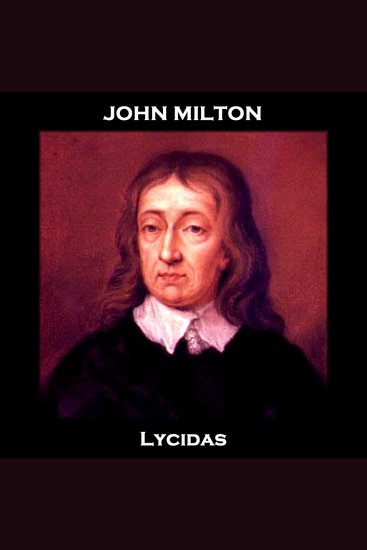
    John Milton was born in Bread Street, London, on December 9th, 1608.  His early years were privately tutored before gaining a place at St Paul’s School and in 1625 he matriculated at Christ's College, Cambridge, earning a BA in 1629 and an MA in 1632. At Cambridge he had developed a reputation for poetic skill but also experienced alienation from his peers and university life as a whole.  
    The next 6 years were spent in private study. He read both ancient and modern works of theology, philosophy, history, politics, literature and science, in preparation for a poetical career.  Milton mastered Latin, Greek, Hebrew, French, Spanish, and Italian. To these he would add Old English (whilst researching his History of Britain) and also acquired more than a passing acquaintance in Dutch.  
    Although he was studying, some of his poetry from this time is remarkable; L’Allegro and Il Penseroso in 1631 and Lycidias in 1638. 
    In May 1638, Milton embarked upon a 15 month tour of France and Italy. These travels added a new and direct experience of artistic and religious traditions, especially Roman Catholicism.  He cut the journey short to return home during the summer of 1639 because of what he claimed were "sad tidings of civil war in England."  
    Once home, Milton wrote prose tracts against episcopacy, in the service of the Puritan and Parliamentary cause.  
    He married 16-year-old Mary Powell in June 1643 but she left him after only a few months during which he wrote and published several writings on divorce. Mary did return after 3 years and their life thereafter seemed harmonious.  Milton received a hostile response to the divorce tracts and drove him to write Areopagitica, his celebrated attack on pre-printing censorship.  
    With the parliamentary victory in the Civil War, Milton wrote The Tenure of Kings and Magistrates (1649) which defended popular government and implicitly sanctioned the regicide which led to his appointment as Secretary for Foreign Tongues by the Council of State.  
    On 24 February 1652 Milton published his Latin defense of the English People, Defensio Pro Populo Anglicano, also known as the First Defense. Milton's Latin prose and intellectual sweep, quickly gained him a European reputation.  
    Tragically his first wife, Mary, died on May 5th, 1652 following the birth of their fourth child.   The following year Milton had become totally blind, probably due to glaucoma.  He then had to dictate his verse and prose to helpers, one of whom was the poet Andrew Marvell.  
    He married again to Katherine Woodcock but she died in February 1658, less than four months after giving birth to a daughter, who also tragically died.  
    Though Cromwell’s death in 1658 caused the English Republic to collapse Milton stubbornly clung to his beliefs and in 1659 he published A Treatise of Civil Power, attacking the concept of a state-dominated church. Upon the Restoration in May 1660, Milton went into hiding for his life. An arrest warrant was issued and his writings burnt. He re-emerged after a general pardon was issued, but was nevertheless arrested and briefly imprisoned before influential friends, such as Marvell, now an MP, intervened 
    His third marriage was to Elizabeth Mynshull. Despite a 31-year age gap, the marriage seemed happy and Milton spent the remaining decade of his life living quietly in London, apart from a short spell in Chalfont St. Giles, during the Great Plague of London.  
    Milton was to now publish his greatest works, which had been gestating for many years.  Paradise Lost, perhaps the classic English Epic poem was originally published in 10 books in 1667.  This was followed by Paradise Regained and Samson Agonistes in 1671.  Because of his anti-monarchy views their reception was muted but over the centuries since Milton has established himself as second only to Shakespeare.  He died of kidney failure on November 8th, 1674 and was buried in the church of St Giles Cripplegate.
    Zum Buch

  • You Took the Last Bus Home - The brilliantly funny first collection from Brian Bilston - cover

    You Took the Last Bus Home - The...

    Brian Bilston

    • 0
    • 0
    • 0
    Read, with his trademark charm and humour, by Brian Bilston.If you like a) laughing or b) words which rhyme with each other, you will love Brian Bilston - Richard Osman, author of We Solve Murders'There is poetry to be found in anything if you look hard enough.'You Took the Last Bus Home is a collection of ingenious, hilarious and touching poems from Brian Bilston, one of Britain’s funniest and best-loved poets.With endless wit, wisdom and delightful wordplay, Bilston's first collection of poetry offers profound insights into the common joys and sorrows of modern life. Exploring themes as diverse as love, death, and the unbearable torment of forgetting to put the rubbish out, all of Bilston’s poems are alive to the improbable nuances of the English language.Constantly experimenting with poetic forms – from Venn diagrams to Scrabble tiles – this irresistibly charming collection of poems will make you ponder the very essence of the human condition in the twenty-first century.'Bilston is a magician with words' - The Guardian'Brian Bilston is a laureate for our fractured times' - Ian McMillan
    Zum Buch
  • The Fabulanarchist Luxury Uprising - cover

    The Fabulanarchist Luxury Uprising

    Jack Houston

    • 0
    • 0
    • 0
    Playful, formal, satirical and tender, the poems in The Fabulanarchist Luxury Uprising are wildly wide-ranging. Jack Houston whisks the reader through meditations on family life, the teachings of Lucretius, the sexual potential of Captain Barnacles, and dreams of a socialist utopia, managing to be both deeply weird and touching.
    In his debut pamphlet, Houston draws out and scrutinises the mundanities of life, showing how they can form part of something much bigger. His poems aim to awaken the capacity for revolution within us all, even if it only gets us as far as the roundabout in the local playpark.
    "In the year 2121, we're all now too aware that a sofa is simply a bench
    
    constructed from the hewn corpse
    
    of a tree, covered in a mesh made from the amniotic fibres
    
    of oppressedly mono-cropped cotton plants
    
    & filled with the plumage
    
    from many a murdered full-grown duck [...]"
    
    - from 'Utopia'
    Zum Buch
  • Paradise Lost - cover

    Paradise Lost

    John Milton

    • 0
    • 0
    • 0
    "Paradise Lost" is an epic poem written by the 17th-century English poet John Milton. First published in 1667, the poem tells the biblical tale of the fall of man, detailing the rebellion of Satan and his followers, their expulsion from Heaven, and the consequences of Adam and Eve's sin in the Garden of Eden. Written in blank verse, the poem grapples with intricate theological issues, including fate, free will, and the nature of evil, while also exploring the human condition and the complexities of temptation and redemption. "Paradise Lost" is considered one of the most important works in the English literary canon.
    Zum Buch