Begleiten Sie uns auf eine literarische Weltreise!
Buch zum Bücherregal hinzufügen
Grey
Einen neuen Kommentar schreiben Default profile 50px
Grey
Jetzt das ganze Buch im Abo oder die ersten Seiten gratis lesen!
All characters reduced
In and Out of Rebel Prisons - Enriched edition - cover

In and Out of Rebel Prisons - Enriched edition

Alonzo Cooper

Verlag: Musaicum Books

  • 0
  • 0
  • 0

Beschreibung

Alonzo Cooper's book, 'In and Out of Rebel Prisons,' provides a riveting firsthand account of his experiences as a prisoner of war during the American Civil War. Cooper's literary style is straightforward and descriptive, allowing readers to vividly imagine the harsh conditions and brutal treatment he endured. Through his detailed narration, the book offers a valuable insight into the human cost of war and the resilience of the human spirit. Set within the context of the Civil War, Cooper's account serves as a poignant reminder of the atrocities of that time and the enduring impact on those who lived through it. His meticulous attention to detail and emotional depth make this book a powerful and thought-provoking read. Alonzo Cooper himself was a Union soldier who was captured and imprisoned by the Confederacy, which influenced his personal motivation for writing this book. His firsthand experiences provide a unique perspective that adds authenticity and depth to the narrative. I highly recommend 'In and Out of Rebel Prisons' to readers interested in Civil War history, personal narratives, and the resilience of the human spirit in the face of adversity.

In this enriched edition, we have carefully created added value for your reading experience:
- Hand‐picked Memorable Quotes shine a spotlight on moments of literary brilliance.
- Interactive footnotes clarify unusual references, historical allusions, and archaic phrases for an effortless, more informed read.
Verfügbar seit: 18.12.2019.
Drucklänge: 216 Seiten.

Weitere Bücher, die Sie mögen werden

  • Madame Clairevoyant's Guide to the Stars - Astrology Our Icons and Our Selves - cover

    Madame Clairevoyant's Guide to...

    Anonym

    • 0
    • 0
    • 0
    “Not just a shimmering guide to our personal cosmologies written in precise and lucid prose, this book is also a devastating collection of cultural-criticism essays cum meditations on the very nature of being alive.”—Emma Copley Eisenberg, author of The Third Rainbow Girl 
    A soulful exploration of the twelve astrological signs embodied by our living “stars”—from divas to philosophers, poets to punks—and the ways they can help us better understand ourselves and each other, from the wildly popular astrology columnist for New York magazine’s The Cut. 
    Whether you believe in it or not, astrology’s job has never been to give us a preordained vision of the future, nor to sort us into twelve neat personality types, but to provide the tools and language for delving into our weirdest, best, most thorny contradictions, and for understanding ourselves and each other in our full complexity. The stars and the planets then are more like mirrors that show us who we are, that give us an understanding of how to be and how to move through the world; how certain people do it differently, and what we can learn by studying them. 
    In Madame Clairevoyant’s Guide to the Stars, Claire Comstock-Gay brings the sky down to Earth and points to our popular “stars”—from Aretha Franklin to Mr. Rogers, from poets in Cancer to punk singers in Scorpio—to reveal what the sky has to teach us about being human. In this wise, lyrically written guide, she examines the twelve astrological signs, illuminating the ways each one is more complicated, beautiful, and surprising than you might have been told. Claire suggests that actually it’s okay, and even important, to be a seeker, to hunger for self-knowledge, and if astrology is the vehicle for that inquiry, so be it. 
    Madame Clairevoyant’s Guide to the Stars offers a clear introduction to the basics and an innovative new framework for creatively using astrology to illuminate our lives on earth. It’s a road map to our internal world, yes, but Claire also reminds us that it’s still our job to navigate it. Combining both heavenly insights and the earthly wisdom of writers like Cheryl Strayed and Heather Havrilesky and the poetry of Patricia Lockwood and Mary Oliver, Madame Clairevoyant’s Guide to the Stars offers a fresh, profound, and fun way to look at ourselves and others, and perhaps see each more clearly. And in that way, this book is not just beautiful, but transformative.
    Zum Buch
  • Anne Frank - cover

    Anne Frank

    History Nerds

    • 0
    • 0
    • 0
    In a world marked by profound turmoil and unspeakable horror, one young girl’s voice continues to resonate through the ages, offering a beacon of hope, resilience, and the enduring power of the human spirit. "Anne Frank" delves deep into the life and legacy of Anne Frank, exploring the nuances of her extraordinary story beyond the pages of her famous diary. 
    From her early years, to her family's flight to Amsterdam, this book paints a vivid picture of Anne’s life before and during the dark days of World War II. But who was Anne Frank beyond the confines of her diary? Discover the curious and spirited young girl who dreamed of being a writer, and maintained an indomitable will to live even in the face of unimaginable adversity. Learn about the historical context that shaped her experiences and the pivotal events that led to her family's tragic fate. 
    Whether you are a student, a history enthusiast, or someone seeking to understand the profound legacy of Anne Frank, this book provides a comprehensive and heartfelt exploration of one of the most iconic figures of the 20th century. Join us on this poignant journey to uncover the story of Anne Frank, the girl whose voice will never be forgotten.
    Zum Buch
  • Magnetize Your Connections: Simple Strategies to Attract Love - "Unlock the secrets to attracting love with dynamic audio lessons designed to elevate your connection skills!" - cover

    Magnetize Your Connections:...

    Jaris Beauchamp

    • 0
    • 0
    • 0
    Magnetize Your Connections: Simple Strategies to Attract Love 
    ⭐⭐ Simplified Guide & Explanations Included ⭐⭐   
    Are you eager to enhance your relationships and deepen your understanding of attraction psychology? 
    Do you seek a comprehensive resource that equips you with the essential tools to forge meaningful connections? 
    Your search ends here! 
    This guide is your ultimate companion for enhancing your understanding of attraction, applying practical strategies, and engaging in exercises to attract love. With this resource, you’re set for success. 
    Updated for the 2024-2025 Relationship Dynamics. 
    Key features of this enriched guide include: 
    - In-depth insights into the psychology of attraction 
    - Detailed explanations on building deeper relationships 
    - Effective strategies for fostering emotional connections 
    Our guide stands out with extensive coverage that is crucial for your success. Concepts are thoroughly explored, ensuring you gain valuable knowledge. 
    Please note that this guide is an independent resource and is not affiliated with any official relationship counseling entities. 
    Crafted with a clear structure and straightforward language, our guide to relationships guarantees smooth transitions between topics. Say goodbye to complicated jargon and embrace clear, precise, and insightful content. 
    So, why delay? Click the BUY NOW button, secure your guide, and embark on your journey to mastering the art of attraction! 
    Magnetize Your Connections: Simple Strategies to Attract Love is here to transform your understanding of relationships!
    Zum Buch
  • A Rare Recording of Oliver Lodge - cover

    A Rare Recording of Oliver Lodge

    Oliver Lodge

    • 0
    • 0
    • 0
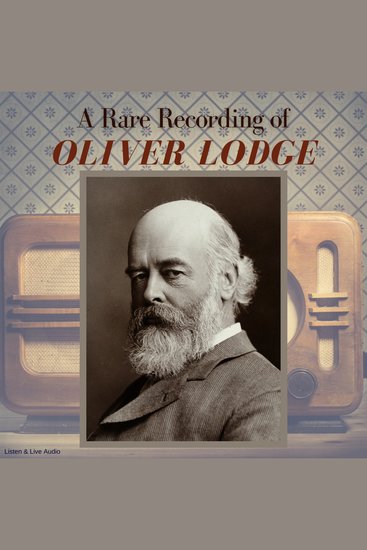
    This is a rare recording of Oliver Joseph Lodge, June 12, 1851 – August 22, 1940, a British physicist and writer involved in the development of, and holder of key patents for, radio.  
    In addition, Lodge wrote more than 40 books, about the afterlife, aether, relativity, and electromagnetic theory. 
    ©2016 Listen & Live Audio (P)2016 Listen & Live Audio
    Zum Buch
  • Project Azorian: The History of the CIA Operation to Recover a Sunken Soviet Submarine - cover

    Project Azorian: The History of...

    Editors Charles River

    • 0
    • 0
    • 0
    Given that there’s such little margin for error in a submersible, many submarine losses remain sources of intrigue and mystery, and few rival the disappearance of the Soviet submarine K-129 in 1968. The Cold War was in high gear, and under the waters of the world’s oceans, Soviet and American submarines were in intense competition, pushing the boundaries of new technologies. Some of these submarines carried nuclear missiles that carried more destructive power than all the bombs dropped by the U.S. Army Air Force throughout World War II, including the nuclear bombs dropped on Hiroshima and Nagasaki. Other submarines, the hunter-killers, were designed to find and destroy these missile-carrying submarines. All of these submarines engaged in their activities while aiming to avoid detection by the other side, establishing a clandestine conflict that was carried out far from the gaze of the public but still strategically vital. If either side could gain a notable advantage, it could abruptly change the fragile balance of power. 
    	Both sides lost submarines in the 1960s, but when the Soviets lost K-129 in 1968, it triggered one of the most interesting episodes of the Cold War, and something that reads like the plot of a techno-thriller. A race developed between the Americans and Soviets to locate the wreck, and when the Americans found it, they realized the submarine sunk in one of the deepest parts of the ocean, far beyond the depths at which conventional divers or submarines could operate. As a result, the CIA, aided by eccentric billionaire Howard Hughes, clandestinely began a lengthy and incredibly expensive project to build equipment that might allow them to recover and examine parts of the sunken submarine.  
    	That operation, Project Azarian, is still controversial over 50 years later. 
    Zum Buch
  • End of World War II The: The History of the Battles that Ended the Fighting in Europe and the Pacific - cover

    End of World War II The: The...

    Editors Charles River

    • 0
    • 0
    • 0
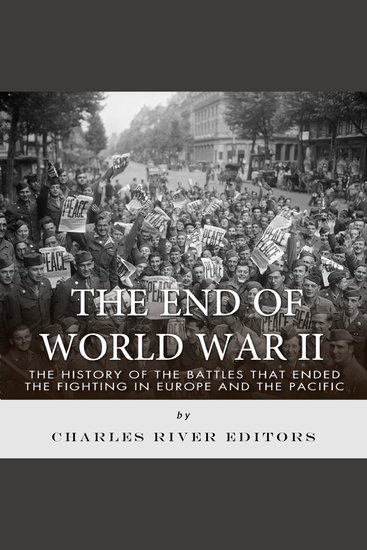
    After the successful amphibious invasion on D-Day in June 1944, the Allies began racing east toward Germany and liberating France along the way. The Allies had landed along a 50 mile stretch of French coast, and despite suffering 8,000 casualties on D-Day, over 100,000 still began the march across the western portion of the continent. By the end of August 1944, the German Army in France was shattered, with 200,000 killed or wounded and a further 200,000 captured. However, Adolf Hitler reacted to the news of invasion with glee, figuring it would give the Germans a chance to destroy the Allied armies that had water to their backs. As he put it, “The news couldn’t be better. We have them where we can destroy them.” While that sounds delusional in retrospect, it was Hitler’s belief that by splitting the Allied march across Europe in their drive toward Germany, he could cause the collapse of the enemy armies and cut off their supply lines.  
    Near the end of 1944, as Allied forces were pushing across the Pacific and edging ever closer to Japan, plans were drawn up to invade the Ryuku islands, the most prominent of them being Okinawa. Military planners anticipated that an amphibious campaign would last a week, but instead of facing 60,000 Japanese defenders as estimated, there were closer to 120,000 on the island at the beginning of the campaign in April 1945. The Battle of Okinawa was the largest amphibious operation in the Pacific theater, and it would last nearly 3 months and wind up being the fiercest in the Pacific theater during the war, with nearly 60,000 American casualties and over 100,000 Japanese soldiers killed. In addition, the battle resulted in an estimated 40,000-150,000 Japanese civilian casualties.
    Zum Buch